
Tutte le attività
Questo elenco si aggiorna automaticamente
- Ultima ora
-
Romana figura femminile?
Giulicarp ha aggiunto un nuovo link in Richiesta Identificazione/valutazione/autenticità
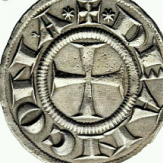
Buonasera a tutti, Per puro piacere di catalogazione potete aiutarmi per questa moneta? Può essere Giulia Mesa? Dimensioni indicative circa 14mm 1gr. Grazie mille -

10 franchi svizzeri anno 1922 e anno 1913
coinzh ha risposto a un topic di Martha94tsn inviato in Richiesta Identificazione/valutazione/autenticità
A venderli in negozio ora dovrebbero dare 375 euro ogni moneta. https://www.swissgoldshop.ch/produkt/goldvreneli-10-fr?srsltid=AfmBOopNxF3YeuBZtTwIFsafvRglL7mlpe6d5e53Q6VBrnAe7mtxYUgN -

Raccolta di rebus attinenti alla Numismatica
esperanto ha risposto a un topic di apollonia inviato in Agorà
Questo è davvero un capolavoro: -
Viennese per LVDOVICO
savoiardo ha risposto a un topic di allobroge inviato in Monete e Medaglie dei Savoia prima dell'unità d'Italia
Fatto... https://numismatica-italiana.lamoneta.it/moneta/W-LUDO/5 -
Torna dopo 1/2 secolo al mercato, un esemplare di denaro dalla zecca reale di Magdeburgo per Ottone III, con al diritto croce e leggenda ed al rovescio chiesa e leggenda . Sarà il 12 Febbraio in vendita Hirsch 405 al n. 2006 .
-
Rinvenuta a Copenaghen la nave vichinga più grande al mondo. E' un cog databile attorno al 1410
Vel Saties ha aggiunto un nuovo link in Rassegna Stampa
L'articolo italiano è abbastanza penoso ma il ritrovamento è favoloso https://leganerd.com/2026/01/14/il-relitto-vichingo-di-600-anni-appena-scoperto-e-il-piu-grande-del-suo-genere/?utm_source=firefox-newtab-it-it Il relitto vichingo di 600 anni appena scoperto è il più grande del suo genere Dalla sabbia emerge il capolavoro ingegneristico dei mari: cosa immaginavano i vichinghi con una nave tanto avanzata e quali merci scambiavano con le grandi potenze medievali? I vichinghi sono noti per le loro navi, i lunghi viaggi e anche una durezza mitica nei loro tratti e modi di fare. Il fascino a loro legato si deve a una cultura del mare e a una spiritualità profonda che fa da cornice a molte opere letterarie e film fantasy. Al largo della costa di Copenaghen è stata scoperta la nave vichinga più grande al mondo. 600 anni di storia ben conservati, l’imbarcazione è stata chiamata Svælget 2. È lunga 28 metri e equivale a due scuolabus uniti. Una nave importante, perché al suo interno presenta anche dei castelli in legno, a poppa e a prua. La nave è un modello cog, utilizzata nel Medioevo per il commercio con grandi carichi. L’età storica in cui è collocata la nave è l’Europa del XV secolo, tra Medioevo e età moderna. “La scoperta rappresenta una pietra miliare per l’archeologia marittima, un’opportunità unica per comprendere sia la costruzione sia la vita a bordo delle grandi navi commerciali nel Medioevo. Non si tratta di comfort in senso moderno, ma è un grande passo avanti rispetto alle navi dell’era vichinga, che avevano solo ponti scoperti in qualsiasi condizione atmosferica”, scrive in una nota il responsabile degli scavi Otto Uldum. Chi viveva per tanti mesi su Svaelget 2? Equipaggio preparato, comandanti e signori che davano ordini per portare a casa nuove merci. La storia studiata attraverso gli oceani L’imbarcazione ha tracce di Medioevo ancora e segni di voglia di esplorare, scoprire nuovi mercati. L’equipaggio aveva una vita dura nell’imbarcazione, meno forse chi comandava e se sulla nave salivano anche donne, figli e parenti vari dei signori. La nave era sepolta sotto 12 metri di sabbia e limo; questa copertura ha preservato tracce del sartiame. È l’ingranaggio dell’albero di corde, fili e tela importante per capire come si muovesse con mari deboli o agitati. Il legno si è ben conservato, Svælget 2 è stata costruita intorno al 1410 da artigiani vichinghi dei Paesi Bassi. Tanto equipaggio significava costi: quanti uomini richiedeva la nave? Pochissimi, analizzando la struttura. Le dimensioni sono grandi, ma ci sono sistemi ingegnosi di corde e sartiame che facilitavano ogni manovra dalla poppa alla prua. Sui castelli si avevano soltanto illustrazioni storiche; per la prima volta si potranno studiare dal vivo costruzioni sopravvissute dal passato. https://www.bbc.co.uk/newsround/articles/clym8jxzkv5o Archaeologists discover huge Viking ship off the coast of Denmark Image source, Viking Ship Museum Published 13 January 2026 Archaeologists in Denmark have discovered a huge Viking ship off the coast of the country. The medieval cargo ship - also known as a cog - is the largest of its kind ever to be found anywhere in the world. The ship has been named Svælget 2 after the channel where it was found, and measures nearly 30 metres in length. Experts think its super size could have helped it carry around 300 tonnes (300,000 kg) of goods What did experts find? Image source, Viking Ship Museum Image caption, Archaeologists used special "underwater vacuum cleaners" to remove centuries of sand and silt from the shipwreck The ship was discovered by maritime archaeologists from the Viking Ship Museum in Denmark. It was unearthed in the the strait between Denmark and Sweden, during seabed investigations for Copenhagen's new district, Lynetteholm. The ship measures 28 metres in length, six metres in height and nine metres wide - making it the world's largest cog ever found. Experts have dated the ship back to the year 1410 and believe it was built in the Netherlands, with wood from the ares which is now modern-day Poland. Image source, Viking Ship Museum Archaeologists say the wreck is also extremely well preserved. It was excavated at a depth of 13 metres, where it has been protected by sand and shielded from forces that normally destroy ships near the coast. Researchers say its good condition gives a unique opportunity to study details of its build and understand the complexity of medieval sailing ships. Otto Uldum, maritime archaeologist and excavation leader, described the find as a "milestone" for experts. He explained: "It is the largest cog we know of, and it gives us a unique opportunity to understand both the construction and life on board the biggest trading ships of the Middle Ages." It's thought that the cog was used to trade everyday goods. "Shipbuilders went as big as possible to transport bulky cargo - salt, timber, bricks or basic food items," Mr Uldum added. Experts say that its vast size could help provide new information into the maritime technology and medieval trade networks that existed at that time across Northern Europe. ------------------------------------------------------------------------ https://news.artnet.com/art-world/largest-cog-shipwreck-svaelget-2-denmark-2735069 Remains of a ‘Medieval Super Ship’ Turn Up in the Waters of Denmark Archaeologists have just unearthed the world's largest known medieval cargo ship, known as a cog. The Svælget 2 shipwreck. Photo courtesy of the Viking Ship Museum. It’s no ordinary shipwreck that maritime archaeologists have uncovered off the coast of Copenhagen, Denmark. Hidden for more than six centuries, the towering vessel has been identified as the largest known medieval cargo ship, a revelation that could offer new insights into shipbuilding of the era. The ship was discovered in Øresund, or the Sound, a strait between Denmark and Sweden, at a depth of more than 40 feet. It was unearthed by archaeologists from Denmark’s Viking Ship Museum amid seabed surveys for Copenhagen’s forthcoming Lynetteholm district. After sweeping away layers of sand and silt, the team found a ship, known as a cog, measuring about 91 feet long, 29 feet wide, and 19 feet high, with a cargo capacity of 300 tons. The Svælget 2 shipwreck. Photo courtesy of the Viking Ship Museum. Named Svælget 2 after its find location, the 15th-century craft represents the largest cog ever unearthed—the museum called it a “medieval super ship.” The depths have also preserved the wreck such that the team was able to study its surviving construction, including a good amount of its rigging. “It is extraordinary to have so many parts of the rigging,” Otto Uldum, the maritime archaeologist who led the excavation, said in a statement. “We have never seen this before, and it gives us a real opportunity to say something entirely new about how cogs were equipped for sailing,” The Svælget 2 shipwreck. Photo courtesy of the Viking Ship Museum. Cogs emerged in the Middle Ages as a safe and efficient means to transport massive quantities of goods. Their substantial cargo holds trumped that of Viking vessels such as knarrs, while their towering sides made them harder to board during sea skirmishes. From the 10th century, the cog revolutionized long-distance trade, making it possible to transport even everyday goods across vast distances. “A ship with such a large cargo capacity is part of a structured system where merchants knew there was a market for the goods they carried,” Uldum noted. “Svælget 2 is a tangible example of how trade developed during the Middle Ages.” Wooden comb found on the Svælget 2. Photo courtesy of the Viking Ship Museum. Using dendrochronological analysis, researchers have dated Svælget 2 to around 1410, when it was constructed with timber from Pomerania (modern-day Poland) and the Netherlands. While its cargo is missing, the team found everyday objects—from shoes and combs to cooking pots and ceramic bowls—that shed light on life aboard the cog. More surprising were some of the ship’s surviving features such as its stern castle. According to Uldum, these castles, or sheltered decks, were only known to researchers through illustrations. No physical evidence has emerged as only the bottom of ships tend to survive. The Svælget 2’s timber-built castle, then, offers not just “archaeological proof,” said Uldum, but “20 times as much material” to study. Part of a bronze cooking pot found on the Svælget 2. Photo courtesy of the Viking Ship Museum. Also extant is the cog’s brick galley, never before seen on a medieval ship found on Danish waters. The galley, constructed with about 200 bricks and 15 tiles, enabled the ship’s crew to cook over an open fire. Bronze and ceramic cookware were found in the same area. “It speaks of remarkable comfort and organization on board,” Uldum said of the galley. For the researchers, a colossal, highly engineered vessel such as the Svælget 2 also provides a rare window into the trade structures of its time. Financing and building these hulking ships, after all, required sufficient demand as much as a robust economy, Uldum noted. Those systems, in turn, spurred shipbuilding technology and innovation, evident in this latest discovery. Model of the Svælget 2 shipwreck. Photo courtesy of the Viking Ship Museum. “We now know, undeniably, that cogs could be this large—that the ship type could be pushed to this extreme,” Uldum added. “Svælget 2 gives us a tangible piece of the puzzle and makes it possible to understand how technology and society evolved side by side in an era when shipping was the driving force behind international trade.” -
Potrebbe essere di qualche dominio spagnolo?
Carlo. ha risposto a un topic di darioelle inviato in Richiesta Identificazione/valutazione/autenticità
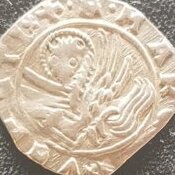
Potrebbe assomigliare anche a qualche moneta di Castiglione delle Stiviere, ma vedo che anche in quel caso i leoni rampanti sono nel secondo e terzo quarto -

Moneta antica
nikita_ ha risposto a un topic di Marco95 inviato in Richiesta Identificazione/valutazione/autenticità
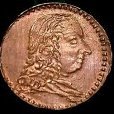
Ci somiglia molto, la moneta presentata è boliviana 8 Reales - Charles IV - Bolivia – Numista -
CONVEGNO DI MODENA 2026
gallo83 ha risposto a un topic di DARECTASAPERE inviato in Segnalazione mostre, convegni, incontri e altro
Anche io presente stamattina. Sono stato un'oretta dentro e confermo che la partecipazione è stata alta, così come si è notata una buona sorveglianza. La parte negativa resta la sempre più ristretta cerchia di banchi di commercianti conosciuti e la conseguente mancanza di monete. Questo diretta conseguenza di furti passati edel poco materiale che passa non per le aste. A livello di qualità dei banchi per me uno dei peggiori convegni di Modena a cui sono stato...e da modenese mi spiace parecchio. Marco - Oggi
-
Queste le informazioni trovate su un sito di vendita. India 2019 11th Def. Series Makers of India 1500p APJ Abdul Kalam 1v MNH Su altri siti la serie è chiamata Builders of India.
-
Moneta antica
SS-12 ha risposto a un topic di Marco95 inviato in Richiesta Identificazione/valutazione/autenticità
Buonasera, comunque dovrebbe trattarsi di questa moneta: https://it.numista.com/18852 -
Moneta antica
nikita_ ha risposto a un topic di Marco95 inviato in Richiesta Identificazione/valutazione/autenticità
Ciao, per una coniazione di oltre 220 anni fa un lieve decentramento è quasi la normalità, nessun errore. -

Moneta antica
Marco95 ha aggiunto un nuovo link in Richiesta Identificazione/valutazione/autenticità
Buonasera sera a tutti. Sono nuovo e vorrei capire se ho qualcosa di interessante e anche imparare qualcosa di molto affascinante. Questa moneta è davvero vecchia "1803" Ho notato che il bordo da una parte è più largo che dall'altra, come se fosse decentrato il disegno. -

Potrebbe essere di qualche dominio spagnolo?
Ajax ha risposto a un topic di darioelle inviato in Richiesta Identificazione/valutazione/autenticità
Buonasera, I'am following this tread but don' 't recognize it as a coin of Dutch orgin yet . I'll submit it to my helpline expert . Saluti, from The Netherlands, Ajax -
Erano i paesi facenti parte della ex Africa orientale britannica, presumo al tempo avessero (ma credo tuttora) strette relazioni. Del resto è una piccola porzione di Africa equatoriale con un minimo di stabilità politica ed istituzionale (su questo certamente @ART ci saprà dire di più).
-
Potrebbe essere di qualche dominio spagnolo?
Carlo. ha risposto a un topic di darioelle inviato in Richiesta Identificazione/valutazione/autenticità
A me questa, come prima impressione, aveva ricordato la monetazione per i paesi bassi spagnoli, possibile sia qualche emissione non ufficiale di qualche pretendente al trono? -
1 Dirham argento quadrato (1202-1237?)
Carlo. ha risposto a un topic di NeroCupo inviato in Altre Monete Medievali
Ma quale pippozzo! Anzi, meriterebbe una discussione dedicata: la monetazione "araba" è molto interessante ed ai più molto sconosciuta, degnissima di approfondimento numismatico e storico! Ti faccio i miei complimenti! -

Identificazione moneta
Ale75 ha risposto a un topic di GurSk inviato in Richiesta Identificazione/valutazione/autenticità
Salve,sulla testa s'intravede AVG GER DAC quindi Traiano al 100% -

"Viceregno che passione"
dareios it ha risposto a un topic di Litra68 inviato in Monete e Medaglie delle Due Sicilie, già Regno di Napoli e Sicilia
Questa pubblica di Filippo IV, ha fatto fino in fondo il suo dovere. Peccato non si leggono bene le sigle dietro il busto. Per completezza aggiungo le misure: 31mm di diametro per un peso di 11.30 grammi. Buona serata a tutti. -

Pagamento con moneta da collezione.
Don peppe ha risposto a un topic di Capirobi inviato in Euro Monete da collezione Italiane e delle altre Zecche Europee.
Buonasera a tutti la moneta di 50€ Francese le commerciante non l'acetano neanche in Francia dovresti cambiarli in banco di francia a Parigi,mio cugino le a venduti a perdita,podarsi ora con l'aumento del argento,,potresti récupérare ma difficile venderli. -
Frattura di conio o artefatto?
Bruzio ha risposto a un topic di poli1 inviato in Regno d'Italia: identificazioni, valutazioni e altro
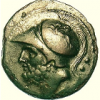
sembra che qualcuno abbia tentato di separare le due facce -
Banconota un dollaro
nikita_ ha risposto a un topic di 01449774 inviato in Richiesta Identificazione/valutazione/autenticità
Non ha particolarità interessanti, solamente valore al cambio. 1 dollaro >> attualmente 86 eurocent -

Identificazione moneta
gennydbmoney ha risposto a un topic di GurSk inviato in Richiesta Identificazione/valutazione/autenticità
Anche per me è Traiano... -
CONVEGNO DI MODENA 2026
DARECTASAPERE ha risposto a un topic di DARECTASAPERE inviato in Segnalazione mostre, convegni, incontri e altro
Ci sono stato stamattina, ho visto parecchio movimento tra rappresentanti di case d'asta, commercianti con i tavoli e non..... Incontrato diversi "vecchi amici" ma sopratutto mi è piaciuta la presenza di almeno 3 ma forse 4 guardie giurate che giravano continuamente all'interno ed esterno del convegno..... -
Identificazione moneta
Lorenzo999Lorenzo ha risposto a un topic di GurSk inviato in Richiesta Identificazione/valutazione/autenticità
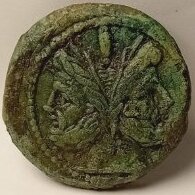
Ciao, ad occhio e croce sembra più un dupondio di traiano (se si aguzza un po lo sguardo sembrano vedersi le punte della corona radiata) Rimane comunque una moneta disastrata, mi chiedo che cosa abbia passato Lorenzo