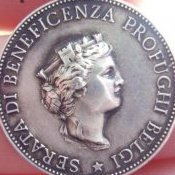
galetto Inviato 7 Marzo, 2013 #1 Inviato 7 Marzo, 2013 gentilmente vorrei sapere che tipo di moneta e per mio conto senbra un denario del XI o XII secolo allego un altra foto della stessa tipologia di moneta che a mio parere sembra un mezzo dinaro aspetto gentilmente una vostra risposta grazie anticipatamente. Cita
galetto Inviato 7 Marzo, 2013 Autore #3 Inviato 7 Marzo, 2013 @galetto Scusami se le foto le ho mandate separate dalla mia domanda,sono certo che l'avevi capito già,ma non essendo molto pratico mi capirai,cordiali saluti. Cita
mariov60 Inviato 7 Marzo, 2013 #4 Inviato 7 Marzo, 2013 (modificato) Denaro di Melgueil, Francia. Per una bella carrellata sulla tipologia e le variazioni in base alle epoche successive: http://heurtoirslanguedociens.over-blog.com/article-le-graphisme-du-denier-melgorien-108029926.html Ciao Mario Modificato 7 Marzo, 2013 da mariov60 Cita
scacchi Inviato 8 Marzo, 2013 #5 Inviato 8 Marzo, 2013 County of Melgueil, Bishop de Maguelonne (11th - 13th C) For a larger image click here Bill denier, 17mm, .94gr. Obv: illegible inscription, distinctive central design. Rev: illegible, four circles with central besant. This is in Provence. R4336, Boudeau 753 (which describes it with "legendes barbares"), Bel 928. For a larger image click here Billon denier, 18mm, 1.04gr. Obv: illegible inscription, distinctive central design. Rev: illegible, four circles with central besant. This is in Provence. R4336, Boudeau 753 (which describes it with "legendes barbares"), Bel 928; Dup 1578 (as 12th-13thC) PdA 3843. By the 12th century this was among the most popular coinages in the south of France. It was used as far south as Catalonia and overshadowed neighboring coinage from Narbonne. Its minting was a source of wealth for the count and it attracted the interest of the papacy. It remained stylistically unchanged for decades, although its weight and quality varied. It was a coinage that was 'confirmed' a number of times by whoever controlled it. For example, in 1125 count Bernard IV confirmed "'to God and all faithful Christians by an oath in the hand of the bishop of Maguelone' that he would maintain the coinage in its designated weight and alloy." (Bisson 66) Bernard issued other confirmations in which he said any change in value (mutation) would be made in conjunction with the consent of his leading vassals. Bisson interprets this as reflecting a broad interest in the stabilization of the currency. By the same token, Bernard's vassal in Montpelier committed not introduce his own currency, and not to clip or counterfeit the coinage of Megueil. The first of the Megueil coins above appears to have been clipped at some point. One way creditors addressed this clipping problem was to set repayment terms for debt and contractual obligations in terms of silver weight rather than coin count. Contracts specifying silver weight terms would reflect the fact that debasement was a concern. Pope Honorius II also weighted in on this and sometime between 1125-29 wrote to Bernard telling him it was his obligation to maintain the stability of his currency. This is one of the first papal interventions in the issue of monetary stability. Honorius' interest was because the Bernard was a papal vassal. Not surprisingly, the currency was debased over time, as was not uncommon. When Raymond V of Toulouse married into Megueil in 1172 and took control of the county, he also took direct control of the currency, set its quality with the moneyers rather than leading men of the county and debased the currency. His successor, Raymond VI, appears to have limited interest in these minting rights and regardless, lost his title to Megueil when the pope took it away in 1212, a byproduct of the Albigensian crusade. Earlier, Alphonse Jourdain had also confirmed the currency in 1132. Bisson (74) observes "So it happened that public and sworn confirmation of coinage, reaching an early climax at Megueil, lapses after 1125 into more conventional and perhaps less solemn forms. The observance of these promises was little more than deflected under the relatively strong dynasty of Toulouse. Neither rural vassals nor burghers gained much influence over the coinage, still thoroughly seigneurial, that was too popular for its proprietors to risk abusing." Cita Awards
Risposte migliori
Unisciti alla discussione
Puoi iniziare a scrivere subito, e completare la registrazione in un secondo momento. Se hai già un account, accedi al Forum con il tuo profilo utente..