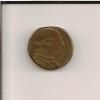
mfiumani Inviato 23 Agosto, 2013 #1 Inviato 23 Agosto, 2013 Ciao volevo farvi vedere questo mezzo dollaro usa del 1963 che ha presso sull'argento del dritto questa particolare ombratura che gli americani definiscono "toned" Cita
Kikko72 Inviato 23 Agosto, 2013 #2 Inviato 23 Agosto, 2013 Wow.è la prima che vedo. Molto bella. Cita
vathek1984 Inviato 23 Agosto, 2013 #3 Inviato 23 Agosto, 2013 Bella patina...però il lato con la campana secondo me è il rovescio...:D Cita
donty Inviato 23 Agosto, 2013 #4 Inviato 23 Agosto, 2013 Ciao volevo farvi vedere questo mezzo dollaro usa del 1963 che ha presso sull'argento del dritto questa particolare ombratura che gli americani definiscono "toned" image.jpg image.jpg Che simpatica!!! Mi piace da morire! -donty- Cita
euenigma Inviato 23 Agosto, 2013 #5 Inviato 23 Agosto, 2013 salve a me piacciono molto le monete americane. anche questa moneta mi piace posto una foto queste sono le mie monete americane ; http://monetemondo.altervista.org/Global%20Coin/nord-america/usa-america-stati-uniti-/ Cita
Ricca770 Inviato 23 Agosto, 2013 #6 Inviato 23 Agosto, 2013 Sicuro che sia una patinatura naturale dell'argento?? Forse sbaglio.....ma mi sembra di vedere delle impronte digitali sulla moneta di cui hai postato la foto. A volte succede questo quando una moneta viene pulita con dei prodotti e, sempre a volte, questi fanno patinare la moneta in maniera anomala. Normalmente questo avviene quando i prodotti vengono risciacquati male dalle superfici che hanno pulito. Sicuramente non è questo il caso ma volevo dirti che determinate patine sono il frutto di precedenti pulizie. Cita
derek83 Inviato 26 Agosto, 2013 #7 Inviato 26 Agosto, 2013 Ciao volevo farvi vedere questo mezzo dollaro usa del 1963 che ha presso sull'argento del dritto questa particolare ombratura che gli americani definiscono "toned" image.jpg image.jpg bella patina! Cita Awards
luke_idk Inviato 26 Agosto, 2013 #8 Inviato 26 Agosto, 2013 Bella patina...però il lato con la campana secondo me è il rovescio... :D Dici? Viene riportata l'autorità emittente; dovrebbe essere il dritto, a mio parere. Cita
vathek1984 Inviato 26 Agosto, 2013 #9 Inviato 26 Agosto, 2013 Diciamo che quando da un lato della moneta c'è una "testa", quello lo ritengo il diritto...poi come criterio residuale sovviene l'autorità emittente...comunque per le monete americane poi il lato in cui c'è la scritta Liberty è sempre quello principale...senza contare l'aquila, che viene anch'essa sempre raffigurata al rovescio delle monete... 1 Cita
villa66 Inviato 28 Agosto, 2013 #10 Inviato 28 Agosto, 2013 (modificato) Diverso coin-culture hanno diverse convenzioni per la determinazione dritto e verso, e luke è corretta, ovviamente, nel dire che il lato che porta il nome del paese è molto spesso l'opposto, ma negli Stati Uniti abbiamo una tradizione diversa. La Zecca Act 1792 è molto specifica su quale lato di monete American è il dritto e che è il contrario (vedi testo in inglese qui sotto). E, naturalmente, questo 220 anni-vecchio istruzione si adatta molto bene con l'usanza comune del lancio della moneta in quanto trova espressione nel folclore americano--Teste, o Croce? E come pertinente per la domanda di superficie qui, in questa discussione su una mezza-dollari di Franklin--perché la piccola aquila sul retro di questo mezzo dollaro di Franklin era un ripensamento, aggiunse per conformarsi alla presente legge molto. "SECTION 10. And be it further enacted, That, upon the said coins respectively, there shall be the following devices and legends, namely, Upon one side of each of the said coins there shall be an impression emblematic of liberty, with an inscription of the word Liberty, and the year of the coinage, and upon the reverse [my emphasis] of each of the gold and silver coins the shall be the figure or representation of an eagle, with this inscription, 'UNITED STATES OF AMERICA,' and upon the reverse [my emphasis] of each of the copper coins, there shall be an inscription which shall express the denomination of the piece, namely, cent or half-cent, as the case may require." :) v. --------------------------------------------------------------------- Different coin-cultures have different conventions for determining obverse and reverse--and luke is correct, of course, in saying that the side that bears the country name is very often the obverse, but in the U.S. we have a different tradition. The 1792 Mint Act is very specific about which side of American coins is the obverse and which is the reverse (see English text below). And of course this 220+ year-old instruction fits very well with the common custom of the coin toss as it finds expression in American folklore--Heads, or Tails? And how appropriate for the question to surface here, in this thread on a Franklin half dollar--because the small eagle on the reverse of this Franklin half dollar was an afterthought, added to comply with this very law. "SECTION 10. And be it further enacted, That, upon the said coins respectively, there shall be the following devices and legends, namely, Upon one side of each of the said coins there shall be an impression emblematic of liberty, with an inscription of the word Liberty, and the year of the coinage, and upon the reverse [my emphasis] of each of the gold and silver coins the shall be the figure or representation of an eagle, with this inscription, 'UNITED STATES OF AMERICA,' and upon the reverse [my emphasis] of each of the copper coins, there shall be an inscription which shall express the denomination of the piece, namely, cent or half-cent, as the case may require.' :) v. Modificato 29 Agosto, 2013 da villa66 1 Cita







Risposte migliori
Unisciti alla discussione
Puoi iniziare a scrivere subito, e completare la registrazione in un secondo momento. Se hai già un account, accedi al Forum con il tuo profilo utente..