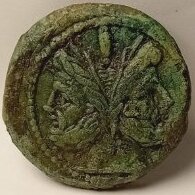
Salvatore Esposito Inviato 3 Gennaio, 2020 #1 Inviato 3 Gennaio, 2020 Buongiorno a tutti e buon anno a tutti. Ieri stato riorganizzando un po la mia piccola collezione di monete britanniche e ho notato qualcosa di strano in questa moneta da mezzo penny del 1771, sul dritto invece di George III (regnate di quel periodo), c'era George II che ha regnato fino al 1760. Ho fatto qualche ricerca ma non ho trovato nulla di uguale ma di simile in merito agli "evasion tokens". Queste monete fatte dai falsari dell'epoca di solito avevano un busto sul dritto - spesso una somiglianza di re Giorgio III, o qualche altra figura ben nota - e una Britannia seduta o un'arpa (per l'Irlanda) sul retro. Le leggende erano spesso senza senso. Invece di "George III Rex", il dritto potrebbe avere "George Rules", "George Reigns" o "George Sus-Sex". I falsari dell'epoca avevano vita facile perchè il cittadino medio dell'epoca era analfabeta, quindi non potendo leggere le leggende si doveva affidare solo al ritratto del Regnante. Non so se sul forum c'è un esperto di questa monetazione, ma anche questa moneta rientra in questa categoria? Cita
Salvatore Esposito Inviato 3 Gennaio, 2020 Autore #2 Inviato 3 Gennaio, 2020 Aggiungo le foto non perfette della moneta. 1 Cita
matteo95 Inviato 3 Gennaio, 2020 #3 Inviato 3 Gennaio, 2020 direi proprio di si , trattasi di un falso d'epoca... ti riporto un passo in inglese (spero non sia un problema) riguardo questo fenomeno The situation deteriorated even further in the following decades, with counterfeit halfpence being produced in both England and Ireland. Partly because of the counterfeiting problem no coppers were produced during the first twenty years of the reign of George III. When production started up again in 1770 the counterfeiters outdid themselves, far surpassing the production of the royal mint. As the principle concern of the counterfeiters was perpetrating a deception, we have no way of determining the actual number of counterfeits made in a particular year. Counterfeiters often made their coins look quite worn, some would not add a date or only put a partial date on the die. Also, they often used earlier dates to avoid detection, such as making 1771 dated halfpence in 1778, or making halfpence with dates and the image of the previous king George II. Realizing the inability to precisely date the year of issue of counterfeits, it is nevertheless interesting to observe in D.T. Batty's 1886 catalogue listing all of the varieties of halfpence he could find bearing the dates 1770-1775, there are 567 different varieties, of which 52 varieties were genuine issues and 515 were counterfeit issues. Within a year of the renewal of regal halfpence production it was clear the situation was out of control. Therefore in 1771 a new law was passed making counterfeiting a felony and placing penalties on distributors as well as minters. However, this did not stop the lucrative counterfeiting trade. Counterfeits continued to be produced and distributed. Now that there were severe penalties at home, several individuals started producing evasion coppers in large numbers for internal distribution, as these were not covered by the counterfeiting laws, and sending their counterfeit issue abroad. da https://coins.nd.edu/ColCoin/ColCoinIntros/CtfBrit.intro.html 1 Cita Awards
bavastro Inviato 3 Gennaio, 2020 #4 Inviato 3 Gennaio, 2020 (modificato) buongiorno e buon anno. Interessante quesito. Suppongo che lo scopo della contraffazione fosse il lucro sul peso del rame. Sarebbe interessante sapere il peso di questo falso, rispetto alla norma dei 9,86 grammi. Nel link seguente ulteriori esempi di evasion tokens: https://en.numista.com/catalogue/royaume-uni-24.html#c_royaume-uni2357 Modificato 3 Gennaio, 2020 da bavastro Cita Awards
Salvatore Esposito Inviato 3 Gennaio, 2020 Autore #5 Inviato 3 Gennaio, 2020 2 ore fa, bavastro dice: Sarebbe interessante sapere il peso di questo falso, rispetto alla norma dei 9,86 grammi L'ho appena misurata: Diametro 26 mm Peso 4,8 gr A tatto mi sembra più sottile rispetto a quelle vere, inoltre, ha anche un diametro leggermente inferiore. Cita
bavastro Inviato 5 Gennaio, 2020 #6 Inviato 5 Gennaio, 2020 Benissimo. E' la conferma di quello che sospettavi. Buona giornata. 1 Cita Awards
Salvatore Esposito Inviato 7 Gennaio, 2020 Autore #7 Inviato 7 Gennaio, 2020 Pensando al peso e al lucro che potevano avere, sono convinto che fondevano i Farthing (veri) che pesavano meno di 5 gr per coniane i 1/2 penny falsi. O semplicemente, invece di usare il branzo necessario per coniare un Farthing, coniavano un 1/2 penny. Cita
Risposte migliori
Unisciti alla discussione
Puoi iniziare a scrivere subito, e completare la registrazione in un secondo momento. Se hai già un account, accedi al Forum con il tuo profilo utente..