eracle62 Inviato 19 Aprile, 2019 #3076 Inviato 19 Aprile, 2019 1 ora fa, King John dice: Numismatica Ars Classica NAC AG, Auction 96, lot 1146, 6/10/2016 Greek Coins Ptolemaic Kings of Egypt. Ptolemy IV Philopator, 221-204 BC Octodrachm, Sidon circa 202-200 BC, AV 27.80 g. Description Diademed and draped bust r. Rev. ΠTOΛEMAIOY – ΦIΛOΠATOPOΣ Eagle standing r., with closed wings, on thunderbolt; in r. field, ΣΩ / ΣI. References Bank Leu Auction 52, 15 May, 1991, lot 136 (these dies) Condition Of the highest rarity, only two specimens known, and among the most spectacular gold Greek coins in existence. A magnificent portrait work of very skilled master engraver perfectly struck in high relief, a real masterpiece of Hellenistic art. Almost invisible marks, otherwise Virtually as struck and almost Fdc Provenance Numismatic Fine Arts sale XXV, 1990, 285 Ira & Larry Goldberg sale 72, 2013, 4111 The Hunter collection This extremely rare and intensely desirable octodrachm represents the pinnacle of Hellenistic portrait coinage although it was struck in connection with what was probably the greatest crisis for the Ptolemaic kingdom since its founding by Ptolemy I Soter (323-283/2 B.C.). Ptolemy V, known as Epiphanes, came to the throne at the young age of five when his father, Ptolemy IV, died. He was under the control of a cabal of ministers and courtiers, who already exercised excessive influence under his debauched father and who, upon Ptolemy IV’s death, immediately did away with his popular mother, Arsinöe III. This situation left the Ptolemaic kingdom in a precariously weak state, which the Antigonid Macedonian and Seleucid kings, Philip V and Antiochos III, plotted to use to their advantage. In 205 B.C., they agreed to divide the Ptolemaic possessions outside Egypt between them and while Philip V began attacks in Asia Minor and the Aegean Islands, Antiochos III embarked upon the Fifth Syrian War. Despite some early success in defending Phoenicia against Antiochos III, the total defeat of the Ptolemaic army at Panion in 201 B.C. guaranteed the successful Seleucid conquest of the region. Phoenicia was never again a Ptolemaic possession until Mark Antony presented (or sold) it to Cleopatra VII (51-30 B.C.) in what has become known as the Donations of Alexandria. Impressive gold denominations struck at Ptolemaic mints in Phoenicia were normally connected to preparations for war with the neighboring Seleucid kingdom (i.e. the dated issues of the Third and Fourth Syrian Wars) and the present octodrachm is no exception. It appears to have been struck at Sidon shortly after the intentions of Antiochos III became clear, apparently in order to fund defensive works and the massing of troops in the region on the eve of the Seleucid invasion. The mint is indicated by the ΣΙ mintmark in the right field of the reverse. The letters ΣΩ below the mintmark is commonly described as the signature of Sosibios, the chief Alexandrian minister under Ptolemy IV and at the beginning of that of Ptolemy V. However, Sosibios was deposed by his colleague Agathokles already in 203/2 B.C., that is, before the gold Ptolemy IB portrait series was struck. Thus the letters ΣΩ cannot stand for Sosibios and must refer to a different individual. The choice of types employed on this coin strongly suggests the dire situation in which the Ptolemaic kingdom found itself. The obverse of this octodrachm features a stunning portrait of Ptolemy IV in the best Hellenistic style and executed by a true master of the ancient engraver's art. The fine treatment of the king's facial features has led to the suggestion that they visually express his dissolute character, but this sort of interpretation has been strongly criticized in recent years for its basis in stereotype. The king is clearly not intended to appear foppish here: an unseen wind blows out the ends of his diadem giving him the air of a man of action, completely fearless and at ease when about to charge into the midst of the storm. Indeed, it is largely for this reason that Ptolemy IV appears on this issue of his young son and successor. His image serves not only to advertise the legitimacy of young Epiphanes in the face of his enemies, but perhaps more importantly to rally the kingdom around the son of a king who had previously held back an invasion by Antiochos III during the Fourth Syrian War (219-217 B.C.). At the head of an army including many untested native Egyptians, Ptolemy IV had defeated Antiochos III in an epic battle at Raphia, thereby saving the kingdom from conquest. The octodrachm portrait is simultaneously a reminder of that signal victory and an invocation for the deified victor of Raphia to aid the kingdom again in its hour of need. Also suggesting a call for divine protection against the invading Seleucids is the eagle type of the reverse. The eagle standing on a thunderbolt was established as the badge of the Ptolemaic dynasty already under Ptolemy I Soter. It is explained by a dynastic myth in which the child Ptolemy was saved from death by the timely intervention of an eagle serving the will of Zeus, the greatest of the Olympian gods. Since this type was normally reserved for silver issues, it is tempting to see it as having a special soteriological meaning here. Unfortunately, as it turned out, this beautiful golden prayer for protection from an embattled son to his divine father was not answered; Phoenicia and Koile Syria were lost to the Seleucids. ILLUSTRAZIONE: TESTA IN MARMO DI TOLOMEO IV FILOPATORE Non ho parole.. Di solito la conservazione la metto sempre in secondo piano, ma qui è imbarazzante a dir poco... Più osservo questi esemplari di monetazione classica, e maggior va il mio pensiero ai paragoni con i nummi di periodo successivo, con un ritratto cosi mi cade anche il Cellini... E poi quest'aquila da fare invidia alle aquile degli Augustali e dei Trionfi di Messina.. Questo ritratto è veramente di altissimo spessore incisorio.. Grazie per il contributo meraviglioso... 1 Cita
dabbene Inviato 20 Aprile, 2019 #3077 Inviato 20 Aprile, 2019 9 ore fa, King John dice: Numismatica Ars Classica NAC AG, Auction 96, lot 1146, 6/10/2016 Greek Coins Ptolemaic Kings of Egypt. Ptolemy IV Philopator, 221-204 BC Octodrachm, Sidon circa 202-200 BC, AV 27.80 g. Description Diademed and draped bust r. Rev. ΠTOΛEMAIOY – ΦIΛOΠATOPOΣ Eagle standing r., with closed wings, on thunderbolt; in r. field, ΣΩ / ΣI. References Bank Leu Auction 52, 15 May, 1991, lot 136 (these dies) Condition Of the highest rarity, only two specimens known, and among the most spectacular gold Greek coins in existence. A magnificent portrait work of very skilled master engraver perfectly struck in high relief, a real masterpiece of Hellenistic art. Almost invisible marks, otherwise Virtually as struck and almost Fdc Provenance Numismatic Fine Arts sale XXV, 1990, 285 Ira & Larry Goldberg sale 72, 2013, 4111 The Hunter collection This extremely rare and intensely desirable octodrachm represents the pinnacle of Hellenistic portrait coinage although it was struck in connection with what was probably the greatest crisis for the Ptolemaic kingdom since its founding by Ptolemy I Soter (323-283/2 B.C.). Ptolemy V, known as Epiphanes, came to the throne at the young age of five when his father, Ptolemy IV, died. He was under the control of a cabal of ministers and courtiers, who already exercised excessive influence under his debauched father and who, upon Ptolemy IV’s death, immediately did away with his popular mother, Arsinöe III. This situation left the Ptolemaic kingdom in a precariously weak state, which the Antigonid Macedonian and Seleucid kings, Philip V and Antiochos III, plotted to use to their advantage. In 205 B.C., they agreed to divide the Ptolemaic possessions outside Egypt between them and while Philip V began attacks in Asia Minor and the Aegean Islands, Antiochos III embarked upon the Fifth Syrian War. Despite some early success in defending Phoenicia against Antiochos III, the total defeat of the Ptolemaic army at Panion in 201 B.C. guaranteed the successful Seleucid conquest of the region. Phoenicia was never again a Ptolemaic possession until Mark Antony presented (or sold) it to Cleopatra VII (51-30 B.C.) in what has become known as the Donations of Alexandria. Impressive gold denominations struck at Ptolemaic mints in Phoenicia were normally connected to preparations for war with the neighboring Seleucid kingdom (i.e. the dated issues of the Third and Fourth Syrian Wars) and the present octodrachm is no exception. It appears to have been struck at Sidon shortly after the intentions of Antiochos III became clear, apparently in order to fund defensive works and the massing of troops in the region on the eve of the Seleucid invasion. The mint is indicated by the ΣΙ mintmark in the right field of the reverse. The letters ΣΩ below the mintmark is commonly described as the signature of Sosibios, the chief Alexandrian minister under Ptolemy IV and at the beginning of that of Ptolemy V. However, Sosibios was deposed by his colleague Agathokles already in 203/2 B.C., that is, before the gold Ptolemy IB portrait series was struck. Thus the letters ΣΩ cannot stand for Sosibios and must refer to a different individual. The choice of types employed on this coin strongly suggests the dire situation in which the Ptolemaic kingdom found itself. The obverse of this octodrachm features a stunning portrait of Ptolemy IV in the best Hellenistic style and executed by a true master of the ancient engraver's art. The fine treatment of the king's facial features has led to the suggestion that they visually express his dissolute character, but this sort of interpretation has been strongly criticized in recent years for its basis in stereotype. The king is clearly not intended to appear foppish here: an unseen wind blows out the ends of his diadem giving him the air of a man of action, completely fearless and at ease when about to charge into the midst of the storm. Indeed, it is largely for this reason that Ptolemy IV appears on this issue of his young son and successor. His image serves not only to advertise the legitimacy of young Epiphanes in the face of his enemies, but perhaps more importantly to rally the kingdom around the son of a king who had previously held back an invasion by Antiochos III during the Fourth Syrian War (219-217 B.C.). At the head of an army including many untested native Egyptians, Ptolemy IV had defeated Antiochos III in an epic battle at Raphia, thereby saving the kingdom from conquest. The octodrachm portrait is simultaneously a reminder of that signal victory and an invocation for the deified victor of Raphia to aid the kingdom again in its hour of need. Also suggesting a call for divine protection against the invading Seleucids is the eagle type of the reverse. The eagle standing on a thunderbolt was established as the badge of the Ptolemaic dynasty already under Ptolemy I Soter. It is explained by a dynastic myth in which the child Ptolemy was saved from death by the timely intervention of an eagle serving the will of Zeus, the greatest of the Olympian gods. Since this type was normally reserved for silver issues, it is tempting to see it as having a special soteriological meaning here. Unfortunately, as it turned out, this beautiful golden prayer for protection from an embattled son to his divine father was not answered; Phoenicia and Koile Syria were lost to the Seleucids. ILLUSTRAZIONE: TESTA IN MARMO DI TOLOMEO IV FILOPATORE Grande somiglianza nei busti, ma e’ più regale Tolomeo o l’aquila ? ? 1 Cita
King John Inviato 20 Aprile, 2019 Autore #3078 Inviato 20 Aprile, 2019 Nomos, Auction 7, lot 114, 15/05/2013 GREEK COINS Arkadia Pheneos. Circa 360-350 BC. Stater (Silver, 12.13 g 10). Head of Demeter to right, wearing grain wreath, elaborate disc and crescent earring with pendants, and pearl necklace. Rev. ΦENEΩN Hermes, nude but for his petasos and for a cloak over his shoulders, partially facing and moving to the left, holding a kerykeion in his right hand; his head is turned back to right to gaze at the infant Arkas, whom he holds on his left arm with his left hand and who raises his right hand towards Hermes’ face. BCD Peloponnesos 1617 ( this coin ). BMFA 1265 ( same dies ). Shultz 3.4, dies V2/R2 ( this coin ). Very rare. A lovely, toned and sharply struck coin of great freshness, beauty, and style. Extremely fine. From the Spina Collection and from the BCD Collection, LHS 96, 8 May 2006, 1617, and from a Peloponnesian Hoard found before 1937 (IGCH 60). The stater coinage of Pheneos was very small: it was struck from only three obverse and seven reverse dies. This means the actual output was probably fairly limited, especially since the first obverse die almost immediately broke and was destroyed. These coins were surely designed to pay mercenaries: the years around 360 were dangerous ones in Greece and there was a considerable amount of fighting going on. The fact that such beautiful coins were made for such a reason may seem surprising, after all soldiers could be paid just in bullion, but it once again shows that civic pride was a major factor in the way coins were conceived and designed. Here the head of Demeter is remarkably elegant, especially given how beautifully struck and sharp it is; as for Hermes and the infant Arkas on the reverse, one immediately thinks of the Hermes of Praxiteles, which was made in c. 343 in nearby Olympia. Cita Awards
King John Inviato 20 Aprile, 2019 Autore #3079 Inviato 20 Aprile, 2019 Roma Numismatics Limited, E-Sale 54, lot 405, 28/02/2019 Roman Provincial Caracalla Æ Medallion of Philadelphia, Lydia. Circa AD 214-217. Klaudios Kapitonos, archon for the first time. AYT K M AYP CЄYH ANTΩNЄINOC, laureate, draped and cuirassed bust right, seen from behind / ЄΠI ΚΛ ΚAΠITΩ[N]OC APX A [ΦΛ], the emperor, radiate and in the guise of Helios, standing heroically nude in a facing quadriga, his left and raising hand in salute; ΦΙΛΑΔЄΛΦЄΩΝ NЄΩKOPΩN in two lines in exergue. Burstein Collection 718 (same dies). 35.37g, 41mm, 5h. Very Fine; pierced three times with indentation on reverse, attractive pale green patina. Extremely Rare and of great historical interest. From the inventory of a German dealer. ILLUSTRAZIONE: BUSTO EROICO DI CARACALLA Cita Awards
King John Inviato 20 Aprile, 2019 Autore #3080 Inviato 20 Aprile, 2019 Numismatica Ars Classica NAC AG, Auction 59, lot 534, 4/04/2011 Syracuse Tetradrachm signed by Kimon circa 405-400, AR 16.99 g. Head of Arethusa facing three-quarters l., wearing pearl-shaped pendant and necklace over collier ornamented with pearls; hair flowing in loose tresses; across her forehead, ampyx on which the signature KIMWN. Around three dolphins emerging from curls and a fourth swimming downward; in l. field, SW. Above, outside dotted border, APEΘOΣA. Rev. ΣYPAK – OΣIΩN Fast quadriga driven l. by chiton -clad charioteer, holding kentron and reins; above, Nike floating r., holding wreath to crown the charioteer. Beneath the two further horses, an overset column ( meta ); in exergue, ear of barley l. Rizzo pl. XLVIII, 11 (these dies). SNG ANS 288 (these dies). Dewing 846 (these dies). AMB 473 (this reverse die). H. Cahn, Arethusa Soteira, in Essays Carson-Jenkins, 1 (this obverse die). Ognina hoard, SNR 57, 1978, pl. 31, 298 (these dies). Tudeer 81. Extremely rare and in exceptional condition for the issue. An enchanting portrait by the most celebrated master die engraver in sublime Classical style, struck on a full flan with an almost invisible trace of double striking on reverse, otherwise good extremely fine Certainly among the most influential coinages of the ancient Greeks, this set of dies rank among Kimon's finest. The obverse offers an arresting portrait of the nymph Arethusa, whose placid countenance is a foil to the hive of activity that surrounds it (and to the energetic scene on the reverse). First to catch the viewer's attention is Arethusa's hair, which flows wildly in all directions, though not to the detriment of her appeal; indeed, the fact that is flows back permits an unobstructed view of her beauty. Four dolphins artfully intertwine with the strands of Arethusa's hair: one at the right is shown in full, one at the left is nearly full, and only the faces of the remaining two are shown, one at each side. Kimon imparts a "playful quality" to these dolphins - a naturalistic triumph considering that is one of the most endearing features of these sea mammals. Even the dotted border is of interest, as it restrains the expansive power of Arethusa's image. Perhaps most masterful of all, though, is how Kimon incorporates three inscriptions into the design. His signature appears on the ampyx that restrains the nymph's hair; her name, Arethusa, is creatively placed at the top outside the border; and an abbreviation for "saviour" is so cleverly hidden among the dolphins and the strands of hair at the left that it was not acknowledged until very recently (H. A. Cahn, "Arethusa Soteira", Essays in honour of Robert Carson and Kenneth Jenkins, 1993, pp. 5-6). The reverse is equally masterful: here we observe a quadriga in high action, viewed at a slight angle, which allowed the artist to demonstrate his ability to convey perspective. Here, it would seem, we have a momentary snapshot of a victorious team after the meta: the driver, with his firm grip on the reins and his command of the goad, is restraining the horses, which rear up and toss their heads in all directions. Clearly Kimon captured a moment when a driver performs an unconventional, but masterful action that catches his team by surprise, yet, was necessary to secure a victory, as symbolised by the crowning of the driver by Nike. We may note that the border is a thin, solid line that does not distract us from the powerful scene; Kimon even delights in allowing the hoofs of the lead horse to break through the border. The combination of the obverse depicting "Arethusa the Savior" and the reverse dedicated to a victorious charioteer, and the remarkable quality of the dies, earmarks this as a commemorative issue. As such, it has been associated with historical events, principally the defeat of the Athenian fleet at Syracuse in 413 B. C. and, perhaps more likely, the good fate of the Syracusans in the otherwise devastating invasion of Sicily by the Carthaginians from 406 to 405 B. C. ILLUSTRAZIONE: Relief with Quadriga. A so-called “Small metope” of the temple X in Selinuntum (Sicily). Limestone of Menfi. 560 550 BCE. Palermo, Regional Archaeological Museum 1 Cita Awards
eracle62 Inviato 21 Aprile, 2019 #3082 Inviato 21 Aprile, 2019 16 ore fa, dabbene dice: Grande somiglianza nei busti, ma e’ più regale Tolomeo o l’aquila ? ? Sicuramente l'aquila a mio modesto parere è imbattibile nella sua fierezza, nell'espressività, nella sua sicurezza, nella sua superbia, nel suo messaggio di potere e come dici tu nella sua regalità! Mai più di ogni cosa la mano dell'artista che l'ha incisa, un piccolo capolavoro.. 1 Cita
eracle62 Inviato 21 Aprile, 2019 #3083 Inviato 21 Aprile, 2019 5 ore fa, King John dice: Numismatica Ars Classica NAC AG, Auction 59, lot 534, 4/04/2011 Syracuse Tetradrachm signed by Kimon circa 405-400, AR 16.99 g. Head of Arethusa facing three-quarters l., wearing pearl-shaped pendant and necklace over collier ornamented with pearls; hair flowing in loose tresses; across her forehead, ampyx on which the signature KIMWN. Around three dolphins emerging from curls and a fourth swimming downward; in l. field, SW. Above, outside dotted border, APEΘOΣA. Rev. ΣYPAK – OΣIΩN Fast quadriga driven l. by chiton -clad charioteer, holding kentron and reins; above, Nike floating r., holding wreath to crown the charioteer. Beneath the two further horses, an overset column ( meta ); in exergue, ear of barley l. Rizzo pl. XLVIII, 11 (these dies). SNG ANS 288 (these dies). Dewing 846 (these dies). AMB 473 (this reverse die). H. Cahn, Arethusa Soteira, in Essays Carson-Jenkins, 1 (this obverse die). Ognina hoard, SNR 57, 1978, pl. 31, 298 (these dies). Tudeer 81. Extremely rare and in exceptional condition for the issue. An enchanting portrait by the most celebrated master die engraver in sublime Classical style, struck on a full flan with an almost invisible trace of double striking on reverse, otherwise good extremely fine Certainly among the most influential coinages of the ancient Greeks, this set of dies rank among Kimon's finest. The obverse offers an arresting portrait of the nymph Arethusa, whose placid countenance is a foil to the hive of activity that surrounds it (and to the energetic scene on the reverse). First to catch the viewer's attention is Arethusa's hair, which flows wildly in all directions, though not to the detriment of her appeal; indeed, the fact that is flows back permits an unobstructed view of her beauty. Four dolphins artfully intertwine with the strands of Arethusa's hair: one at the right is shown in full, one at the left is nearly full, and only the faces of the remaining two are shown, one at each side. Kimon imparts a "playful quality" to these dolphins - a naturalistic triumph considering that is one of the most endearing features of these sea mammals. Even the dotted border is of interest, as it restrains the expansive power of Arethusa's image. Perhaps most masterful of all, though, is how Kimon incorporates three inscriptions into the design. His signature appears on the ampyx that restrains the nymph's hair; her name, Arethusa, is creatively placed at the top outside the border; and an abbreviation for "saviour" is so cleverly hidden among the dolphins and the strands of hair at the left that it was not acknowledged until very recently (H. A. Cahn, "Arethusa Soteira", Essays in honour of Robert Carson and Kenneth Jenkins, 1993, pp. 5-6). The reverse is equally masterful: here we observe a quadriga in high action, viewed at a slight angle, which allowed the artist to demonstrate his ability to convey perspective. Here, it would seem, we have a momentary snapshot of a victorious team after the meta: the driver, with his firm grip on the reins and his command of the goad, is restraining the horses, which rear up and toss their heads in all directions. Clearly Kimon captured a moment when a driver performs an unconventional, but masterful action that catches his team by surprise, yet, was necessary to secure a victory, as symbolised by the crowning of the driver by Nike. We may note that the border is a thin, solid line that does not distract us from the powerful scene; Kimon even delights in allowing the hoofs of the lead horse to break through the border. The combination of the obverse depicting "Arethusa the Savior" and the reverse dedicated to a victorious charioteer, and the remarkable quality of the dies, earmarks this as a commemorative issue. As such, it has been associated with historical events, principally the defeat of the Athenian fleet at Syracuse in 413 B. C. and, perhaps more likely, the good fate of the Syracusans in the otherwise devastating invasion of Sicily by the Carthaginians from 406 to 405 B. C. ILLUSTRAZIONE: Relief with Quadriga. A so-called “Small metope” of the temple X in Selinuntum (Sicily). Limestone of Menfi. 560 550 BCE. Palermo, Regional Archaeological Museum Qui con un tondello del genere c'è poco da scegliere, con un Aretusa sfavillante ed una quadriga dove ogni cavallo ha la sua personalità, e poi l'esergo, la Nike, la corsa folle... Sempre affascinate Siracusa.. 1 Cita
King John Inviato 21 Aprile, 2019 Autore #3084 Inviato 21 Aprile, 2019 Classical Numismatic Group, Mail Bid Sale 76, lot 183, 12/09/2007 TAURIC CHERSONESOS, Chersonesos. Circa 350-300 BC. Æ 20mm (6.61 g, 5h). Artemis Parthenos, holding torch, in quadriga right / Hoplite kneeling left, holding shield and spear. SNG BM Black Sea 734. Good VF, dark green-brown patina. From the Christopher Morcom Collection. Estimate: $500 ILLUSTRAZIONE: FREGIO DEL TEMPIO DI APOLLO A BASSAIA (L'ANTICA PHIGALEIA) CHE RAFFIGURA UNA BATTAGLIA CONTRO LE AMAZZONI Cita Awards
King John Inviato 21 Aprile, 2019 Autore #3085 Inviato 21 Aprile, 2019 Numismatica Ars Classica > Auction 114 Auction date: 6 May 2019 Lot number: 880 Lot description: The Roman Empire Constantine II caesar, 317 – 337. Medallion of five siliquae, Constantinople 11 May 330, AR 17.00 g. Head r., wearing rosette diadem. Rev. D N CONSTANTINVS – MAX TRIVMF AVG Roma, turreted and draped, seated r. on throne, head facing, holding globe and sceptre; l. foot on stool. On l. of throne, shield; in exergue, M CONS S. C –. Gnecchi –. Alföldi –. Toynbee –. RIC –. Hollard, BSFN 66, 2011, p. 95, 12 (this coin). Of the highest rarity, only the third and by far the finest specimen known. A medallion of tremendous historical importance struck to commemorate the foundation of Constantinopolis. An interesting portrait struck in high relief and a finely detailed representation of Roma on the reverse. Light iridescent tone. Virtually as struck and almost Fdc Ex Harlan J. Berk 100, 1998, 684 and Tkalec 23, 1998, 330 sales. This medallion was struck to commemorate the foundation of Constantinople on May 11, AD 330. Over the course of the third century it had become increasingly apparent that Rome was too far away from the borders for an Emperor to reside there and still be able to fend off the advances of Germanic peoples across the Rhine and Danube frontiers or to defend against the attacks of the Sasanian Persian Empire. Rome was also too steeped in its own history and traditions to adapt well to the novelties required by the age-such as autocratic emperors drawn from the ranks of the humble soldiery rather from the senatorial class, and Christianity, to name but two. While earlier military emperors and the Tetrarchy had tried to solve the problem by dividing up the Empire so that each tetrarch had his own territory to govern with his own capital, as sole ruler, Constantine's solution was to found a new capital on the site of the ancient Greek city of Byzantium. Its location on the Bosporus put it in close communication with the Danube frontier as well as in proximity to Syria and the frontier with the Sasanian Empire. Although Constantine certainly struck issues depicting the enthroned personification of Constantiopolis to celebrate the city foundation, this particular issue actually honours Rome rather than Constantine's new capital. It is true that the figure here is similar to depictions of Constantinopolis in that she wears a helmet, sits on a throne and holds a spear, but the presence of a shield on the ground beside her and her bared breast make it clear that the figure is intended to be Roma, the Amazonian personification of Rome. Rome appears here to show that the grandeur of her past was not forgotten as Constantine established his new city, but rather it was being transferred to Constantinople. As the Emperor would have it old Rome was merely being relocated to his new Rome on the Bosporos. To make this point, depictions of Roma and Constantinopolis appeared on their own coins struck for the same occasion under Constantine and his successors. Indeed, some issues even go so far as to show both Roma and Constantinopolis together holding a shield inscribed with imperial votae to further underline the point. We may gauge the success of Constantine's transference of old Rome to new Rome by the fact that down to the fall of Constantinople to the Ottoman Turks in 1453 the Emperors who resided continued to themselves in Greek as basileus Romaion, "King of the Romans." Estimate: 150000 CHF illustrazione: fontana della dea Roma in Campidoglio 1 Cita Awards
King John Inviato 21 Aprile, 2019 Autore #3086 Inviato 21 Aprile, 2019 Nomisma S.p.a. > Auction 58 6/11/2018 Lot number: 166 Price realized: 320 EUR (Approx. 365 USD) Note: Prices do not include buyer's fees. Lot description: Servilia - M. Servilius - Denario (100 a.C.) Testa di Roma a d. - R/ Scena di combattimento - B. 13; Cr. 327/1 AG (g 3,94) SPL+/qFDC Starting Price: 200 EUR ILLUSTRAZIONE: SCENA DI UN COMBATTIMENTO TRA UN SOLDATO ROMANO E UN GUERRIERO DACICO, TRATTA DALLA COLONNA TRAIANA Cita Awards
eracle62 Inviato 22 Aprile, 2019 #3087 Inviato 22 Aprile, 2019 6 ore fa, King John dice: Numismatica Ars Classica > Auction 114 Auction date: 6 May 2019 Lot number: 880 Lot description: The Roman Empire Constantine II caesar, 317 – 337. Medallion of five siliquae, Constantinople 11 May 330, AR 17.00 g. Head r., wearing rosette diadem. Rev. D N CONSTANTINVS – MAX TRIVMF AVG Roma, turreted and draped, seated r. on throne, head facing, holding globe and sceptre; l. foot on stool. On l. of throne, shield; in exergue, M CONS S. C –. Gnecchi –. Alföldi –. Toynbee –. RIC –. Hollard, BSFN 66, 2011, p. 95, 12 (this coin). Of the highest rarity, only the third and by far the finest specimen known. A medallion of tremendous historical importance struck to commemorate the foundation of Constantinopolis. An interesting portrait struck in high relief and a finely detailed representation of Roma on the reverse. Light iridescent tone. Virtually as struck and almost Fdc Ex Harlan J. Berk 100, 1998, 684 and Tkalec 23, 1998, 330 sales. This medallion was struck to commemorate the foundation of Constantinople on May 11, AD 330. Over the course of the third century it had become increasingly apparent that Rome was too far away from the borders for an Emperor to reside there and still be able to fend off the advances of Germanic peoples across the Rhine and Danube frontiers or to defend against the attacks of the Sasanian Persian Empire. Rome was also too steeped in its own history and traditions to adapt well to the novelties required by the age-such as autocratic emperors drawn from the ranks of the humble soldiery rather from the senatorial class, and Christianity, to name but two. While earlier military emperors and the Tetrarchy had tried to solve the problem by dividing up the Empire so that each tetrarch had his own territory to govern with his own capital, as sole ruler, Constantine's solution was to found a new capital on the site of the ancient Greek city of Byzantium. Its location on the Bosporus put it in close communication with the Danube frontier as well as in proximity to Syria and the frontier with the Sasanian Empire. Although Constantine certainly struck issues depicting the enthroned personification of Constantiopolis to celebrate the city foundation, this particular issue actually honours Rome rather than Constantine's new capital. It is true that the figure here is similar to depictions of Constantinopolis in that she wears a helmet, sits on a throne and holds a spear, but the presence of a shield on the ground beside her and her bared breast make it clear that the figure is intended to be Roma, the Amazonian personification of Rome. Rome appears here to show that the grandeur of her past was not forgotten as Constantine established his new city, but rather it was being transferred to Constantinople. As the Emperor would have it old Rome was merely being relocated to his new Rome on the Bosporos. To make this point, depictions of Roma and Constantinopolis appeared on their own coins struck for the same occasion under Constantine and his successors. Indeed, some issues even go so far as to show both Roma and Constantinopolis together holding a shield inscribed with imperial votae to further underline the point. We may gauge the success of Constantine's transference of old Rome to new Rome by the fact that down to the fall of Constantinople to the Ottoman Turks in 1453 the Emperors who resided continued to themselves in Greek as basileus Romaion, "King of the Romans." Estimate: 150000 CHF illustrazione: fontana della dea Roma in Campidoglio Un trionfo questo medaglione, per quello che vuole celebrare, e per la sua pregevole fattezza. Come si fa a non innamorarsi dei medaglioni... ti seguo.. 1 Cita
King John Inviato 22 Aprile, 2019 Autore #3088 Inviato 22 Aprile, 2019 Leu Numismatik AG > Auction 4 Auction date: 25 May 2019 Lot number: 426 Lot description: MYSIA. Attaea. Caracalla, 198-217. Tetrassarion (Bronze, 27 mm, 14.45 g, 7 h), Andronos, strategos. AY KAI M AYP ANTONЄINOC Laureate, draped and cuirassed bust of Caracalla to right, seen from behind. Rev. CTP ANΔPΩNOC ATTAIT/ΩN On the left, nude heros standing right, placing his left foot on rock and leaning on his left knee, facing Demos (?), on the right, standing facing, head to left, holding uncertain object in his right hand and scepter in his left. AMNG IV 407. BMC 12. SNG Paris 154 (same obverse die). SNG von Aulock 1083 and 7209 (same dies). Sharp and clear and with an attractive dark patina. Extremely fine. Estimate: 250 CHF ILLUSTRAZIONE: L'ATLETA DI LUSSINO, STATUA DEL I SECOLO A.C. Cita Awards
King John Inviato 22 Aprile, 2019 Autore #3089 Inviato 22 Aprile, 2019 Leu Numismatik AG > Auction 4 Auction date: 25 May 2019 Lot number: 464 PISIDIA. Termessus Major. Pseudo-autonomous issue. Diassarion (Bronze, 20 mm, 6.95 g, 6 h), time of the Antonines, 138-192. TЄPMЄI Bearded and cuirassed bust of the hero Solymos to left, wearing crested Corinthian helmet; breastplate decorated with aegis. Rev. COΛYMOC The hero Solymos, bearded and wearing crested Corinthian helmet, seated left, raising his right hand to mouth and leaning left on short sword. RPC IV online 8647. SNG Paris 2158 (same obverse die). A beautiful piece of unusually fine style and with attractive earthen highlights. Nearly extremely fine. Estimate: 250 CHF Cita Awards
King John Inviato 22 Aprile, 2019 Autore #3090 Inviato 22 Aprile, 2019 Leu Numismatik AG > Auction 4 Auction date: 25 May 2019 Lot number: 308 Lot description: KINGS OF SOPHENE. Arsames, circa 255-225 BC. Dichalkon (Bronze, 19 mm, 3.81 g, 12 h), first series. Head of Arsames to right, wearing bashlyk with beaded edges, tied with a diadem. Rev. [BA]ΣIΛEΩΣ / APΣAMOY Arsames on horseback to right, hurling javelin at two attacking soldiers; below his horse, a third, fallen enemy. Kovacs 1. Rare and undoubtedly among the finest known. In exceptional condition for this often crude issue, perfectly centered and with superb details. Somewhat smoothed, otherwise, nearly extremely fine. From an important collection of Armenian coins. Estimate: 750 CHF ILLUSTRAZIONE: CAVALIERI DEL REGNO DI SOPHENE Cita Awards
King John Inviato 22 Aprile, 2019 Autore #3091 Inviato 22 Aprile, 2019 Leu Numismatik AG > Auction 4 Auction date: 25 May 2019 Lot number: 429 Lot description: TROAS. Alexandria Troas. Pseudo-autonomous issue. 'As' (Bronze, 21 mm, 5.20 g, 12 h), time of Trebonianus Gallus, 251-253. CO ALEX TRO Turreted and draped bust of the city-goddess to right, with vexillum inscribed CO / AV behind. Rev. COL AVG / TRO On the left, cult statue of Apollo Smintheos standing right, holding patera in his right hand and bow in his left and with quiver over shoulder; on the right, Alexander 'the Great' riding left towards the god, raising his right arm in salute. Bellinger A475. RPC IX 468. A beautifully struck piece with lovely earthen highlights. Nearly extremely fine. Estimate: 200 CHF ILLUSTRAZIONE: ALESSANDRO IL GRANDE 1 Cita Awards
eracle62 Inviato 22 Aprile, 2019 #3092 Inviato 22 Aprile, 2019 4 ore fa, King John dice: Leu Numismatik AG > Auction 4 Auction date: 25 May 2019 Lot number: 429 Lot description: TROAS. Alexandria Troas. Pseudo-autonomous issue. 'As' (Bronze, 21 mm, 5.20 g, 12 h), time of Trebonianus Gallus, 251-253. CO ALEX TRO Turreted and draped bust of the city-goddess to right, with vexillum inscribed CO / AV behind. Rev. COL AVG / TRO On the left, cult statue of Apollo Smintheos standing right, holding patera in his right hand and bow in his left and with quiver over shoulder; on the right, Alexander 'the Great' riding left towards the god, raising his right arm in salute. Bellinger A475. RPC IX 468. A beautifully struck piece with lovely earthen highlights. Nearly extremely fine. Estimate: 200 CHF ILLUSTRAZIONE: ALESSANDRO IL GRANDE Questo è un tondello molto interessante per l'aspetto stilistico, quasi difforme il dritto dal rovescio, come se le mani dell'incisore fossero due.. Piacevolissima la città turrita e Alessandro il Grande in pompa magna sul fedelissimo Bucefalo... Particolare del Mosaico di Alessandro, Museo Archeologico Nazionale di Napoli Alessandro doma Bucefalo, Villa della Farnesina, Roma 1 Cita
King John Inviato 23 Aprile, 2019 Autore #3093 Inviato 23 Aprile, 2019 (modificato) Leu Numismatik AG > Auction 4 Auction date: 25 May 2019 Lot number: 356 Lot description: ARMENIA. Artaxata (?). Octachalkon (Bronze, 21 mm, 10.58 g, 1 h), circa mid 1st century BC. Turreted and draped bust of the city-goddess to right. Rev. A[PT?]A[...] Five-pointed Armenian tiara to left. Kovacs -. Unpublished and unique. A fascinating and highly important issue. Very fine. From an important collection of Armenian coins. Given that all previously known civic Armenian issues avoid Royal types, the emergence of a coin showing an Armenian tiara is both surprising and exciting. Unfortunately, the legend on the reverse is incomplete: we can only read A[..]A..., which perhaps stands for Artagigarta or Artaxata. However, as all the known civic coins from Artagigarta carry the city name in the form of a monogram, it is much more likely that the present coin was issued by the city of Artaxata, perhaps in the early 50s BC, like Kovacs 213-217. On the other hand, it has to be pointed out that the Armenian tiara on the reverse resembles the very rare Royal issue of Artaxias III-Zeno (18-35 AD) with Tiberius (Kovacs 189), but the rather crude flan and style do speak against such a late dating. Estimate: 2000 CHF ILLUSTRAZIONE: TIARE ARMENE Modificato 23 Aprile, 2019 da King John 1 Cita Awards
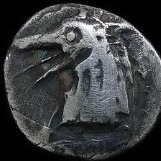
King John Inviato 23 Aprile, 2019 Autore #3094 Inviato 23 Aprile, 2019 Classical Numismatic Group, Triton VII, lot 257, 12/01/2004 CARIA, Kaunos. Circa 470-450 BC. AR Stater (11.61 gm). Estimate $2000 CARIA, Kaunos. Circa 470-450 BC. AR Stater (11.61 gm). Winged female figure running right, head left, holding caduceus and wreath / Baetyl(?) in incuse square, small horn-like projection (handles?) on apex of baetyl. Konuk 79 (O24/R21); Troxell, Winged 24; SNG Helsinki 822; SNG Kayhan 790; Kunstfreund 166 (this coin). Lightly toned, good VF, small split on edge, good metal quality. ($2000) Ex Kunstfreund Collection (Leu & Münzen und Medaillen, 28 May 1974), lot 166. 1 Cita Awards
dabbene Inviato 23 Aprile, 2019 #3095 Inviato 23 Aprile, 2019 1 ora fa, King John dice: Classical Numismatic Group, Triton VII, lot 257, 12/01/2004 CARIA, Kaunos. Circa 470-450 BC. AR Stater (11.61 gm). Estimate $2000 CARIA, Kaunos. Circa 470-450 BC. AR Stater (11.61 gm). Winged female figure running right, head left, holding caduceus and wreath / Baetyl(?) in incuse square, small horn-like projection (handles?) on apex of baetyl. Konuk 79 (O24/R21); Troxell, Winged 24; SNG Helsinki 822; SNG Kayhan 790; Kunstfreund 166 (this coin). Lightly toned, good VF, small split on edge, good metal quality. ($2000) Ex Kunstfreund Collection (Leu & Münzen und Medaillen, 28 May 1974), lot 166. Fantastiche queste prime monete dell’umanita’ con simbologie e incuso, anche questa estremamente significativa e dal gran pedigree ... 1 Cita
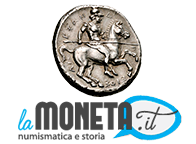
VALTERI Inviato 23 Aprile, 2019 #3096 Inviato 23 Aprile, 2019 Da Tindari, una interessante piccola, forse non comune, moneta in bronzo . Al rovescio, a cavallo, uno dei Dioscuri : dunque guerriero ed Argonauta . Al diritto, curiosamente, non il fratello bensì (forse) la sorella : quella Elena alla quale i miti dei Greci debbono molto . 1 Cita
eracle62 Inviato 23 Aprile, 2019 #3097 Inviato 23 Aprile, 2019 12 ore fa, King John dice: Leu Numismatik AG > Auction 4 Auction date: 25 May 2019 Lot number: 356 Lot description: ARMENIA. Artaxata (?). Octachalkon (Bronze, 21 mm, 10.58 g, 1 h), circa mid 1st century BC. Turreted and draped bust of the city-goddess to right. Rev. A[PT?]A[...] Five-pointed Armenian tiara to left. Kovacs -. Unpublished and unique. A fascinating and highly important issue. Very fine. From an important collection of Armenian coins. Given that all previously known civic Armenian issues avoid Royal types, the emergence of a coin showing an Armenian tiara is both surprising and exciting. Unfortunately, the legend on the reverse is incomplete: we can only read A[..]A..., which perhaps stands for Artagigarta or Artaxata. However, as all the known civic coins from Artagigarta carry the city name in the form of a monogram, it is much more likely that the present coin was issued by the city of Artaxata, perhaps in the early 50s BC, like Kovacs 213-217. On the other hand, it has to be pointed out that the Armenian tiara on the reverse resembles the very rare Royal issue of Artaxias III-Zeno (18-35 AD) with Tiberius (Kovacs 189), but the rather crude flan and style do speak against such a late dating. Estimate: 2000 CHF ILLUSTRAZIONE: TIARE ARMENE Tondello semplice, grezzo ed essenziale, però con tanto simbolismo, la Tiara Armena e la città turrita, iconografie che poi ritroviamo nel tempo, e l'unicità dell'esemplare fanno il resto, a volte basta poco... 1 Cita
dabbene Inviato 24 Aprile, 2019 #3098 Inviato 24 Aprile, 2019 A volte leggendo questa splendida discussione mi vien da pensare certo su questo forum ci potrebbe essere più partecipazione, condivisione, collaborazione però fin che ci sono e ci saranno discussioni che sono la divulgazione con la D maiuscola come questa, ma ce ne sono in corso anche altre per non parlare di quelle del passato, possiamo dire la numismatica e’ anche qui, leggetele e riflettete su questi capolavori artistici e simbolici e lunga vita a tutto ciò ! 1 Cita
King John Inviato 24 Aprile, 2019 Autore #3099 Inviato 24 Aprile, 2019 Bertolami Fine Arts - ACR Auctions - Auction 52, Lot 50 Sicily, Segesta, Onkia, ca. 420-400 BC; AE (g 3,38; mm 15; h 3); Head of nymph r., Rv. Hound standing r., looking back; hare beneath; above, °. Cf. CNS -; SNG ANS -; HGC 2, -. Very rare, brown patina; minor tooled, otherwise about extremely fine. Estimate: 300 GBP 1 Cita Awards
King John Inviato 24 Aprile, 2019 Autore #3100 Inviato 24 Aprile, 2019 Nomos, Auction 4, lot 1166, 10/05/2011 Coins of Thessaly, the BCD Collection Larissa First half of the 4th century BC. Dichalkon (Bronze, 17mm, 6.30 g 12). Head of the nymph Larissa to right, wearing a grain wreath, double-pendant earring, simple necklace and with her hair tied into a bun at the back. Rev. LARI - S - AIWN ( last letters retrograde ) Armored horseman wearing crested Phrygian helmet riding right, holding couched lance. Rogers -. Apparently unpublished . An attractive and stylish coin with a fine golden-brown patina. About extremely fine. The reverse type of this coin is very reminiscent of the silver drachms struck just prior to the mass issues of the late 350s-340s (as above, lot 1152). A note from BCD : About two centuries later this coin served as the prototype for another issue of Larissa (see below, lot 1172.1) . 1 Cita Awards









Risposte migliori
Unisciti alla discussione
Puoi iniziare a scrivere subito, e completare la registrazione in un secondo momento. Se hai già un account, accedi al Forum con il tuo profilo utente..