giarea Inviato 16 Ottobre, 2016 #26 Inviato 16 Ottobre, 2016 ...e dai @Numbus speriamo che il tuo amico ci faccia vedere queste foto... magari riusciamo a scoprire qualcosa... questo tondello personalmente mi sta appassionando molto... sono curioso!!!1 :-) Cita
monetiere Inviato 19 Ottobre, 2016 #27 Inviato 19 Ottobre, 2016 Secondo me l'animale nel dritto della moneta è un coleottero. A destra si possono distinguere le sue mandibole. Nel rovescio invece, mi sembra di intravedere la lettera S nel campo. Che si tratti di una moneta di siena? Cita
Numbus Inviato 19 Ottobre, 2016 Autore #28 Inviato 19 Ottobre, 2016 ecco le nouve foto. si vede un po meglio Cita
monetiere Inviato 19 Ottobre, 2016 #29 Inviato 19 Ottobre, 2016 Guardando meglio le nuove foto mi accorgo che in effetti quello al dritto è uno scorpione. Cosa c'è nel rovescio adesso non me ne rendo proprio conto Cita
monetiere Inviato 19 Ottobre, 2016 #30 Inviato 19 Ottobre, 2016 Facendo delle accurate ricerche, ho scoperto che lo scorpione nella tradizione orientale, è raffigurato in alcune monete,infatti,in rete ho trovato 2 monete(entrambe in oro):una di area islamica, e l'altra ebraica. Potrebbe aiutarvi nell'identificazione? Cita
giarea Inviato 19 Ottobre, 2016 #31 Inviato 19 Ottobre, 2016 ciao @monetiere prova a postare il link, oppure le foto di cosa hai trovato in rete, magari potrebbe essere di aiuto nell'identificazione.... Cita
giarea Inviato 19 Ottobre, 2016 #32 Inviato 19 Ottobre, 2016 @Numbus le foto sono decisamente migliori, si intravedono molti particolari in più.... ma personalmente non mi fanno venire in mente nulla.... per ora!!! ma ci riusciremo!!! a presto.... Cita
monetiere Inviato 19 Ottobre, 2016 #33 Inviato 19 Ottobre, 2016 Ecco qui,in fondo c'è la moneta con lo scorpione. Feb 20 2013Coins Lot 105: Vijayanagara, Krishnadevaraya(1509-30), AV presentation Double-Pagoda, 7.79g, Venkateshwara standing facing under arch ornamented withmakaras,rev. Devanagari legend sri krishna raya. This coin is unusual firstly because of its weight, double that of a normal pagoda orvarahacoin, and secondly on account of its obverse image. Krishnadevaraya identified strongly with the Vaishnava deity Krishna, and went to some lengths to promote himself as the representative of this god on earth, as his name might imply (translated as 'Krishna god king'). All his gold currency coins bore the image of Balakrishna (Krishna as a baby), and his 'liberation' of a statue of this deity from the Gajapati dynasty at Udayagiri, was marked by the building of a huge dedicated temple to house it at his capital. Yet this coin bears an image of Vishnu as Venkateshwara standing under an arch. The form his image takes immediately identifies it as the icon of the Vaishnavite temple at Tirupati, renowned as one of the most important, and certainly the most wealthy, in South India. The donations that Krishnadevaraya made in the course of his seven visits to this temple are inscribed into the wall in stone. The most pertinent is that of July 1514, when he and his two queens, Tirumala Devi and Chinna Devi , made a detour to Tirupati specifically to give thanks to Venkateshwara after his conquest of Udayagiri. This occasion was marked by aKanakabhishekam(shower of gold) ceremony where this deity was endowed with 30,000 gold coins. It is thought likely that this coin might have been struck especially as a donative issue for this single occasion. Certainly the few known examples of this type exhibit almost no signs of wear, as if they had never circulated. One might wonder how these coins ever left the temple treasuries. However, it is well known that in later, more turbulent, times the temple at Tirupati was hotly contested as ownership gave rights over the renowned treasury, and there is evidence that its riches were often plundered to fund military campaigns in the late 17th and 18th centuries. The content of the treasury has been investigated only recently, and it was discovered that barely any of the original magnificent objects donated by Krishnadevaraya remain. Lot 117: Mughal Empire, Jahangir(1605-28), AV Mohur, 10.90g, Ajmir, AH1023, yr.9, Jahangir seated on a cushioned throne holding a goblet left,qaza-e-bar sikka zad kard tasvir / shabbih-e-hazrat shahe Jahangir(destiny has drawn the portrait of His Majesty Shah Jahangir on (this) coin of gold), rev. sun within a beaded square border with mint name left and regnal year right, legend above and belowhuruf-e-jahangir wa allahu akbar / za roz-e-aowal dar 'ahad shud brabar(from the beginning of time the letters of Jahangir and Allahu Akbar are equal in numerical value). Jahangir established his court at an imperial camp at Ajmir for his campaign against the Rana of Mewar in 1613 and remained there until 1616. It was home to the mausoleum of the Muslim saint Khwaja Mu'in ud-din Chishti, who, before his death, was said to have interceded on behalf of Akbar to give him a son. As this son was Jahangir himself Ajmir already held a special significance for him, which was only increased when he was cured of an illness after a visit to the shrine. Wearing a pearl embedded in the earlobe was a sign of devotion to this saint, and Jahangir decided that he and his courtiers would start wearing pearls in his honour. Sir Thomas Roe, envoy of the East India Company paid court to him here during his sojourn at Ajmir, as did a man who informed him that, under the Abjad system, where each letter of the Arabic alphabet stands for a number, the letters of his name and that of Allahu Akbar added up to the same number. Whitehead conjectures (Numismatic Chronicle, 1928-29, p.24) that these two events prompted the striking of this coin and the otherwise recondite couplet on the reverse. He further suggests that the word 'Mu'in' inserted above the regnal year is also in honour of Mu'in ud-din Chishti. This very rare piece is one of the last of the series of portrait coins struck by Jahangir. It is likely that their appearance was prompted more by an appreciation of figurative art than in rebellion against strict Muslim edicts against it. It appears to be the same coin sold at Spink auction 102, 2nd March 1994, lot 509. Lot 118: Mughal Empire, Jahangir,AV Zodiac Mohur, 10.91g, Scorpio, Agra, AH1032, yr.17,az jahangir shah, shah-e akbar yaft dar agra ruye zar zewar(the face of gold received ornaments at Agra from Jahangir Shah, (son of) Shah Akbar), rev. scorpion right within a sunburst. During the first month of Jahangir's 13th regnal year he wrote ' previous to this, the rule of coinage was that on one face of the metal they stamped my name, and on the reverse the name of the place, and the month and year of the reign. At this time it entered my mind that in place of the month they should substitute the figure of the constellation which belonged to that month; for instance, in the month of Farwardin the figure of a ram, and in Ardibihisht the figure of a bull…..' The idea for the zodiac coins was thus clearly that of Jahangir alone, although his father, Akbar was responsible for the introduction of the Ilahi dating system which counted in solar years, and first utilised the Persian names for the twelve months on coins. Agra is by far the most common mint for these coins, where they are known in regnal years from 13 to 19. The scorpion is found facing both right and left on these coins, and is rare in this condtion. Cita
monetiere Inviato 19 Ottobre, 2016 #34 Inviato 19 Ottobre, 2016 Queste sono altre informazioni prese da un altro sito relative alla stessa moneta del messaggio precedente MUGH-36 Click on image for enlargement. Indian Coins, Mughal. Nuruddin Jahangir , 1605-1627 AD, Gold Mohur (11.14 grams; 20.75 mm.), die-axis 11 o'clock. Obv. Scorpion (Scorpio) . Scorpion tail to right surrounded by solar rays, within double circles with dots between. Rev. Persian legend, YAFT DAR AGRA RUE ZAR ZEWAR AZ JAHANGIR SHAH AKBAR SHAH The face of money received beauty at Agra through Jahangir Shah, (son of) Akbar Shah, AH year 1030, (regnal year 16), within double circles with dots between. Extremely fine. This extremely rare type is genuine gold coin of the Imperial mints class A, seldom found outside museum collections. Islam prohibits displaying the images or idols of human or animals. As soon as Shah Jahan came to throne, he imposed a death penalty for the use of these coins as well as those having the portrait or animal signs and ordered that they should be returned to the royal mint and melted. And for this reason, these coins are now rarely seen in museums or private collections, these coins are extremely rare. It is important to distinguish the early strucks which were official issues of the Mughal court, from the later imitations, which are private strike made for purposes of bullion accumulations, or for the deception of collections. Because of it tremendous popularity, it was extensively imitated, copy and restruck ever since it was recalled from circulation. If one does not find the die similarity, one should treat them with caution. The coin is die-identical with the specimen in the collection of the Metropolitan Museum of Art, New York, U.S.A. Refer to Classical Numismatic Group, Inc. Numismatists have devided the portrait and zodiac series mohurs into four classes: Class A: undisputed original strikes, characterized by deep relief, somewhat uneven flans, and rounded calligraphy. Class B: possibly original strikes, but more likely minted in the first decade or two following Jahangir's death. The relief is shallower, of a more uniform appearance, and the calligraphy is more square. Class C: mohurs class A or B that have had the zodiac type remove and re-engraved. Class D: later imitations and forgeries. Cita
monetiere Inviato 19 Ottobre, 2016 #36 Inviato 19 Ottobre, 2016 Questa però credo che sia romana Scorpions have been mentioned. Here is a prominent one:King Antiochus IV of Commagene, AD 38-72.He was appointed king by Caligula. The coin was struck at Samosota.29 mm. 14.31 gramsReverse type: Scorpion in laruel wreath. Inscription KOMMA<gamma> HNON Cita
gigetto13 Inviato 19 Ottobre, 2016 #37 Inviato 19 Ottobre, 2016 vi prego torniamo in tema. La moneta (o meglio l'oggetto) non è antica. E' verosimilmente medioevale o moderna. a questo punto escluderei l'area italiana, altrimenti sarebbe ormai già stata identificata sul forum. Cita
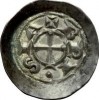
Questo è un post popolare pozleo Inviato 19 Ottobre, 2016 Questo è un post popolare #38 Inviato 19 Ottobre, 2016 Dopo un'assenza prolungata da lamoneta entro e vedo una tessera misteriosa che fa parte di una piccola serie di cui si conoscono pochissimi esemplari. Non so neppure se italiana o francese. Banti ne ha pubblicate tre, una con lo scorpione, un'altra col giglio e la terza con un leone. Non sono tessere mercantili, forse gettoni di conto o tessere d'altro tipo. Per ora ho l'immagine di quella con lo scorpione. Attorno alla lettera nel campo A la legenda è IVSTITIA. Quella attorno allo scopione non l'ho ancora decifrata. Nei prossimi giorni allego le altre. Dimenticavo, un'altra con scorpione è nel Medagliere Milanese. saluti Pozleo 13 Cita
giarea Inviato 20 Ottobre, 2016 #39 Inviato 20 Ottobre, 2016 Buon Giorno @pozleo grazie mille per il tuo intervento è stato decisivo :-) un saluto. Cita
Numbus Inviato 20 Ottobre, 2016 Autore #40 Inviato 20 Ottobre, 2016 (modificato) @pozleo sei un grande. Riesci a postare il link al catalogo dove viene descritta la tessera/gettone per favore? Grazie a tutti per l'impegno profuso in questa identificazione. E' sempre bello vedere la passione che si mette su questo forum. Modificato 20 Ottobre, 2016 da Numbus 1 Cita
Numbus Inviato 20 Ottobre, 2016 Autore #41 Inviato 20 Ottobre, 2016 (modificato) La grande A sembra indicare che sia un bolognino...forse per ancona o modena. Inrotno allo scorpione leggo GSAR (coda delo scoprione) D Modificato 20 Ottobre, 2016 da Numbus Cita
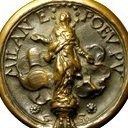
pozleo Inviato 21 Ottobre, 2016 #42 Inviato 21 Ottobre, 2016 Allego immagini di quattro tipi di tessera collegati con lo scorpione- Non saprei come definirli. Mi sembrano comunque dei Jetons o gettoni di conto, forse d'area transalpina (Francia o Belgio) In ordine sono: Banti n.769, Banti 326 (con giglio fiorentino); Banti 760 (AVE MARIA GRATI.P:); il quarto Coll.Priv. con IE SVIS DE LATON B (io sono di buon ottone) tipico dei mereaux francesi. Il catalogo è Alberto Banti, Tessere Mercantili Italiane in uso fra i secoli XIII-XV, Vol. lI-II, Firenze 2000. Le foto sono mie. Le legende dei R/ sia dello scorpione che del giglio sono per ora misteriose. Più di questo non trovo. Salutoni pozleo 1 Cita
savoiardo Inviato 8 Gennaio, 2019 Supporter #43 Inviato 8 Gennaio, 2019 Aggiorno questa vecchia discussione perché mi hanno fatto avere le immagini di un secondo "tondello" uguale a quello di questa discussione.. Potrebbe servire per riuscire ad interpretare qualcosa di più delle legende. Da un lato lo stesso scorpione e dall'altro si vede bene una M oppure il simbolo del segno scorpione. Chiamo in causa anche @pozleo che in questa discussione è stato fondamentale. Cita



Risposte migliori
Unisciti alla discussione
Puoi iniziare a scrivere subito, e completare la registrazione in un secondo momento. Se hai già un account, accedi al Forum con il tuo profilo utente..