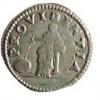
mjovica Inviato 20 Luglio, 2019 #1 Inviato 20 Luglio, 2019 Hello everybody, I would appreciate it if anyone could provide more info about this coin. I suppose it's minted by a Germanic tribe, probably Gepids, in late 5 th or 6 th century AD. Some kind of pseudo-imperial coinage, 1.67g, 16mm, 6h, I believe it came from Timok valley (east Serbia, close to the Serbian-Bulgarian border). This area was near Gepid territory. The coin reminded me of the one posted here: https://www.lamoneta.it/topic/152349-un-tremisse-a-imitazione-di-un-solido/. Thank you. 1 Cita
isaia_67 Inviato 22 Luglio, 2019 #2 Inviato 22 Luglio, 2019 La legenda mi pare molto strana e senza senso. Anche il bordo così incurvato mi lascia dei dubbi... Cita
gpittini Inviato 24 Luglio, 2019 #3 Inviato 24 Luglio, 2019 (modificato) DE GREGE EPICURI @mjovicaNella sezione "Identificazioni" è già stato risposto, confermando trattarsi di coniazione pseudo-imperiale. Immagini rozze e semplificate, e al posto della normale legenda, la ripetizione della lettera Y sia al diritto che al rovescio; in esergo una serie di O. Queste ripetizioni, per le monete costantiniane, sono tipiche dell'Europa Centrale ed Orientale (Pannonia, ecc.); credo però sia impossibile identificare la localitàdi emissione. Difficile per me anche collocarla nel tempo (IV, improbabile, o V secolo? o addirittura VI?) La moneta sembra scodellata, il che è strano per le imitative. Mi sorge anche un dubbio sul metallo: penso sia rame, ma il colore può far pensare all'oro, vista anche la citazione ed il link. Modificato 24 Luglio, 2019 da gpittini Cita
mjovica Inviato 25 Luglio, 2019 Autore #4 Inviato 25 Luglio, 2019 Dear friends @gpittini, @isaia_67 thank you for the time and effort. In the past few days I found more information about the coin. Here are my assumptions: Whoever engraved the coin was illiterate, however, judging by the number of symbols on the obverse and reverse, we can assume that the prototype for manufacture was a tremissis of Zeno, RIC X 914, which has 13 symbols on the obverse (D N ZENO – PERP AVG). The letters are also distributed in the same way (6+7). A less probable prototype is RIC X 611 Leo I. The number of letters on the obverse is 14 (DN LEO PE-RPT AVG). The layout is 7+7, except for the imitation found here: https://www.coinarchives.com/a/lotviewer.php?LotID=1479354&AucID=3058&Lot=546&Val=e392bea113dd3f91f5debfd816c1d57a DN LEO P-ERPT AVC, 13 letters, 6+7, same as my coin. In the lot with the tremissis was also a coin of Leo I (RIC X 694), and a couple pieces of cut coinage (all from the same location). This leads me to believe that there wasn’t enough money in circulation, which may be the reason for a local ruler to start minting his own money, or accept an obvious imitation in a trade (which seems more probable). The tremissis is almost certainly pure gold, the color is different on the photographs, but might be closer to the original in the attachments. 2 Cita
Arka Inviato 30 Luglio, 2019 #5 Inviato 30 Luglio, 2019 La moneta è un tremisse in oro. E' sicuramente barbarica e non è stata coniata in Italia e non è Visigota. Queste sono le mie certezze. Credo che imiti il tremisse di Giustino e non di Zeno. Somiglia alle Merovinge del tipo MEC 1, 362-372. E' sicuramente una moneta interessante da studiare. Arka Diligite iustitiam 1 Cita
mjovica Inviato 31 Luglio, 2019 Autore #6 Inviato 31 Luglio, 2019 On 7/30/2019 at 5:24 PM, Arka said: The coin is a tremisse in gold. It is certainly barbaric and was not minted in Italy and is not Visigoth. These are my certainties. I believe he mimics Giustino's and not Zeno's tremisse. It resembles the Merovingians of the type MEC 1, 362-372. It is certainly an interesting currency to study. Arka Diligite iustitiam @Arka I looked at MEC 1 362-372, and I see what you mean. It will certainly be interesting to learn more about my coin. Thanks. Cita
Risposte migliori
Unisciti alla discussione
Puoi iniziare a scrivere subito, e completare la registrazione in un secondo momento. Se hai già un account, accedi al Forum con il tuo profilo utente..