planetetour Inviato 9 Dicembre, 2025 #1 Inviato 9 Dicembre, 2025 Dear experts, Your opinion about this coin ? https://www.hjbltd.com/#!/inventory/item-detail/ancient-coins/110380 Cita
skubydu Inviato 9 Dicembre, 2025 #2 Inviato 9 Dicembre, 2025 7 ore fa, planetetour dice: Dear experts, Your opinion about this coin ? https://www.hjbltd.com/#!/inventory/item-detail/ancient-coins/110380 Sicily, Messana; ca. 420-413 BC, Tetradrachm, 28.74g. SNG ANS-372, Rizzo-8, BMC-42, HGC-790. Obv: Nymph Messana appears draped and facing left as she guides a mule-drawn two‑horse chariot in the same direction. She holds the reins in her left hand and a goad in her right, with the legend ΜΕΣΣΑΝ above and two dolphins facing each other beneath the ground line. Rx: ΜΕΣΣΑΝΙΟΝ accompanies a hare shown leaping left; below it, an ear of grain with two leaves extends to the left.Biga driver flatly-struck. Virtually MS Cita
skubydu Inviato 9 Dicembre, 2025 #3 Inviato 9 Dicembre, 2025 Per uno studio della moneta é importante partire dagli esemplari conosciuti e dai riferimenti indicati nel testo. Ans 372 g. 16,95 Trovo strano non abbiano citato il testo della Caltabiano, testo base per la catalogazione di Messana caltabiano 511 Cita
skubydu Inviato 9 Dicembre, 2025 #5 Inviato 9 Dicembre, 2025 (modificato) Sicuramente nel testo di berk c è un errore nel peso. Non può pesare 28,74 g. Modificato 9 Dicembre, 2025 da skubydu Cita
roby14 Inviato 9 Dicembre, 2025 #6 Inviato 9 Dicembre, 2025 42 minuti fa, skubydu dice: Sicuramente nel testo di berk c è un errore nel peso. Non può pesare 28,74 g. Esatto...la stessa moneta nel passaggio in asta da Astarte un anno e mezzo fa riportava (Silver, 28.74 mm, 17.18 g) per quello che vale il mio parere, è una bellissima moneta che non lascia spazio ad alcun dubbio. Se devo fare un appunto è solo alla tirata a lucido a cui è stata sottoposta... Cita
Lelouch Inviato 10 Dicembre, 2025 #7 Inviato 10 Dicembre, 2025 Ciao a tutti, I have noticed that many auction houses label Messana (the female figure on the coins) as a nymph. If possible, could you let me know if Caltabiano also labels Messana as a nymph? Cita
numa numa Inviato 10 Dicembre, 2025 Supporter #8 Inviato 10 Dicembre, 2025 (modificato) Hello Lelouch I checked the Caltabiano text: she speaks for these issues of a feminine ‘auriga’ . At least at a superficial check I could not see any mention of a nymph ( also a bit incongruous if I may, for a nymph to be represented with auriga functions ). Modificato 10 Dicembre, 2025 da numa numa 1 Cita
Lelouch Inviato 10 Dicembre, 2025 #9 Inviato 10 Dicembre, 2025 Grazie mille, Numa. I was wondering, but Caltabiano has confirmed it, there is actually no nymph named Messana. The auction houses are all wrong and made her completely Messana up. No ancient texts refer to a nymph Messana either. Thucydides writes as well the Anaxilas renamed Messana after Messine, not after a nymph like Kamarina or Himera. Cita
numa numa Inviato 11 Dicembre, 2025 Supporter #10 Inviato 11 Dicembre, 2025 For sake of precision I checked how these tetradrachms had been described in the past in older collections and found out - for example - that in the De Luynes collection the reverse was described as: Bige des mules conduit par la deesse eponyme Messana In the Locker Lampson (1923) the auriga was described as a “female figure (Messana?)” with the question mark providing at least the benefit of the doubt. from these quick references it must at least recognized that the Messana nymph identification of the auriga has not been altogether invented by subsequent dealers 1 Cita
Lelouch Inviato 11 Dicembre, 2025 #11 Inviato 11 Dicembre, 2025 (modificato) Ciao Numa, Admittedly I was being a bit facetious, most auction houses just repeat references maybe a bit misquoted sometimes. I also tried to work out where it was from but could not figure it out. BMC Sicily also mentions Messana, but still no nymph. The reference as you well mentioned does not say nymph just "female figure (Messana?)". Where does the nymph attachment to Messana come from? I could not find a proper reference with the word nymph attached to Messana. The older references are correct by being vague and not calling her a nymph, even though they do identify her as Messana. The modern references like Caltabiano and Buceti are also correct saying auriga (but not Hoover HGC 2 though (but Hoover copies CNG references which incorrectly label Messana as nymph Messana)). At some point someone attached Nymph, instead of just a female figure named Messana. I do believe the female auriga is named Messana, just that she isn't a nymph. Modificato 11 Dicembre, 2025 da Lelouch Cita
numa numa Inviato 12 Dicembre, 2025 Supporter #12 Inviato 12 Dicembre, 2025 You are right Lelouch the old catalogues and repertoire references quoted above refer to either Messana’ as such or eventually ( De Luynes) “ deesse Messana” … however no ‘nymph’ mention as such which is possible a misquote that has been subsequently repeated by later authors reiterating a conceptual typo as is often the case in numismatic scholars and authors who simply copy/paste old references without taking the pain to fact-check them good catch anyway 👍 1 Cita
Brennos2 Inviato 15 Dicembre, 2025 #13 Inviato 15 Dicembre, 2025 @Lelouch, this is a very interesting observation. Messana, the female figure driving the mule-biga, is described by most of the numismatic scholars as a civic personification of the city (e.g. Imhoof-Blumer, Nymphen und Chariten auf griechischen Münzen), or, by others, as a city-goddess (e.g. "Stadtgöttin" in Roscher’s Ausführliches Lexikon der griechischen und römischen Mythologie). To my knowledge, there is no clear literary or cultic evidence that Messana was regarded as a nymph in the strict sense. However, her association within the nymphic iconographic sphere — notably Pan, a water source, and the nymph Pelorias — may explain why some authors identify her as such. In fact, Messana is explicitly called a nymph by modern numismatists, not only by Hoover, but also by Westermark (the coinage of Akragas, p. 137), who writes: “At Messana the legend MESSANA designates the nymph driving her biga.” This usage seems to reflect an iconographic and functional interpretation, rather than a securely attested mythological or cultic tradition. 4 Cita
numa numa Inviato 15 Dicembre, 2025 Supporter #14 Inviato 15 Dicembre, 2025 (modificato) To Brenno’s excellent remark ( and wonderful tetra with Pan and hare on the reverse) I would only add that the city name was derived by the Peloponnesians settlers, Messenians, who repopulated the city, Zankle (sickle) after it had been seized by Rhegion tyrant Anaxilas in late 5th century. Apparently the identification of the auriga with a nymph and altogether the nymph Messana purported iconography looks to be confined solely to the numismatic context Modificato 16 Dicembre, 2025 da numa numa 1 Cita
Lelouch Inviato 15 Dicembre, 2025 #15 Inviato 15 Dicembre, 2025 (modificato) In my opinion we should look to Caltabiano who is the expert on Messana and says female auriga. Even if Westermark and Hoover say nymph, I believe they have been misled by the modern auction houses. Please show me a single old reference pre-Caltabiano that says nymph. And why should we trust any reference after Caltabiano who wrote the book on Messana and is the expert on this coinage. The significance of these nymphs Kamarina, Himera and others are the role of the eponymous nymph where the city is named after that nymph. However as @numa numa says we know the true etymological reason as Anaxilas renamed Messana based on the the Messenians. There is no role here for the eponymous nymph. Thus it seems to me fictitious, but very convenient though because it almost just works which is why auction houses latch unto it. Hoover as well I know makes frequent misattributions as he directly copies the CNG references even if he does cite for example Caltabiano. Why does he say nymph if he cites Caltabiano himself? Hoover is not an expert on this area, he is a generalist having written books on all of Greek coinage. He heavily relies on CNG and does not check the sources he himself cites. Hoover says eponymous nymph, but like I said above which is quoted from Thucydides there is no eponymous nature here. We know 100% without a doubt from true literary evidence of why Messana is called Messana, Anaxilas renamed it based on the Messenians. So Hoover here is just wrong. Buceti who is still more general, but only focused on Sicily wrote the Italian equivalent of HGC 2 and says female auriga. It is interesting Westermark says nymph but again every auction house does which is a major issue. But even if she says it, her work is new and nobody is citing a work on Akragas for a coinage for Messana. All the auction house citations are to Caltabiano's work. Both Hoover and Westermark's opinion don't matter for on this topic, so we should look to Caltabiano as the auction houses do. I think we should see Messana as the personification of the city as Imhoof-Blumer said, but that is if anything. There is no reason to see her as nymph regardless of the Pan coin. That is 1 coin among many and there are other coins that display Pan without a nymph. I don't see how this one link implies that Messana is a nymph, just because Pan is often a companion of ones. NAC in this listing for example don't suggest that Messana is the nymph on the obverse https://www.acsearch.info/search.html?id=12672810 (and their major citation is once again Caltabiano) The nymph Pelorias is real and attested in ancient texts. And, the nymph Pelorias is from a different period altogether as well and is not connected to the female auriga with Messana legend, unless I unaware of a coin with them both. If so please show it to me. But otherwise no connection can be drawn between them. Modificato 16 Dicembre, 2025 da Lelouch Cita
Lelouch Inviato 15 Dicembre, 2025 #16 Inviato 15 Dicembre, 2025 (modificato) As obvious I don't speak Italian, but perhaps one of the members here could write to Caltabiano and ask her opinion on this. But based on her work she does not find a nymph. Modificato 15 Dicembre, 2025 da Lelouch Cita
Archestrato Inviato 15 Dicembre, 2025 #17 Inviato 15 Dicembre, 2025 (modificato) Sìnce on the online catalogue of cultural heritage of the Italian Ministry of Culture the auriga is described as nymph Messana and the bibliographic reference given is to Georges Vallet 1958 (I guess in “Rhégion et Zancle: histoire, commerce et civilisation des cités chalcidiennes du détroit de Messine”), I would suggest checking his work for the possible origin of the definition of nymph referring to the auriga on the coinage of Messana. Modificato 16 Dicembre, 2025 da Archestrato 1 Cita
Lelouch Inviato 16 Dicembre, 2025 #18 Inviato 16 Dicembre, 2025 Grazie Archestrato. Will try to find it, but doesn't seem to be free online so might take a while. But really, should we not all look towards Caltabiano as the expert on this coinage? Perhaps she would even supercede the Italian Ministry on Cultural Heritage too. Her book on Messana is recent being written in only 1993. And as shown above the other numismatists after her either have weak (Hoover) or no arguments (Westermark). The great Rizzo before her are also says "Biga guidata da auriga muliebre". So would there really be new evidence he was unaware of that that this Georges Vallet would be, but then Caltabiano in 1993 would no longer be? Her whole work as is well is focused on iconography and the spread of symbols. Nymphs are significant so would she not have been able to "find" the nymph Messana if there really was one. Cita
numa numa Inviato 16 Dicembre, 2025 Supporter #19 Inviato 16 Dicembre, 2025 Fully agree Lelouch, Caltabiano is undoubtedly the foremost reference for the coinage of Messana Cita
Archestrato Inviato 16 Dicembre, 2025 #20 Inviato 16 Dicembre, 2025 (modificato) I also suggest to check this reference: Sebastiano Nerina Consolo Langher “Contributo alla storia della antica moneta bronzea in Sicilia”, since it is quoted in an article appeared in 1994 in Panorama Numismatico, page 3 of this pdf: https://www.panorama-numismatico.com/wp-content/uploads/monetazione-messano-mamertina.pdf However after a brief research I have found that professor Caltabiano herself gives us a plain explanation on the use of the word nymph: https://www.academia.edu/68594813/MARIA_CACCAMO_CALTABIANO_DEA_e_NYMPHE_lideologia_della_personificazione_della_Città_nelliconografia_monetale Modificato 16 Dicembre, 2025 da Archestrato Aggiunta link 1 Cita
Lelouch Inviato 16 Dicembre, 2025 #21 Inviato 16 Dicembre, 2025 Grazie mille, Archestrato. I appreciate both references. Interesting that the 1st article says both "Ninfe Messana", but reading further it then says "Ecco la conferma che il diritto rappresenta la dea eponima della città." I am not sure if Caltabiano is so plain about it though. Messana specifically is only mentioned once. She says "In Sicilia e nell'Italia Meridionale, già nella prima metà del V secolo a.C., si registra un fenomeno che non trova riscontro nelle monetazioni di altre aree geografiche: la presenza delle personificazioni delle Città, protettrici soprannaturali e loro incarnazioni divinizzate, definite in genere nella letteratura numismatica con l'appellativo di Ninfe. ... Verso il 420 e il 415 a.C., anche Messana e Camarina rappresentano la dea cittadina, la prima alla guida di una biga di mule, la seconda in volo sul dorso di un cigno. In tutti questi casi l'identità del soggetto rappresentato è resa certa dal nome della personificazione, espresso al nominativo." This translate I believe to "In Sicily and Southern Italy, already in the first half of the 5th century BC, a phenomenon appears that finds no parallel in the coinages of other geographical areas: the presence of personifications of Cities, supernatural protectors and their deified incarnations, generally defined in numismatic literature by the appellation of Nymphs. ... Around 420 and 415 BC, Messana and Camarina also represent the city goddess, the former driving a biga of mules, the latter flying on the back of a swan. In all these cases, the identity of the subject represented is made certain by the name of the personification, expressed in the nominative case." Importantly she says "genere nella letteratura numismatica con l'appellativo di Ninfe" / "generally defined in numismatic literature by the appellation of Nymphs". Please correct me if I am wrong, but I believe this should be interpreted as this does not mean they are all nymphs, and in fact she is perhaps suggesting that the literature may not be correctly in calling them nymphs. If they were all nymphs would she not plainly state it? I believe as well Aigeste is another "Nymph" which is sometimes more so seems as a female heroine based on her mythology instead of a proper Nymph so Messana is not without precedent. And I believe in fact the further point Caltabiano makes is that Himera also should not be seen as just a nymph, but also as "divinità poliadica" and as as an aspect of Aphrodite (sort of like Artemis-Arethusa and their syncretization). "Nella voce Himera redatta per il LIMC avevo proposto di leggere nel nome Himera un appellativo di Afrodite: poiché Himeros (la 'bramosia amorosa') in età arcaica aveva costituito insieme ad Eros il principale attributo di Afrodite (Tav. V d), Himera sarebbe stata un'ipostasi, una trasformazione, della grande dea che, infondendo il desiderio amoroso negli esseri animati, assicurava la fecondità e la continuità della vita." "Dispensatrice e legittimatrice del potere regale secondo il modello fenicio-cipriota, Himera – proiezione simbolica di un'Afrodite ispiratrice del desiderio amoroso e pronta a concedersi all'unione coniugale – sarebbe stata dunque la dea in grado di conferire a colui che aveva dato prova della propria areté nella vittoria agonistica il potere regale, divenendo la sua protettrice ma anche la sua amante divina." So even with Himera it seems to me that Caltabiano is questioning the nymph status of Himera. Throughout the article itself Caltabiano rarely uses either word ninfe or nymphe, only appearing 5 times in total and 2 times in the main content. And thus it still seems to me does not seem like she believes Messana is a nymph. 1 Cita
Lelouch Inviato 16 Dicembre, 2025 #22 Inviato 16 Dicembre, 2025 (modificato) I've re-read the paper again. I will admit I somewhat wrong here, but I also think there is some nuance still in her word choices as in her writing she uses both Nymphe and Ninfe. The key statement she says is "Dalle antiche esperienze mesopotamiche a quelle più tarde di età classica ai più recenti racconti di età medievale si evince come le dee dispensatrici della regalità siano in primo luogo guerriere; la loro fondamentale capacità seduttiva le rende letteralmente irresistibili; sono in grado di conferire la regalità a loro esclusivo piacimento e tale conferimento assume spesso l'aspetto di uno hieròs gamos. Benché siano spesso collegate alla fertilità e possano avere dei figli non sono principalmente madri, perché sono prima di tutto – ci sentiamo ormai di aggiungere noi – delle Nymphai, cioè delle 'Spose' nel senso letterale che il termine greco possiede." In ancient Greek, νύμφη means bride first and foremost https://en.wiktionary.org/wiki/νύμφη#Ancient_Greek The 2nd definition is then to the female nature spirit In modern usage, when we see nymph I think most would agree we think of one of the female nature spirit such as the Oceanids or Nereids or fountain nymphs https://en.wiktionary.org/wiki/nymph. Indeed the most common usage is of this female nature spirit, Wikipedia as well shows https://en.wikipedia.org/wiki/Nymph this version of the word So it is interesting, for example Arethusa is a true fountain nymph of Greek mythology. And she is the bride of Syracuse so thus also nymph in the aspect Caltabiano brings up. Arethusa is a nymph in 2 regards. Kamarina is also a mythological nymph, daughter of Oceanus https://www.theoi.com/Nymphe/NympheKamarina.html And she is the bride of the city. Kamarina is also a nymph in 2 regards. But, Messana is not a Greek mythological nymph. We don't see her with a hydria, there are no springs in her name (as there wouldn't be as we know the etymological reason of the naming of Messana), no mythologically nymph symbols. But she is a nymph in that she is the bride of the city. Prof. Caltabiano doesn't say nymph Messana though in her own work in 1993, but she clearly could if she really wanted. Perhaps she understands that most see nymph in the Greek mythological sense. In fact as well she titles this article "DEA E NYMPHE. L’IDEOLOGIA DELLA PERSONIFICAZIONE DELLA CITTÀ NELL’ICONOGRAFIA MONETALE" I believe the common word for Nymph in Italian is Ninfa / Ninfe. "Nymphe" and "Nymphai" is what she writes though in the above, however earlier she writes "definite in genere nella letteratura numismatica con l'appellativo di Ninfe". So Caltabiano is drawing this distinction as well between these two versions of the words. As I do think most would agree with the above that we would see ninfe / nymph and think of the female nature spirit. Nymphe seems to be itself is sort of a concept that these various female figures embody. Some of them are quite literal mythological nymphs like Arethusa and Kamarina, but even as well with like Aigeste's mythology indicating she maybe is a heroine, Himera being an aspect of Aphrodite Himeros, and there being no signs of Messana being a mythological nymph it is okay if they are not all mythological nymphs they can be Nymphe. So I guess one could argue it is okay to label Messana as nymph, but in my opinion Caltabiano does seem to distinguish between Nymphe and Ninfe and the auction houses and most others are interpreting as it as the Greek mythological nymph, which would be incorrect. Most still are citing Caltabiano's 1993 opus on Messana where Caltabiano doesn't say nymph even though she is the one to later call them all Nymphai in 2012. I am still curious as to where exactly the auction houses are misquoting the attribution as again Caltabiano, Rizzo, BMC Sicily, de Luynes, SNG ANS, Weber, Jameson do not say nymph. Is there a major reference that says nymph as we all seem unable to find one. I am certain Caltabiano could have very easily nymph Messana in her work if she wanted to and even defended it, but she intentionally didn't and even now uses 2 different words. So I do think she would still say there is no nymph Messana. Should we call Messana a nymph (ninfe)? In my opinion no as the majority of the population won't recognize it for the meaning of bride of the city and would see it as nature spirit. Nymph in the modern day doesn't retain bride as a meaning https://en.wiktionary.org/wiki/nymph so it will only mislead people. Modificato 16 Dicembre, 2025 da Lelouch 2 Cita
Archestrato Inviato 16 Dicembre, 2025 #23 Inviato 16 Dicembre, 2025 I believe professor Caltabiano porpousedly avoided the use of the word nymph because of its specific meaning when referring to Messana, though she seems to aknowledge her supernatural/devine nature. So I basically agree with what you wrote. 1 Cita
Lelouch Inviato 19 Dicembre, 2025 #24 Inviato 19 Dicembre, 2025 (modificato) Ciao e tutti, I have found some more references, and catalogued them below. Importantly, there is also one more reference by Caltabiano in 1992, the "Lexicon Iconographicum Mythologiae Classicae". It has an entry for Messana written by Caltabiano herself. Available online https://archive.org/details/limc_20210516/Lexicon Iconographicum Mythologiae Classicae/LIMC VI-1 Kentauroi et Kentaurides-Oıax/page/n381/mode/1up This is the most explicit, Caltabiano writes "(Μεσσάνα, Messana) Personificazione della omonima città in Sicilia, nota dalle monete della polis peloritana soprattutto del V sec. a. C., in cui compare come auriga di una pariglia di mule." and then has a whole paragraph discussion about it. Caltabiano in three of her works never calls Messana nymph. I think the issue in the modern day may lie with SNG ANS 4 though. Unfortunately I don't have a physical copy, but they have a database online (though there are some gaps in that database as well). But on the online database for a few coins they are listed as Nymph and Massana (not Messana) https://numismatics.org/collection/1944.100.8636. The Dewing sale also follows SNG ANS where they cite it explicitly. I think SNG ANS 4 was a recent major general english reference that was right before many of the major modern auction houses. The next one after that was Hoover HGC 2 in 2012. Though as well even some earlier English sales say Nymph like the Lockett sale. It is still unclear though to where the auction houses would be getting this from. Most agree no nymph Messana. Honestly I just think people like nymphs and unless you know the reason that Anaxilas renamed Messana based on Messene, it is very to believe there is an eponymous nymph of Messana as there are other eponymous nymphs in Sicily. That pattern just fits which makes it convenient to guess. Likely multiple catalogers did it independently at various points. The real problem is the internet and AI. Now if you search it up all the incorrect auction houses pop with their listing saying nymph Messana. There is likely almost no way to correct this I think now the auction houses will be forever saying nymph Messana. If possible could one of you provide me with a quote from Caltabiano's 1993 work on one of the coins with the female auriga? Modificato 20 Dicembre, 2025 da Lelouch 1 Cita
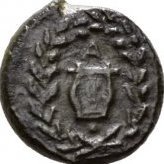
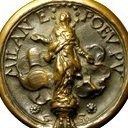
Brennos2 Inviato 21 Dicembre, 2025 #25 Inviato 21 Dicembre, 2025 You may also find some interesting information in Jennifer Larson's book, Greek Nymphs. Myth, Cult, Lore, available online. In Caltabiano : 1 Cita



.thumb.jpg.ae694d43dad26808f483a70d749ce2f0.jpg)
.thumb.jpg.49bf7893ab8deb0b9efbfc02c41b7421.jpg)

Risposte migliori
Unisciti alla discussione
Puoi iniziare a scrivere subito, e completare la registrazione in un secondo momento. Se hai già un account, accedi al Forum con il tuo profilo utente..