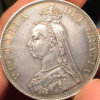
Manuel88 Inviato 11 Febbraio, 2016 #1 Inviato 11 Febbraio, 2016 Vi presento il mio acquisto effettuato sabato presso il convegno di Forlì. Questa tipologia di farthing vittoria giovane è stata coniata dal 1860 al 1895. Nel prossimo post caricherò il R della moneta e vedrete che sotto la data 1882 c'è una H, sta a significare zecca di Birmingham. I materiali coi quali è stata coniata sono bronzo e rame. Purtroppo non conosco altro, se qualcuno gentilmente è a conoscenza e vuole raccontare in breve un po' di storia ne sarei grato. Sono aperte anche opinioni riguardante lo stato di conservazione 3 Cita
Cinna74 Inviato 11 Febbraio, 2016 #3 Inviato 11 Febbraio, 2016 Complimenti @@Manuel88 la moneta è molto bella. Non ti so dire nulla sullo stato di conservazione. Ma posso guardare su "grading british coins" se è analizzata e magari postarne le scansioni domani. Ciao Cita
refero1980 Inviato 11 Febbraio, 2016 #4 Inviato 11 Febbraio, 2016 (modificato) a me le monete "farthing" hanno sempre fatto un po schifo... :rofl: :crazy: :crazy: scherzi a parte, questo è quanto dice la pagina wiki sui victorian farthings.. a dopo per altre info.. The farthings of Queen Victoria's long reign (1837–1901) can be basically divided into the copper issue of 1838–1860, where the coins were 4.5–4.9 grams in weight and 22 millimetres in diameter, and which were very similar to the farthings of her two predecessors (with the obvious substitution of REG for REX on the reverse), and the bronze issue of 1860–1901, which itself is split between 1894 and 1895 into coins displaying the "young head" and the "old head" of the Queen (although in 1864 a copper farthing was produced as well as the normal bronze coin: this is extremely valuable). The bronze coins weighed 2.8–3.0 grams, were 20 millimetres in diameter, and the metal content was 95% copper, 4% tin, 1% zinc. The bronze coins also featured the denomination FARTHING on the reverse, with the date in the exergue beneath Britannia. The inscription on the obverse of the "young head" coins reads VICTORIA D G BRITT REG F D, while on the "old head" it is VICTORIA DEI GRA BRITT REGINA FID DEF IND IMP (Victoria, by the grace of God Queen of Britain, defender of the faith, Empress of India). Some 1874–1876 and 1881–1882 farthings have an "H" mintmark underneath the date, indicating that they were produced at the Heaton mint in Birmingham. Farthings were produced in all years of Victoria's reign except 1837, 1870, 1871, and 1889. Starting in 1897, farthings were issued in an artificially toned state so that they would not be confused with the half-sovereign coin. It is thought that the reason there is an unbroken series of copper farthings between 1838 and 1860 is because the same dies were used to produce the obverses of both the gold sovereign and the farthing – this would account for the high frequency of defects in the coin series as presumably the dies would have been used first to produce the gold coins, and defects may have appeared in them before they were used on the farthing. There were also fractional farthings. The first of the fractional farthings to be issued was the third-farthing, which throughout the period of issue from 1827 to 1913 was minted solely for use in Malta. The island used British coins, but the grano, dating from before British rule, was valued at a twelfth of a penny. As a result the decision was made to coin the equivalent in a British denomination. Half-farthings and even quarter farthings were also issued for colonial use. From 1844 to 1869 the half farthing was legal tender in Britain. The coin was much derided by press and public and was withdrawn in 1869. However the value of a half farthing in 1844, in 2010 values, can be estimated at approximately £0.05 (5p). Modificato 11 Febbraio, 2016 da refero1980 Cita
Manuel88 Inviato 11 Febbraio, 2016 Autore #5 Inviato 11 Febbraio, 2016 a me le monete "farthing" hanno sempre fatto un po schifo... :rofl: :crazy: :crazy: scherzi a parte, questo è quanto dice la pagina wiki sui victorian farthings.. a dopo per altre info.. The farthings of Queen Victoria's long reign (1837–1901) can be basically divided into the copper issue of 1838–1860, where the coins were 4.5–4.9 grams in weight and 22 millimetres in diameter, and which were very similar to the farthings of her two predecessors (with the obvious substitution of REG for REX on the reverse), and the bronze issue of 1860–1901, which itself is split between 1894 and 1895 into coins displaying the "young head" and the "old head" of the Queen (although in 1864 a copper farthing was produced as well as the normal bronze coin: this is extremely valuable). The bronze coins weighed 2.8–3.0 grams, were 20 millimetres in diameter, and the metal content was 95% copper, 4% tin, 1% zinc. The bronze coins also featured the denomination FARTHING on the reverse, with the date in the exergue beneath Britannia. The inscription on the obverse of the "young head" coins reads VICTORIA D G BRITT REG F D, while on the "old head" it is VICTORIA DEI GRA BRITT REGINA FID DEF IND IMP (Victoria, by the grace of God Queen of Britain, defender of the faith, Empress of India). Some 1874–1876 and 1881–1882 farthings have an "H" mintmark underneath the date, indicating that they were produced at the Heaton mint in Birmingham. Farthings were produced in all years of Victoria's reign except 1837, 1870, 1871, and 1889. Starting in 1897, farthings were issued in an artificially toned state so that they would not be confused with the half-sovereign coin. It is thought that the reason there is an unbroken series of copper farthings between 1838 and 1860 is because the same dies were used to produce the obverses of both the gold sovereign and the farthing – this would account for the high frequency of defects in the coin series as presumably the dies would have been used first to produce the gold coins, and defects may have appeared in them before they were used on the farthing. There were also fractional farthings. The first of the fractional farthings to be issued was the third-farthing, which throughout the period of issue from 1827 to 1913 was minted solely for use in Malta. The island used British coins, but the grano, dating from before British rule, was valued at a twelfth of a penny. As a result the decision was made to coin the equivalent in a British denomination. Half-farthings and even quarter farthings were also issued for colonial use. From 1844 to 1869 the half farthing was legal tender in Britain. The coin was much derided by press and public and was withdrawn in 1869. However the value of a half farthing in 1844, in 2010 values, can be estimated at approximately £0.05 (5p). Dopo leggo e provo a tradurre!! Grazie!! Guarda non discuto la bellezza dell'oro, le nostre sovrane sono monete stupende!! Però inizio ad adorare il rame, questa è una moneta piccola ma altrettanto fantastica, non sarà FDC pieno ma appena l'ho presa in mano sono rimasto colpito dalla lucentezza!! Ho anche un farthing vittoria velata in FDC ma non è così bello!! Secondo voi com'è meglio conservarlo!? Ora è nel vassoio in floccato con la dentro una bustina tipo perizia, consigliate di toglierla in modo che prenda più ossigeno? Cita
refero1980 Inviato 11 Febbraio, 2016 #6 Inviato 11 Febbraio, 2016 era un gioco di parole con l inglese... farthing suona come (perdonate il termine..) moneta "scureggiante"... Cita
Lay11 Inviato 12 Febbraio, 2016 #7 Inviato 12 Febbraio, 2016 era un gioco di parole con l inglese... farthing suona come (perdonate il termine..) moneta "scureggiante"... ad esempio "Farthing John": Gianni lo Scureggione! ah ah ah! momento pecoreccio stile Pierino con Alvaro Vitali :D :rofl: Cita
Lay11 Inviato 12 Febbraio, 2016 #8 Inviato 12 Febbraio, 2016 parlando della moneta, è un vero spettacolo, non vedo cosa le possa mancare per essere Fdc assoluto. complimentoni! Cita
Manuel88 Inviato 12 Febbraio, 2016 Autore #9 Inviato 12 Febbraio, 2016 Eh Fabio non lo so, ne ho ancora da imparare per valutare bene lo stato di conservazione di una moneta!! Da un esperto dalle foto mi è stato detto SPL ma sinceramente speravo qualcosa in più Cita
Lay11 Inviato 12 Febbraio, 2016 #10 Inviato 12 Febbraio, 2016 Eh Fabio non lo so, ne ho ancora da imparare per valutare bene lo stato di conservazione di una moneta!! Da un esperto dalle foto mi è stato detto SPL ma sinceramente speravo qualcosa in più ...mmhà... Cita
Manuel88 Inviato 13 Febbraio, 2016 Autore #11 Inviato 13 Febbraio, 2016 A me piace comunque!! Che sia EF o UNC non mi interessa più di tanto, quando l'ho presa in mano mi sono brillati gli occhi e mi son detto: questa è mia!! Cita
Faletro78 Inviato 13 Febbraio, 2016 #12 Inviato 13 Febbraio, 2016 È una bellissima moneta ! Hai fatto bene a prenderla, io che sono abituato alla conservazione delle papali la giudico tranquillamente prossima al fdc, magari sbaglio però mi pare davvero ben conservata. Cita
Manuel88 Inviato 13 Febbraio, 2016 Autore #13 Inviato 13 Febbraio, 2016 Stamattina l'ho fatta esaminare dal negoziante della mia città e l'ho confrontata con un altro farthing vittoriano (tipologia vittoria velata) il quale mi è stato venduto come fdc. Guardandola con la lente "conta fili" si vede qualche difettuccio e chiaramente non è fdc pieno a contrario dell'altra, in ogni caso me l'ha valutata spl-fdc. Cita
vathek1984 Inviato 13 Febbraio, 2016 #14 Inviato 13 Febbraio, 2016 Ottima moneta, conservazione vicina al FDC...molto affascinanti i farthing ed in generale il rame della Regina Vittoria! Cita
Manuel88 Inviato 13 Febbraio, 2016 Autore #15 Inviato 13 Febbraio, 2016 A me affascina molto la monetazione vittoriana in generale!!! Prima o poi mi compro un bel fiorino gotico!! Cita



.thumb.jpg.49bf7893ab8deb0b9efbfc02c41b7421.jpg)


Risposte migliori
Unisciti alla discussione
Puoi iniziare a scrivere subito, e completare la registrazione in un secondo momento. Se hai già un account, accedi al Forum con il tuo profilo utente..