...Ok, adesso sono curioso riguardo allo sfondo che usi per le foto! 
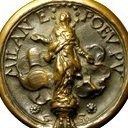
Mio sfondo corrente per le foto è questo piccolo (15 x 19 cm), libretto di sottile (1 cm): "Mio Viaggio Oceano."
Registra un viaggio 1911 da Baltimore, Maryland, a Bremen, in Germania. Poi, in breve, alberghi e paesi di un europeo tour (compreso il Continental Hotel in Roma, l'Hotel Bristol di Firenze e il Grand Canal Hotel di Venezia).
100_2934.JPG 96,85K 2 Numero di downloads
100_2938.JPG 75,88K 2 Numero di downloads
Poi è stato torna casa, da Southampton, Inghilterra, a Hoboken, New Jersey.
Ironico che dovrebbe essere Hoboken—che divenne famosa durante 1GM come punto di imbarco per i soldati Americani si diresse verso i campi di battaglia Europei—perché entrambi del Tedesco navi menzionati nel presente libretto pccolo (SS
Neckar e SS
Kaiserin Augusta Victoria) più tardi furono confiscate dagli Stati Uniti e divenne truppe Americane durante 1GM.
Si noti inoltre il fatto che il "Hoboken nickels" scolpito da molti dei soldati Americani in attesa il loro turno per rendere il viaggio oceanico passato U-boot. (Molti "Hoboken nickels" raffigurato il Kaiser Tedesco).
Oggi, scolpito nichelini del 1913-38 Indiano/Buffalo tipo sono più spesso chiamati "Hobo nickels," a causa della loro connessione con la grande depressione degli anni '30. ("Hobos", o "vagabondi", come venivano chiamati frequentemente, erano una diffusa sintomo di quelli impoverito volte, e un tema di progettazione comune di questi scolpito monete.)
A quanto pare, però, c'è stato un raccolto precedente di queste monete intagliate ("Hoboken nickels") che sono qualificabili come "arte di trincea" da 1GM. "Hoboken"...."hobo"....mi chiedo se la somiglianza è completa coincidenza?

v.
-----------------------------------------
...Ok, now I am curious about the background you use for your pictures! 
My current background for photos is this small (15cm x 19cm), thin (1cm) booklet: “My Ocean Trip.”
It records a 1911 voyage from Baltimore, Maryland, to Bremen, Germany. Then, briefly, hotels and countries of a European tour (including the Continental Hotel in Roma, the Bristol Hotel in Firenze, and the Grand Canal Hotel in Venezia).
100_2934.JPG 96,85K 2 Numero di downloads
100_2938.JPG 75,88K 2 Numero di downloads
Then it was back home, from Southampton, England, to Hoboken, New Jersey.
Ironic that it should be Hoboken—which became famous during WWI as an embarkation point for American soldiers headed for European battlefields—because both of the German ships mentioned in this little booklet (SS
Neckar and SS
Kaiserin Augusta Victoria) were later confiscated by the U.S. and became American troopships during WWI.
Note also the fact of the “Hoboken nickels” carved by many of the American soldiers waiting their turns to make the ocean voyage past the U-Boats. (Many “Hoboken nickels” depicted the German Kaiser.)
Today, carved nickels of the 1913-38 Indian/Buffalo type are most often called “Hobo nickels,” because of their connection to the Great Depression of the ‘30s. (”Hobos,” or “bums,” as they were frequently called, were a widespread symptom of those impoverished times, and a common design theme of these carved coins.)
Apparently, however, there was an earlier crop of these carved coins (“Hoboken nickels”) that qualify as “trench art” from WWI. “Hoboken”....“hobo”....I wonder if the similarity is complete coincidence?

v.