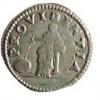
King John Inviato 12 Settembre, 2018 Autore #2151 Inviato 12 Settembre, 2018 (modificato) Roma Numismatics Limited, Auction 14, lot 787, 21/09/17, Hammer 6.000 GBP Caracalla Æ Sestertius. Rome, AD 215. M AVREL ANTONINVS PIVS AVG GERM, laureate, draped and cuirassed bust right / P M TR P XVIII [IMP III] COS IIII P P, Isis standing right, holding sistrum and presenting grain ears to Caracalla standing left, holding reversed spear, foot on crocodile between. BMCRE 287; C. 334; RIC 544. 18.25g, 31mm, 7h. Near Mint State. Ex E. P. Nicolas Collection, Maison Platt, 9-10 March 1982, lot 597. This type records the infamous visit of Caracalla to Alexandria, the capital of the province of Egypt. Since the conclusion of his campaign against the Alamanni in 213-4, it had become apparent that the emperor was unhealthily obsessed with the great Macedonian conqueror Alexander the Great. At this point he appears to have begun openly emulating Alexander in his personal style. Indeed, Cassius Dio (78.7-78.23) relates that "he was so enthusiastic about Alexander that he used certain weapons and cups which he believed had once been his, and he also set up many likenesses of him both in the camps and in Rome itself. He organised a phalanx, composed entirely of Macedonians, sixteen thousand strong, named it 'Alexander's phalanx', and equipped it with the arms that warriors had used in his day." Caracalla's visit in 215 to Alexandria while on his way east should then have been a happy occasion. However the emperor, "hearing that he was ill-spoken of and ridiculed by them for various reasons, not the least of which was the murder of his brother... concealing his wrath and pretending that he longed to see them... first greeted [the leading citizens] cordially... and then put them to death. Then, having arrayed his whole army, he marched into the city, after first notifying all the inhabitants to remain at home and after occupying all the streets and all the roofs as well. And, to pass over the details of the calamities that then befell the wretched city, he slaughtered so many persons that he did not even venture to say anything about their number, but wrote to the senate that it was of no interest how many of them or who had died, since all had deserved to suffer this fate." ILLUSTRAZIONE: ISIDE Iside (gr ῏Ισις) La maggiore divinità femminile dell’antico Egitto, il culto della quale è originario del Delta, probabilmente della città di Buto. Si ritiene fosse in origine una divinità celeste, e a ciò si attribuisce la sua assimilazione a Hathor e alla stella Sirio. La fortuna di Iside è in ogni caso dovuta alla parte conferitale nel mito di Osiride: sposa di quest’ultimo, essa ne cerca il corpo dopo l’uccisione, lo trova, gli ridà vita e genera il figlio Oro. Nell’Egitto faraonico, centro famoso di culto era l’isola di File. In età ellenistica I. viene assimilata a varie divinità greche e il suo culto si diffonde nel bacino mediterraneo raggiungendo l’Italia, dove diventa molto popolare, finché misure repressive contro di esso sono adottate dal senato romano a partire dal 59 a.C. Un oggetto rituale caratteristico del culto egiziano della dea Iside era il sistro di bronzo o di più nobile metallo di cui Iside ne era considerata l’inventrice e che lo aveva perciò (così come i suoi sacerdoti, sacerdotesse o fedeli) come attributo; nella forma tipica (ne esistono numerose varianti), consisteva in una lamina a ferro di cavallo, con fori per il passaggio di asticciole mobili trasversali (3 o 4), ripiegate all’estremità, e con manico diritto assicurato alla base, agitando il quale le asticciole, urtando contro la lamina, producevano un suono (Treccani.it). Modificato 12 Settembre, 2018 da King John Cita Awards
King John Inviato 12 Settembre, 2018 Autore #2152 Inviato 12 Settembre, 2018 Dr. Busso Peus Nachfolger, Auction 410, lot 732, 31/10/2013 Kilikien Seleukeia am Kalykadnos Trebonianus Gallus, 251-253 Bronze. 11.74 g. Büste / Athena mit Lanze und Schild über schlangenbeinigem Giganten. SNG BN 1055 var Braungrüne Patina Sehr schön ILLUSTRAZIONE: ATENA COMBATTE CONTRO I GIGANTI, FREGIO DAL NINFEO DI AFRODISIA (CARIA) DEL II SECOLO D.C. 1 Cita Awards
eracle62 Inviato 13 Settembre, 2018 #2154 Inviato 13 Settembre, 2018 8 ore fa, King John dice: Dr. Busso Peus Nachfolger, Auction 410, lot 732, 31/10/2013 Kilikien Seleukeia am Kalykadnos Trebonianus Gallus, 251-253 Bronze. 11.74 g. Büste / Athena mit Lanze und Schild über schlangenbeinigem Giganten. SNG BN 1055 var Braungrüne Patina Sehr schön ILLUSTRAZIONE: ATENA COMBATTE CONTRO I GIGANTI, FREGIO DAL NINFEO DI AFRODISIA (CARIA) DEL II SECOLO D.C. Apprezzo in questo caso sia il tondello per la strana espressività di Gaio Vibio Treboniano Gallo, e per il rovescio che riproduce il combattimento di Athena in una scena animata che non smette di muoversi... Il basso rilievo poi forse più statico, ma l'impatto dell'evento magico in tutto.. 1 Cita
King John Inviato 13 Settembre, 2018 Autore #2155 Inviato 13 Settembre, 2018 Imperatorial Issues M. Iunius Brutus with Casca Longus. Aureus, mint moving with Brutus in the East 43-42, AV 8.07 g. BRVTVS – IMP Bare head of Brutus r. within laurel wreath. Rev. CASCA – LONGVS Trophy, with curved sword and two spears on l. and figure-of-eight shield on r., mounted on a post set on a base formed by two prows back to back. Two shields are placed on the front of the prows and a sword with square handle extends to r. In inner l. field, L. Babelon Junia 46 and Servilia 37. C 14 var. Bahrfeldt 65b and pl. VII, 16. Sydenham 1297. Sear Imperators 211. Money of the World 30 (this coin illustrated). Biaggi 40 (this coin). RBW –. Crawford 507/1b. Calicó 56 (this coin illustrated). Exceedingly rare and possibly the finest specimen known of this issue of great historical interest and fascination. A bold portrait of superb style struck in high relief on a very broad flan. Almost invisible double strike on obverse, otherwise virtually as struck and almost Fdc Ex Leu 22, 1979, 184; NFA XXII, 1989, 23; Stack’s-Berk 29 November 1990, John Whitney Walter, 7; Ira & Larry Goldberg 46, 2008, Millenia, 75 and Goldberg 59, 2010, 2416 sales. According to Biaggi de Blasis’ inventory: privately purchased from Lucien Hirsch in June 1951 and from the Jameson collection, but not published in the catalogue. I had arranged for extended payment terms to bid on this lot. The day of the sale, after we had won the lot, we were offered more for the coin from two different sources. I have had offers to buy this coin ever since the day it became part of my collection. The fact is, every great collection of twelve Caesars and imperatorial coinage isn’t complete without this most difficult issue. MSG. Coins with the portrait of Brutus are among the most desired of all objects from the Roman world. Here we have a remarkable aureus with a realistic portrait of the conflicted nobleman who forged the plot to murder Julius Caesar, and whose legacy is still subject open to a wide range of interpretations. The fact that Brutus placed his own portrait on coinage is clear testimony to his confusion about his principles and his mission, for it contradicts some of the lofty Republican sentiments that he proclaimed as a defence for his murder of Caesar. When Brutus came to lead his own political movement he, too, behaved as a despot, and like Caesar before him, he succumbed to the temptation to place his image on circulating coins. Cassius, his principal ally, did not follow suit. This is a double-edged sword: though we may admire the nobility of Cassius' restraint, it is a great loss that no coin portraits of him exist. This deprives us not only of an assured image from coinage, but it means we are unable to assign to him any un-inscribed portraits in other media, such as marble or gemstone. As with all coins that Brutus produced as Imperator, this aureus was probably struck in the late summer or in the fall of 42 B.C., not long before he and Cassius were defeated at Philippi by Mark Antony and Octavian. Since these Republican warlords were operating in the eastern Mediterranean, a host of mints in Asia Minor and Greece emerge as possibilities, though we may best describe them as products of "moving mints" that accompanied the imperators and their vast armies. Brutus struck three issues of aurei with his portrait. We are fortunate that this issue of Servilius Casca offers a sober and realistic image, especially in comparison with his other aurei, struck by the legate Pedanius Costa, which bear what Sheldon Nodelman rightly describes as a portrait of "neoclassic" style. The features of Brutus on this piece are fully developed, and there is no attempt to portray youthfully this noble Roman, who was probably forty-three at the time. In that respect, these aurei may offer the most truthful depiction of Brutus, perhaps eclipsing the very best portraits on the EID MAR coinage. We would like to thank Hadrien Rambach for pointing out that this coin also formerly belonged to the Kunsthistorisches Museum Vienna, inventory no. RO 2579 (before 1875), and was de-accessioned in 1930. The coin is also from the ADM collection SULLO SFONDO: IL BRUTO DI MICHELANGELO, FIRENZE Cita Awards
King John Inviato 13 Settembre, 2018 Autore #2156 Inviato 13 Settembre, 2018 Classical Numismatic Group, Inc., Triton Vi, lot 1105, 14/01/2003 NEPOTIAN. 350 AD. Æ Centenionalis (4.03 gm). Rome mint. Estimate $7500 NEPOTIAN. 350 AD. Æ Centenionalis (4.03 gm). Rome mint. FL POP NEPOT-IANVS P F AVG, bare-headed, draped, and cuirassed bust right / GLORIA ROMANORVM, Nepotian on horseback right, spearing enemy; shield and broken spear below, star in field; RS. RIC VIII 200; LRBC 643. Good VF, light encrustation. Artistic portrait. Very rare.($7500) F Flavius Julius Popilius Nepotianus Constantinus was a nephew of Constantine the Great. Following the death of Constans in 350 AD, Nepotian seized power in Rome. After a turbulent reign of only 28 days, Nepotian fell into the hands of Magnentius’ soldiers and was executed. During his short reign, Nepotian struck a small issue of solidi and centenionales, and all of his coins are very rare today. 1 Cita Awards
dabbene Inviato 13 Settembre, 2018 #2157 Inviato 13 Settembre, 2018 Immagini del cavaliere con lancia al galoppo quasi similari , altro bellissimo esempio ... 1 Cita
King John Inviato 13 Settembre, 2018 Autore #2158 Inviato 13 Settembre, 2018 (modificato) Numismatica Genevensis SA, Auction 9, lot 56, 14/12/2015 Asia Minor. Mysia, Lampsakos. Stater, c. 370 BC. (Gold, 8.39g., 17.8mm). Nike, nude to the waist, kneeling to right, affixing a helmet to a trophy set up before her: she holds a nail in her left hand and a hammer in her upraised right / Forepart of a winged horse springing to right; all within shallow incuse square. Baldwin 26, pl. 2, 27 (same dies). Traité II 2535, pl. 171, 1 (same dies). Jenkins, AGC 288 (same dies). Kraay-Hirmer 734 (same dies). Kunstwerke der Antike F 73 (this coin). Schefold, MW 506 (this coin). Provenance: Numismatica Genevensis SA V, 2 December 2008, 110.Exceptional Private Collection, Leu 76, 27 October 1999, 153. Collection of R. Käppeli. Extremely rare, the second known example of this type. With a wonderful Nike of splendid late classical style. Good extremely fine. Lampsakos (IACP 748) was founded as a Greek city in 654/3 by colonists from Phokaia in Ionia; it gained importance from its position on the Hellespont. In the later 6th and 5th centuries it produced a significant coinage of electrum staters but in the earlier 4th century it began minting a series of gold staters of Persic weight that had considerable economic importance. All the coins had the city badge of the forepart of a winged horse on their reverses, but the obverses were quite varied, just like those of the electrum staters from nearby Kyzikos. They mostly bore remarkably fine heads of gods and goddesses, though there is also one of a satrap, perhaps Orontas; among the heads of divinities is a wonderful one of Nike (AGC 296 = Baldwin 30). However, there are also two very rare staters that show us the full figure of Nike: on this piece we have a lovely view of her kneeling and setting up a trophy, and on another she is seen sacrificing a ram. These coins are outstanding masterpieces of full Classical art. ILLUSTRAZIONE: PELIKE DEL 450-400 A.C. CONSERVATA AL FINE ARTS MUSEUM DI BOSTON Modificato 13 Settembre, 2018 da King John 1 Cita Awards
King John Inviato 13 Settembre, 2018 Autore #2159 Inviato 13 Settembre, 2018 Mesembria, Ancient Greek Silver Diobol coin, circa 450-350 Bc. Corinthian helmet 1 Cita Awards
King John Inviato 13 Settembre, 2018 Autore #2160 Inviato 13 Settembre, 2018 Classical Numismatic Group, Inc. Triton XI, lot 479, 8/01/2008 TROAS, Ilium. Marcus Aurelius. AD 161-180. Æ “Sestertius” (35mm, 22.12 g, 1h). AVT KAI MA AVPHL ANTWNEINOC A, laureate, draped, and cuirassed bust right / ILIEWN, Ganymede, wearing chlamys and Phrygian cap, seated right on rock outcropping set on ground line, leaning back on right hand and extending left hand to large eagle standing left; behind eagle, low column surmounted by statue of Athena Ilios standing left. Bellinger T149; Von Fritze, Münzen 61; SNG von Aulock 7612 (same dies); cf. SNG Copenhagen 411. VF, blue-black patina, light roughness on obverse. Extremely rare and struck with dies of fine style. From the J.S. Wagner Collection. Ganymede was the son of Tros, founder of Troy. A youth of great beauty, he was abducted by Zeus while the young man was tending his flocks on Mt. Ida. Carried to Olympus either by an eagle, or Zeus himself in aquiline form, Ganymede served as the god’s cupbearer in place of Hebe, as well as his eromenos. This arrangement angered Hera to such a degree that she would abandon the Trojans in their war against the Greeks. To recompense Tros for the loss of his son, Zeus provided him with a pair of horses so swift, they could cross over water, and which were the ancestors of the horses for which the Trojans were renowned. Estimate: 2000 USD ILLUSTRAZIONE: Ganimede abbevera l’aquila di Giove (particolare), 1817, marmo, h.93,3 cm., Copenaghen, Museo Bertel Thorwaldsen Mitico giovinetto, figlio del dardanide Tros, o di Laomedonte o di Ilo, e di Calliroe; fu rapito in cielo, per la sua bellezza, dall’aquila di Zeus o da Zeus stesso in forma di aquila, per fungervi poi da coppiere della mensa degli dei. Il mito, ricordato di frequente dagli scrittori classici, fu trattato spesso nelle arti figurative; famoso fu il gruppo scultorio di Leocare (4° sec. a.C.), noto per molte riproduzioni. Il soggetto fu spesso trattato dal Rinascimento in poi: celebre soprattutto il dipinto di Correggio (Kunsthistorisches Museum, Vienna). Cita Awards
eracle62 Inviato 13 Settembre, 2018 #2161 Inviato 13 Settembre, 2018 10 ore fa, King John dice: Numismatica Genevensis SA, Auction 9, lot 56, 14/12/2015 Asia Minor. Mysia, Lampsakos. Stater, c. 370 BC. (Gold, 8.39g., 17.8mm). Nike, nude to the waist, kneeling to right, affixing a helmet to a trophy set up before her: she holds a nail in her left hand and a hammer in her upraised right / Forepart of a winged horse springing to right; all within shallow incuse square. Baldwin 26, pl. 2, 27 (same dies). Traité II 2535, pl. 171, 1 (same dies). Jenkins, AGC 288 (same dies). Kraay-Hirmer 734 (same dies). Kunstwerke der Antike F 73 (this coin). Schefold, MW 506 (this coin). Provenance: Numismatica Genevensis SA V, 2 December 2008, 110.Exceptional Private Collection, Leu 76, 27 October 1999, 153. Collection of R. Käppeli. Extremely rare, the second known example of this type. With a wonderful Nike of splendid late classical style. Good extremely fine. Lampsakos (IACP 748) was founded as a Greek city in 654/3 by colonists from Phokaia in Ionia; it gained importance from its position on the Hellespont. In the later 6th and 5th centuries it produced a significant coinage of electrum staters but in the earlier 4th century it began minting a series of gold staters of Persic weight that had considerable economic importance. All the coins had the city badge of the forepart of a winged horse on their reverses, but the obverses were quite varied, just like those of the electrum staters from nearby Kyzikos. They mostly bore remarkably fine heads of gods and goddesses, though there is also one of a satrap, perhaps Orontas; among the heads of divinities is a wonderful one of Nike (AGC 296 = Baldwin 30). However, there are also two very rare staters that show us the full figure of Nike: on this piece we have a lovely view of her kneeling and setting up a trophy, and on another she is seen sacrificing a ram. These coins are outstanding masterpieces of full Classical art. ILLUSTRAZIONE: PELIKE DEL 450-400 A.C. CONSERVATA AL FINE ARTS MUSEUM DI BOSTON Non posso rimanere impassibile davanti ad uno statere come questo, il vedere una Nike ritratta con queste grazie e con una prospettiva che farebbe invidia a Giotto, rimango estasiato.. Se poi ci mettiamo il pegaso che scalpita in maniera cosi prorompente da uscire dal tondello, l'opera è compiuta.. Grazie Federico per le magnificenze che ci doni.. 1 Cita
King John Inviato 14 Settembre, 2018 Autore #2162 Inviato 14 Settembre, 2018 Numismatica Ars Classica NAC AG, Auction 59, lot 640, 4/04/2011 Seleucid Kings of Syria, Seleucus I Nikator, 312 – 294 Tetradrachm, Susa circa 305-298/7, AR 17.02 g. Head of Alexander r. in Dionysian helmet covered with panther’s skin and adorned with bull’s ear and horns; panther’s skin tied around neck. Rev. BASILEWS SELEUKOU Nike standing r., crowning trophy; in lower l. field, monogram; in lower central field, AX. Kraay-Hirmer pl. 204, 720. ESM 417. Seleucid Coins 173.12. Kritt A53/P13. Rare. A bold portrait, lightly toned, the reverse weakly struck, otherwise about extremely fine / good very fine 2 Cita Awards
King John Inviato 14 Settembre, 2018 Autore #2163 Inviato 14 Settembre, 2018 (modificato) Roma Numismatics Limited, Auction 7, lot 414, 22/03/2014 Kingdom of Macedon. Alexander III 'the Great' AR Tetradrachm. Pella, circa 325-315 BC. Head of Herakles right, wearing lion skin headdress / Zeus Aëtophoros seated left, holding eagle and sceptre; AΛEΞANΔPOY to right, horizontal axe in left field, coiled snake beneath throne. Price 246var. (position of axe). 17.28g, 25mm, 3h. Extremely Fine ILLUSTRAZIONE: Scure votiva magno-greca proveniente da S. Sosti (Cosenza), VI sec SU QUESTA SPLENDIDA SCURE: http://www.famedisud.it/dalla-calabria-al-british-museum-lincredibile-storia-dellascia-votiva-di-kyniskos/ Modificato 14 Settembre, 2018 da King John Cita Awards
King John Inviato 14 Settembre, 2018 Autore #2164 Inviato 14 Settembre, 2018 (modificato) Pegasi Numismatics, Auction XXVI, lot 375, 6/11/2012 ROMAN REPUBLIC. Anonymous Semilibral Series, 217-215 BC. Æ Uncia (14.00 gm) of Rome. Helmeted head of Roma l., pellet to r / Prow of ship, pellet in ex. Cr.38/6. aXF, deep olive green patina. Rare this nice. [Est. $500] ILLUSTRAZIONE: LA DEPORTAZIONE DEGLI APUANI DAL PORTO DI LUNI (180 A.C.) Quello degli Apuani era un popolo ligure abitante le valli della Magra e del Serchio (Garfagnana) ed il sovrapposto Appennino, confinante con quello di Pisa. Le guerre, o per meglio dire le guerriglie, condotte dai Romani contro i Liguri ebbero inizio poco dopo la metà del sec. III a. C. Per quanto le fonti parlino indeterminatamente di Liguri (anni 238, 236, 234, 233, 230, 223, 222), si può pensare che si tratti di quegli Apuani che più da vicino minacciavano Pisa, entrata nell'alleanza romana, il porto romano allora più settentrionale. Era anche necessario garantire alle navi romane il meraviglioso porto di Luni, dove forse fin da allora era stata collocata una fattoria. I Romani così vennero in possesso di alcuni dei valichi più occidentali dell'Appennino. Con la guerra annibalica Pisa era tornata a segnare il confine; ma nei due primi decennî del sec. II riprese violenta la lotta fra Roma e i Liguri Apuani. Pisa era sempre minacciata: fra Pisa, Luni e Genova occorreva aprire la via. La guerra s'iniziò seriamente nel 186, con quattro legioni e con Pisa per base d'operazione. Il territorio apuano fu percorso più volte dai consoli romani, ma, pur vinti, i Liguri riapparivano di nuovo minacciosi. Nel 180 i proconsoli C. Cornelio Cetego e M. Bebio Panfilo colsero gli Apuani impreparati: dodicimila si arresero, quarantamila (capi e famiglie) furono trasportati nel Sannio, dove anche molto più tardi conservarono i nomi di Ligures Corneliani e Baebiani. Altri settemila ne trasportarono nel Sannio, lo stesso anno, i consoli Aulo Postumio e Quinto Fulvio. Modificato 14 Settembre, 2018 da King John Cita Awards
King John Inviato 14 Settembre, 2018 Autore #2165 Inviato 14 Settembre, 2018 Gemini, LLC, Auction II, lot 124, 11/01/2006 PAMPHYLIA. Aspendus. Ca. 400 BC. Silver stater (10.82 gm). Two wrestlers grappling / EΣTFE?IIVΣ, slinger slinging right, triskeles before, all in shallow incuse square with dotted border. Kraay-Hirmer and Franke-Hirmer 663 (this coin). Cf. BMC Lycia p. 95, 14, pl. xix, 13 (of slightly later style). Beautifully detailed obverse showing wrestlers engaged. Reverse struck from worn dies, otherwise about extremely fine. Ex Giessener Munzhandlung 102, 24 May 2000, lot 292; ex Max Hirmer Collection; ex Hess-Leu 19, 12 April 1962, lot 314. Estimate: US$3750 Cita Awards
eracle62 Inviato 14 Settembre, 2018 #2166 Inviato 14 Settembre, 2018 15 ore fa, King John dice: Numismatica Ars Classica NAC AG, Auction 59, lot 640, 4/04/2011 Seleucid Kings of Syria, Seleucus I Nikator, 312 – 294 Tetradrachm, Susa circa 305-298/7, AR 17.02 g. Head of Alexander r. in Dionysian helmet covered with panther’s skin and adorned with bull’s ear and horns; panther’s skin tied around neck. Rev. BASILEWS SELEUKOU Nike standing r., crowning trophy; in lower l. field, monogram; in lower central field, AX. Kraay-Hirmer pl. 204, 720. ESM 417. Seleucid Coins 173.12. Kritt A53/P13. Rare. A bold portrait, lightly toned, the reverse weakly struck, otherwise about extremely fine / good very fine Questa, questa, dritto stupendo e rovescio animato.. 1 Cita
King John Inviato 15 Settembre, 2018 Autore #2167 Inviato 15 Settembre, 2018 Leu Numismatik AG (1991-2007), Auction 81, lot 234, 16/05/2001 Crete Phaistos Estimate: CHF 17'500.00 Stater (Silver, 12.05 g 4), c. 350. Europa, seated on rock to left, her left hand in her lap and her right hand outstretched towards the forepart of a bull advancing to right. Rev. Hermes seated to left on rocky ground, with his petasos hanging behind his neck and holding kerykeion in his right hand and resting his left on the ground; on rocks to left and right, bushes. AMK pl. XXXI, 659. BMC 2. KdA F 89 (this coin). LIMC IV, sv. Europe I, 12. Svoronos 2, pl. XXII, 36. Very rare and of exceptional quality, probably the finest example of this coin known. Good very fine. From the collections of N.B. Hunt, II, Sotheby's 21 June 1990, 444, and R. Käppeli. Zeus, seeing Europa, daughter of the king of Sidon, immediately fell in love with her. He then turned himself into a bull, charmed her by his gracious ways, and carried her off to Crete where she subsequently gave birth to his sons Minos, Rhadamanthys and Sarpedon. This coin shows one of the early parts of this episode. When Europa and her companions were picking flowers in a meadow by shore, Hermes led a herd of bulls down towards them, and one, Zeus in disguise, approached Europa. On the coin we see Hermes resting from his exertions and keeping a careful eye on the enfolding drama, while Europa seems to be having an animated conversation with the bull. Soon she will get on his back and off they will go to Crete. ILLUSTRAZIONE: EUROPA E ZEUS, TRASFORMATOSI IN TORO Europa era figlia di Agenore, re di Tiro, antica città fenicia. Zeus se ne innamorò, vedendola insieme ad altre coetanee raccogliere dei fiori nei pressi della spiaggia. Zeus allora inventò uno dei suoi molteplici travestimenti: ordinò a Ermes di guidare i buoi del padre di Europa verso quella spiaggia. Zeus quindi prese le sembianze di un toro bianco, le si avvicinò e si stese ai suoi piedi. Europa salì sul dorso del toro, e questi la portò attraverso il mare fino all'isola di Creta. 2 Cita Awards
King John Inviato 15 Settembre, 2018 Autore #2168 Inviato 15 Settembre, 2018 (modificato) Solidus Numismatik, Auction 2, lot 128, 18/05/2014 LYKAONIEN. Iconium. Gallienus (253 - 268 n. Chr.). Bronze. Vs: Büste mit Strahlenkrone, Paludament und Panzer rechts. Rs: Perseus mit dem Haupt der Medusa und Harpa en face stehend. Von Aulock (1976) 428. SNG BN 2304. Vorzüglich. 6,62 g 23 mm ILLUSTRAZIONE: "LA MORTE DI MEDUSA", OLIO SU TELA DI EDWARD BURNE JONES (1882). QUANDO PERSEO DECAPITO' MEDUSA, DALLA FERITA FUORISCIRONO IL CAVALLO ALATO PEGASO E IL GIGANTE CRISAORE, I FIGLI CHE LA GORGONE ASPETTAVA DA POSEIDONE Modificato 15 Settembre, 2018 da King John Cita Awards
King John Inviato 15 Settembre, 2018 Autore #2169 Inviato 15 Settembre, 2018 (modificato) Numismatica Ars Classica NAC AG, Auction 29, lot 463, 11/05/2005 The Roman Empire Erotic Spintriae, time of Tiberius No.: 463 Schätzwert/Estimation: CHF 6000.- d=22 mm Spintria early first century BC, æ 5.04 g. Erotic scene. Rev. I within wreath. Buttrey, The Spintriae as Historical source, NC 1973, 12 var. (different number). Bateson, Roman Spintriae in the Hunterian Coin Cabinet, Glaux 7, pl. 86, 32 var. (XIII). Rare. Green patina and good very fine ILLUSTRAZIONE: AFFRESCO EROTICO DA UN LUPANARE DI POMPEI La Spintria (plurale spintriae), o più correttamente tessera erotica, era il nome di una particolare categoria di gettone romano, usato in genere per pagamenti all'interno di un lupanare. Su di esso, usualmente, sono raffigurate scene erotiche eterosessuali. Erano usati per pagare le prestazioni sessuali delle prostitute, che a volte parlavano una lingua diversa. Modificato 15 Settembre, 2018 da King John Cita Awards
eracle62 Inviato 15 Settembre, 2018 #2170 Inviato 15 Settembre, 2018 Qui la numismatica vince sempre e comunque, certi tondelli devono essere visti, apprezzati e conosciuti da tutti.. Qui c'è la storia del mondo, che poi è la nostra.. Avanti... 1 Cita
King John Inviato 16 Settembre, 2018 Autore #2171 Inviato 16 Settembre, 2018 (modificato) Gergis, Troas, AE16. ca 400-241 BC. Laureate head of Sibyl Herophile, turned slightly right. GER, Sphinx sitting right, grain ear in exergue. SNG Copenhagen 339-340; SNG von Aulock 1514. 3.68g, 16mm, 6h. Dark patina, Extremely Fine ILLUSTRAZIONE: LA SIBILLA EROFILA La sibilla (in latino Sibylla; greco Σίβυλλα) è una figura esistita storicamente, ed anche presente nella mitologia greca e in quella romana. Le sibille erano vergini dotate di virtù profetiche ispirate da un dio (solitamente Apollo), in grado di fornire responsi e fare predizioni, per lo più in forma oscura o ambivalente. Le sibille del mondo antico erano leggendarie profetesse, collocate in diversi luoghi del bacino del Mediterraneo: Italia (Cuma), Africa, Grecia (Delfi), Asia Minore. Tra le più conosciute, la Sibilla Eritrea, la Sibilla Cumana e la Sibilla Delfica, rappresentanti altrettanti gruppi: ioniche, italiche ed orientali. Nella Roma repubblicana e imperiale un collegio di sacerdoti custodiva gli Oracoli sibillini, testi sacri di origine etrusca, consultati in caso di pericoli o di catastrofi. Dal II secolo a.C. si sviluppa negli ambienti ebraici romanizzati un'interpretazione dei vaticini delle Sibille corrispondente alle attese messianiche. Successivamente i cristiani videro nelle predizioni delle veggenti pagane lontani preannunci dell'avvento di Gesù Cristo e del suo atteso ritorno finale (WIKIPEDIA). Modificato 16 Settembre, 2018 da King John 1 Cita Awards
King John Inviato 16 Settembre, 2018 Autore #2172 Inviato 16 Settembre, 2018 Numismatik Naumann (formerly Gitbud & Naumann) Auction 6, lot 333, 4/08/2013 CARISIUS. Denarius (46 BC). Rome. Obv: Head of Sibyl Herophile right. Rev: T. CARISIUS / III. VIR. Sphinx seated right. Crawford 464/1. Condition: Good very fine. Weight: 4.2 g. Diameter: 15 mm. ILLUSTRAZIONE: LA SIBILLA ERITREA, MICHELANGELO (CAPPELLA SISTINA) La Sibilla Eritrea era la profetessa dell'antichità classica che presiedeva sopra l'oracolo di Apollo a Eritre, una città della Ionia di fronte a Chios. Una leggenda vuole fosse figlia di una ninfa e del pastore (Teodòro), ambedue del Monte Ida. Essa, sotto il nome di Erofila, avrebbe insegnato agli Etruschi l'arte della divinazione tramite i fulmini. 1 Cita Awards
eracle62 Inviato 16 Settembre, 2018 #2173 Inviato 16 Settembre, 2018 53 minuti fa, King John dice: Gergis, Troas, AE16. ca 400-241 BC. Laureate head of Sibyl Herophile, turned slightly right. GER, Sphinx sitting right, grain ear in exergue. SNG Copenhagen 339-340; SNG von Aulock 1514. 3.68g, 16mm, 6h. Dark patina, Extremely Fine ILLUSTRAZIONE: LA SIBILLA EROFILA La sibilla (in latino Sibylla; greco Σίβυλλα) è una figura esistita storicamente, ed anche presente nella mitologia greca e in quella romana. Le sibille erano vergini dotate di virtù profetiche ispirate da un dio (solitamente Apollo), in grado di fornire responsi e fare predizioni, per lo più in forma oscura o ambivalente. Le sibille del mondo antico erano leggendarie profetesse, collocate in diversi luoghi del bacino del Mediterraneo: Italia (Cuma), Africa, Grecia (Delfi), Asia Minore. Tra le più conosciute, la Sibilla Eritrea, la Sibilla Cumana e la Sibilla Delfica, rappresentanti altrettanti gruppi: ioniche, italiche ed orientali. Nella Roma repubblicana e imperiale un collegio di sacerdoti custodiva gli Oracoli sibillini, testi sacri di origine etrusca, consultati in caso di pericoli o di catastrofi. Dal II secolo a.C. si sviluppa negli ambienti ebraici romanizzati un'interpretazione dei vaticini delle Sibille corrispondente alle attese messianiche. Successivamente i cristiani videro nelle predizioni delle veggenti pagane lontani preannunci dell'avvento di Gesù Cristo e del suo atteso ritorno finale (WIKIPEDIA). Tondello ispiratore.. Volto di Sibilla a tre quarti fra i miei preferiti, maggior carica espressiva...e poi la sfinge.. 1 Cita
eracle62 Inviato 16 Settembre, 2018 #2174 Inviato 16 Settembre, 2018 45 minuti fa, King John dice: Numismatik Naumann (formerly Gitbud & Naumann) Auction 6, lot 333, 4/08/2013 CARISIUS. Denarius (46 BC). Rome. Obv: Head of Sibyl Herophile right. Rev: T. CARISIUS / III. VIR. Sphinx seated right. Crawford 464/1. Condition: Good very fine. Weight: 4.2 g. Diameter: 15 mm. ILLUSTRAZIONE: LA SIBILLA ERITREA, MICHELANGELO (CAPPELLA SISTINA) La Sibilla Eritrea era la profetessa dell'antichità classica che presiedeva sopra l'oracolo di Apollo a Eritre, una città della Ionia di fronte a Chios. Una leggenda vuole fosse figlia di una ninfa e del pastore (Teodòro), ambedue del Monte Ida. Essa, sotto il nome di Erofila, avrebbe insegnato agli Etruschi l'arte della divinazione tramite i fulmini. Questo post insieme al tondello per sempre... E tu sai perchè... 1 Cita
dabbene Inviato 17 Settembre, 2018 #2175 Inviato 17 Settembre, 2018 8 ore fa, King John dice: Numismatik Naumann (formerly Gitbud & Naumann) Auction 6, lot 333, 4/08/2013 CARISIUS. Denarius (46 BC). Rome. Obv: Head of Sibyl Herophile right. Rev: T. CARISIUS / III. VIR. Sphinx seated right. Crawford 464/1. Condition: Good very fine. Weight: 4.2 g. Diameter: 15 mm. ILLUSTRAZIONE: LA SIBILLA ERITREA, MICHELANGELO (CAPPELLA SISTINA) La Sibilla Eritrea era la profetessa dell'antichità classica che presiedeva sopra l'oracolo di Apollo a Eritre, una città della Ionia di fronte a Chios. Una leggenda vuole fosse figlia di una ninfa e del pastore (Teodòro), ambedue del Monte Ida. Essa, sotto il nome di Erofila, avrebbe insegnato agli Etruschi l'arte della divinazione tramite i fulmini. Di tutto un po’, conoscere la storia, le divinità , le profezie, anche la vita quotidiana, le vessazioni, i tradimenti, la vita e’ sempre stata così, lo e’ anche oggi, ecco perché in fondo storia si, ma anche tanto odierno, certamente oggi le mie preferenze non so perché vanno a questo tondello anche per me .... 1 Cita
Risposte migliori
Unisciti alla discussione
Puoi iniziare a scrivere subito, e completare la registrazione in un secondo momento. Se hai già un account, accedi al Forum con il tuo profilo utente..