eracle62 Inviato 5 Aprile, 2019 #3001 Inviato 5 Aprile, 2019 10 ore fa, King John dice: Classical Numismatic Group > Triton XXII Auction date: 8 January 2019 Lot number: 904 Price realized: 6,500 USD (Approx. 5,680 EUR) Note: Prices do not include buyer's fees. Lot description: Moneyer issues of Imperatorial Rome. L. Hostilius Saserna. 48 BC. AR Denarius (19mm, 3.94 g, 6h). Rome mint. Head of Gallic captive (Vercingetorix?) right, wearing hair flowing back and long, pointed beard, and a chain around his neck; Gallic shield to left / Two warriors in biga right: one driving, holding whip in right hand and reins in left, and the other, facing backward, holding shield in left hand and brandishing spear in right; L • HOSTILIVS above, SASER[N] below. Crawford 448/2a; CRI 18; Sydenham 952; Hostilia 2; BMCRR Rome 3994-5; RBW 1569. Choice EF. Great metal. From the Alan J. Harlan Collection. Ex Tkalec (29 February 2008), lot 226. The portrait on the obverse has sometimes been identified as the famous chief of the Arverni, Vercingetorix, whom Julius Caesar captured in 52 BC in Alesia. It is difficult to imagine anyone placing such a dramatic portrait of a defeated foe on their coinage, but it is clear from surviving sources of the period that the Romans had a good deal of respect for the Gauls as honorable warriors. Crawford and Sear believe this identification is unlikely, but the large, distinctive, and carefully engraved head suggests the die cutter worked with an eye toward creating an individualized portrait, rather than a stylized personification of a Gaul. The reverse is also of particular historical interest, in that it depicts the manner in which chariots were used in Celtic Gaul, and perhaps in Britain as well. Estimate: 5000 USD Ammazza che denarino... Sai cosa mi piace...l'idea del movimento che l'artista è riuscito a dare sia al dritto che al rovescio... E poi il ritratto del noto Gallo che sembra sfrecci il vento... Tondello superlativo... 1 Cita
King John Inviato 5 Aprile, 2019 Autore #3002 Inviato 5 Aprile, 2019 Roma Numismatics Limited, E-live Auction 2, lot 452, 30/08/2018 Roman Provincial Caracalla, with Plautilla, Æ30 of Cnidus, Caria. Circa AD 202-205. [AV] T K [..], laureate, draped and cuirassed bust of Caracalla right, facing draped bust of Plautilla left / ΚΝ[Ι]ΔΙΩ[Ν], the statue of the Knidian Aphrodite standing facing, nude, covering herself with her hand and holding robe; at feet to right, amphora. Gorny & Mosch 251, 4676; Naumann 52, 342; CNG e123, 89 = Asia Minor Coins 2767. 18.18g, 30mm, 12h. Good Fine. Very Rare. The subject of this reverse type recalls the Aphrodite of Cnidus, a Greek sculpture created by Praxiteles and purchased by Cnidus, described by Pliny as "superior to anything not merely by Praxiteles, but in the whole world" (Natural History, 36.20-1). The renowned sculpture was the first life sized representation of the nude female form. Such was its beauty and fame in antiquity that it was extensively copied; a Roman copy now in the Vatican museum is of close comparison to the numismatic representation offered here. Unfortunately the original sculpture appears to be lost; it may have been removed to Constantinople and destroyed during the Nika riots. ILLUSTRAZIONE: COPIA DELLA STATUA DI AFRODITE CNIDIA, OPERA DI PRASSITELE (VERSIONE ALTEMPS DI ROMA) Cita Awards
King John Inviato 5 Aprile, 2019 Autore #3003 Inviato 5 Aprile, 2019 Classical Numismatic Group, Web shop n.155714 155714. Sold For $795 BITHYNIA, Nicaea. Severus Alexander. 222-234 AD. Æ 22mm (4.16 gm, 8h). M AVP CEVHAΛEΞANΔPOC AΥΓ, laureate head right / NIKAIEΩN; Aphrodite-Venus kneeling right, nude but for cloth draped across her lap, flanked by two winged Erotes, each holding a torch, with the one on the left also holding up a mirror, which Aphrodite turns to gaze into. RG pg. 473, 588; SNG Copenhagen -. Good VF, smooth olive green patina. Important mythological type. The typos of Aphrodite emerging from her bath, assisted by her winged companions to prepare herself, was a popular theme in art from classical times to the modern era, treated in many media by numerous artists throughout the ages. ILLUSTRAZIONE: LA VENERE DI LELY, CONSERVATA AL BRITISH MUSEUM, COPIA DI ETA' ANTONINIANA DI UN ORIGINALE ELLENISTICO DI DOIDALSA DI BITINIA Cita Awards
King John Inviato 5 Aprile, 2019 Autore #3004 Inviato 5 Aprile, 2019 Classical Numismatic Group, Triton XIII, lot 202, 5/01/2010 CARIA, Knidos. Circa 411-405/4 BC. AR Drachm (6.14 g, 3h). Head and foreleg of roaring lion right / Head of Aphrodite right, hair in sphendone decorated with ivy leaves; A behind neck; all within incuse square. Cahn Series VI.1, 93 (V45/R63); SNG Keckman 138 (same dies); SNG von Aulock 2598 (same rev. die); SNG Copenhagen 252 (same dies); Waddington 2354 (same dies); de Luynes 2704 (same dies); Boston MFA 1956 (same rev. die). EF, toned, a couple minor die breaks on reverse. An important city which comprised settlements on both the mainland and an adjoining island that was bridged by a causeway, Knidos was a partner in the Dorian Hexapolis, a federation of six regional cities of Doric colonization, which included Kos, Halikarnassos, Lindos, Ialysos, and Kamiros. Because of its connection with the trading routes along the Ionian coast, Knidos became an important and affluent trading center, and the city was adorned with numerous impressive public buildings, both within the city itself and in the surrounding countryside. Among these buildings were the Temple of the Triopian Apollo, where the members of the Hexapolis met and whose symbol was the lion; hence, the use of the lion as one of the civic badges on the coinage. Because Knidos had been originally settled by Phoenicians prior to its Doric colonization, it also possessed a large temple dedicated to Aphrodite Euploia – the Phoenician Asherar-yam. As a result of the godessess’s importance to the city, the head of Aphrodite was included on the coinage. Because of the city’s connection with Aphrodite, in the fourth century BC, Knidos acquired a cult-statue of the goddess by the sculptor Praxitiles. After it was rejected by the citizens of Kos – for whom it had been commissioned – because it showed Aphrodite nude for the first time, Knidos purchased the statue, erecting it in an open air temple so that it could be viewed from all angles. As a result, it became a popular tourist attraction and the subject of numerous tales of all types. 1 Cita Awards
VALTERI Inviato 5 Aprile, 2019 #3005 Inviato 5 Aprile, 2019 Passerà in asta NAC 114 tra un mese, un rarissimo tetradramma ex Prospero, testimonianza monetata del 'passaggio' in India di Alessandro Magno . al diritto elefante con kornac e vessillifero, al rovescio bella rappresentazione di carro da guerra al galoppo con arciere saettante ed auriga . 1 Cita
eracle62 Inviato 6 Aprile, 2019 #3006 Inviato 6 Aprile, 2019 13 ore fa, King John dice: Classical Numismatic Group, Triton XIII, lot 202, 5/01/2010 CARIA, Knidos. Circa 411-405/4 BC. AR Drachm (6.14 g, 3h). Head and foreleg of roaring lion right / Head of Aphrodite right, hair in sphendone decorated with ivy leaves; A behind neck; all within incuse square. Cahn Series VI.1, 93 (V45/R63); SNG Keckman 138 (same dies); SNG von Aulock 2598 (same rev. die); SNG Copenhagen 252 (same dies); Waddington 2354 (same dies); de Luynes 2704 (same dies); Boston MFA 1956 (same rev. die). EF, toned, a couple minor die breaks on reverse. An important city which comprised settlements on both the mainland and an adjoining island that was bridged by a causeway, Knidos was a partner in the Dorian Hexapolis, a federation of six regional cities of Doric colonization, which included Kos, Halikarnassos, Lindos, Ialysos, and Kamiros. Because of its connection with the trading routes along the Ionian coast, Knidos became an important and affluent trading center, and the city was adorned with numerous impressive public buildings, both within the city itself and in the surrounding countryside. Among these buildings were the Temple of the Triopian Apollo, where the members of the Hexapolis met and whose symbol was the lion; hence, the use of the lion as one of the civic badges on the coinage. Because Knidos had been originally settled by Phoenicians prior to its Doric colonization, it also possessed a large temple dedicated to Aphrodite Euploia – the Phoenician Asherar-yam. As a result of the godessess’s importance to the city, the head of Aphrodite was included on the coinage. Because of the city’s connection with Aphrodite, in the fourth century BC, Knidos acquired a cult-statue of the goddess by the sculptor Praxitiles. After it was rejected by the citizens of Kos – for whom it had been commissioned – because it showed Aphrodite nude for the first time, Knidos purchased the statue, erecting it in an open air temple so that it could be viewed from all angles. As a result, it became a popular tourist attraction and the subject of numerous tales of all types. Beh sempre doppio ritratto.. Anche se ad una Afrodite piatta, preferisco il ritratto del leone sicuramente.. Tondello interessante comunque. 1 Cita
King John Inviato 6 Aprile, 2019 Autore #3007 Inviato 6 Aprile, 2019 Numismatica Ars Classica > Auction 114 Auction date: 6 May 2019 Lot number: 648 Lot description: The Roman Empire Titus caesar, 69 – 79. Sestertius 72, Æ 24.68 g. T CAES VESPASIAN IMP PON TR POT COS II Laureate head r. Rev. S – C Titus on horseback r., spearing fallen Jewish soldier. C 236. BMC Vespasian 634. RIC Vespasian 430. CBN Vespasian 622. Hendin 1524. Very rare and in unusually fine condition for the issue. Green patina with some minor areas of smoothing on reverse and areas of encrustations, otherwise good very fine / about extremely fine 1 Cita Awards
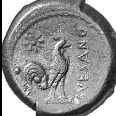
King John Inviato 6 Aprile, 2019 Autore #3008 Inviato 6 Aprile, 2019 Classical Numismatic Group > Electronic Auction 442 Auction date: 17 April 2019 Lot number: 677 Lot description: IONIA, Clazomenae. Valerian I. AD 253-260. Æ (27mm, 7.63 g, 6h). Aurelius Dionysios, strategos. A· K· Π ·ΛI · OVAΛЄPIANOC ·, laureate, draped, and cuirassed bust right / CT · AV ΔIONVCIOV · KΛAZO/MЄNIΩN ·, helmeted soldier standing facing, head left, holding spear and shield. BMC 135. VF, dark green patina. Rare. Ex I. Vecchi 7 (6 October 1997), lot 1598. Estimate: 150 USD 1 Cita Awards
dabbene Inviato 6 Aprile, 2019 #3009 Inviato 6 Aprile, 2019 Se prima proponevo un libro per questa discussione, ora proporrei una enciclopedia ?, sarebbe veramente da dare nelle scuole per far conoscere le monete, la storia, i simboli ... 1 Cita
King John Inviato 6 Aprile, 2019 Autore #3010 Inviato 6 Aprile, 2019 Passerà in asta il prossimo 6 maggio.. Numismatica Ars Classica > Auction 114 Auction date: 6 May 2019 Lot number: 1441 Lot description: The Roman Empire Nero augustus, 54 – 68. Sestertius circa 64, Æ 27.55 g. Laureate head r., with aegis. Rev. Nero, bare-headed and in military attire, prancing r. on horseback, holding spear with r. hand; behind him, mounted soldier prancing r. with vexillum held over r. shoulder. In exergue, DECVRSIO. C 64. RIC 170. A lovely brown-green patina and about extremely fine Ex Bourgey sale 20 June 1949, 62. From the Pierre Bastien collection. Estimate: 1500 CHF ILLUSTRAZIONE: NERONE E POPPEA A CAVALLO, OPERA DEL 1458-60 DI ISAIA DA PISA (Philadelphia Museum of Art) Cita Awards
eracle62 Inviato 7 Aprile, 2019 #3011 Inviato 7 Aprile, 2019 13 ore fa, King John dice: Numismatica Ars Classica > Auction 114 Auction date: 6 May 2019 Lot number: 648 Lot description: The Roman Empire Titus caesar, 69 – 79. Sestertius 72, Æ 24.68 g. T CAES VESPASIAN IMP PON TR POT COS II Laureate head r. Rev. S – C Titus on horseback r., spearing fallen Jewish soldier. C 236. BMC Vespasian 634. RIC Vespasian 430. CBN Vespasian 622. Hendin 1524. Very rare and in unusually fine condition for the issue. Green patina with some minor areas of smoothing on reverse and areas of encrustations, otherwise good very fine / about extremely fine Questo sesterzio di Vespasiano è spettacolare, primo come tondello per conservazione visto la tipologia e la sua rarità, e poi per quella scena sul rovescio, a dir poco incantevole.. N.B. Dopo questo Sesterzio di Vespasiano, bisognò aspettare i fratelli Lumiere prima di animare ancora qualcosa... 1 Cita
King John Inviato 7 Aprile, 2019 Autore #3012 Inviato 7 Aprile, 2019 Numismatica Ars Classica > Auction 114 Auction date: 6 May 2019 Lot number: 1451 Lot description: The Roman Empire The Civil Wars, 68 – 69. Denarius, Gaul 68-69, AR 3.40 g. Helmeted and draped bust of Mars r. Rev. Aquila between two standards, altar to r.; in field, P – R and in exergue, SIGNA. C Galba 406. Martin 60. RIC 51. Very rare. Struck on an excellent metal with a lovely light iridescent tone, about extremely fine Ex M&M 66, 1984, 560 and Ponterio 23, 1986, 272 sales. From the George C. Hopkins collection, Estimate: 4500 CHF Cita Awards
King John Inviato 7 Aprile, 2019 Autore #3013 Inviato 7 Aprile, 2019 Ira & Larry Goldberg Coins & Collectibles, Auction 80, lot 3148, 3/06/2014 Trajan. Silver Denarius (3.1 g), AD 98-117. Rome, AD 104-107. IMP TRAIANO AVG GER DAC P M TR P COS V P P, heroic bust showing bare chest of Trajan left, slight drapery on near shoulder. Reverse S P Q R OPTIMO PRINCIPI, Genius standing facing, head left, sacrificing out of patera over altar at his feet to left, holding cornucopiae. RIC 185; cf. Woytek 217q; BMC p. 60, note; RSC 394f. Extremely rare. Boldly struck and quite attractive with lovely iridescent toning on both sides. Superb Extremely Fine. A splendid and very rare bust type, almost medallic in nature! We must wonder if coins such as this were used as special presentation pieces. Estimated Value $3,000 - 3,500 Ex NAC 38 (21 March 2007), 50. 1 Cita Awards
King John Inviato 7 Aprile, 2019 Autore #3014 Inviato 7 Aprile, 2019 Classical Numismatic Group > Electronic Auction 442 Auction date: 17 April 2019 Lot number: 123 Lot description: Gallienus, with Salonina. AD 253-268. Æ Medallion (22mm, 5.67 g, 7h). Rome mint. Struck AD 253-260. [CONC]ORDIA AVGVSTORVM, laureate, draped and cuirassed bust of Gallienus to right, facing diademed and draped bust of Salonina to left / [AD]VENTVS AVGG, Valerian and Gallienus on horseback to left, raising right hands, preceded by Victory and followed by a soldier holding a standard. MIR 36, 328b; Gnecchi Plate 155, 11. Good VF, rough green patina. Very rare. Ex Numismatic Fine Arts XXIX (13 August 1992), lot 417; Numismatic Fine Arts XXV (29 November 1990), lot 451. Estimate: 2000 USD ILLUSTRAZIONE: RILIEVO DI UN PANNELLO TRATTO DAL NON PIU' ESISTENTE ARCO DI TRIONFO DI MARCO AURELIO CHE LO RITRAE MENTRE VIENE ACCOLTO DAI BARBARI Cita Awards
King John Inviato 7 Aprile, 2019 Autore #3015 Inviato 7 Aprile, 2019 Classical Numismatic Group > Electronic Auction 441 Auction date: 3 April 2019 Lot number: 493 Price realized: 220 USD (Approx. 197 EUR) Note: Prices do not include buyer's fees. Lot description: Constantine I. AD 307/310-337. Æ Follis (18mm, 3.53 g, 6h). Constantinople mint, 3rd officina. Struck AD 327. Laureate head right / Soldier standing right, holding reversed spear and shield set on ground to right; Γ-//CONS. RIC VII 16 (r3). EF, silvering, toned, some brown. Estimate: 150 USD Cita Awards
eracle62 Inviato 8 Aprile, 2019 #3016 Inviato 8 Aprile, 2019 11 ore fa, King John dice: Ira & Larry Goldberg Coins & Collectibles, Auction 80, lot 3148, 3/06/2014 Trajan. Silver Denarius (3.1 g), AD 98-117. Rome, AD 104-107. IMP TRAIANO AVG GER DAC P M TR P COS V P P, heroic bust showing bare chest of Trajan left, slight drapery on near shoulder. Reverse S P Q R OPTIMO PRINCIPI, Genius standing facing, head left, sacrificing out of patera over altar at his feet to left, holding cornucopiae. RIC 185; cf. Woytek 217q; BMC p. 60, note; RSC 394f. Extremely rare. Boldly struck and quite attractive with lovely iridescent toning on both sides. Superb Extremely Fine. A splendid and very rare bust type, almost medallic in nature! We must wonder if coins such as this were used as special presentation pieces. Estimated Value $3,000 - 3,500 Ex NAC 38 (21 March 2007), 50. Magnifico il denarino di Traiano, il ritratto di grande qualità incisoria, per le fattezze e per lo stile. Ovviamente il basso rilievo è degno di nota, profondità, prospettiva, ed effetto scenico notevole, oltre la qualità scultorea.. 1 Cita
King John Inviato 8 Aprile, 2019 Autore #3017 Inviato 8 Aprile, 2019 Gorny & Mosch Giessener Münzhandlung, Auction 215, lot 889, 14/10/2013 GRIECHEN KARIEN KNIDOS Tetradrachme (14,48g). ca. 330 - 250 v.Chr. Vs.: Kopf der Aphrodite nach r. Rs.: Löwenkopf mit Pranke nach recht, darüber Beamtenname ΔIO[ΓH...?]. Darunter KNI. RRR! Rs. Schrötlingsfehler, leichte Prägeschwäche, vz In der Publikation von R.Ashton zu den Silberprägungen aus dieser Periode fehlt dieser Beamtenname in allen Nominalen: R.Ashton. The late classical/early hellenistic drachms of Knidos, RN 154, 1999, 63ff. Cita Awards
King John Inviato 8 Aprile, 2019 Autore #3018 Inviato 8 Aprile, 2019 Numismatica Ars Classica > Auction 114 Auction date: 6 May 2019 Lot number: 608 Lot description: The Roman Empire Claudius augustus, 41 – 54. Denarius 41-42, AR 3.78 g. TI CLAVD CAESAR AVG [P M TR P] Laureate head r. Rev. PRAETOR – RECEPT Claudius togate standing r., clasping hands with long-haired soldier who holds Aquila and stands l. before him. C 78. BMC 9. RIC 12. CBN 26 (Lugdunum). Rare and in exceptional condition for the issue, among the finest specimens known. Wonderful old cabinet tone and extremely fine Ex Cahn 17 March 1913, A. Oertel, 1079; Schulman 5 March 1923, M. L. Vierordt, 804 and Leu 36, 1985, 238 sales. From the George C. Hopkins collection. Estimate: 8000 CHF Cita Awards
King John Inviato 8 Aprile, 2019 Autore #3019 Inviato 8 Aprile, 2019 Ira & Larry Goldberg Coins & Collectibles, Auction 72, lot 4280, 3/02/2013 Calabria, Tarentum. AR Didrachm (7.7 g), ca. 280-272 BC. Magistrates: [Lykiskos] and Zor- . Warrior bearing a shield riding a prancing horse left; Nike (Victory) standing before, holding the reins and restraining the horse. Reverse: Phalanthos (Taras) astride a dolphin left, holding a shield inscribed E; Zor in left field, waves below. Vlasto 679; HN Italy 963; SNG ANS 1056-8; SNG France 1874-6; Pozzi 357. Some old hairlines in obverse peripheries. Lovely, soft iridescent highlights . Choice Very Fine. . The didrachms of Tarentum exhibit a bewildering number of variations on the basic theme of horseman / Taras astride dolphin. This early third century example shows a standing figure of Nike receiving a victorious horseman, a revival of an earlier type (Evans period IV), while the reverse has the novel innovation of Taras rising to his full height with one knee on the dolphin's back. . Estimated Value $600 - 800. Cita Awards
VALTERI Inviato 8 Aprile, 2019 #3020 Inviato 8 Aprile, 2019 Da Tarso di Cilicia, Bellerofonte (eroe dunque guerriero) per ben due volte, dal diritto e dal rovescio di un bellissimo statere, combatte cavalcando Pegaso : curiosamente la sua arma è un tridente . Passerà, il prossimo 5 Maggio, in asta Nomos 18 al lotto 203 . 2 Cita
dabbene Inviato 8 Aprile, 2019 #3021 Inviato 8 Aprile, 2019 1 ora fa, VALTERI dice: Da Tarso di Cilicia, Bellerofonte (eroe dunque guerriero) per ben due volte, dal diritto e dal rovescio di un bellissimo statere, combatte cavalcando Pegaso : curiosamente la sua arma è un tridente . Passerà, il prossimo 5 Maggio, in asta Nomos 18 al lotto 203 . Grande chicca questa, il cavaliere al dritto e al rovescio anche in incuso, che perfezione, che dettagli e siamo nel 400 a.c. ....cosa ci state facendo vedere ? 1 Cita
King John Inviato 9 Aprile, 2019 Autore #3022 Inviato 9 Aprile, 2019 Numismatica Ars Classica > Auction 114 Auction date: 6 May 2019 Lot number: 123 Lot description: Greek coins Alexander III, 336 – 323 and posthumous issues. Tetradrachm of 2 shekels, Babylon circa 327, AR 15.41 g, Indian archer standing r., drawing a large bow; in l. field, monogram. Rev. Indian elephant r.; below, Ξ. Price, Mnemata p. 70, 18 (this obverse die). Price, Naster Oblata p. 78, A/b (these dies). Dürr, Neues aus Babylonien, in SM 94 (1974), 36b (this coin). Mitchiner Type 22. Of the highest rarity, only very few specimens known. An issue of tremendous importance and fascination. Unusually well struck for the issue and with a light tone. Very fine / good very fine Ex NFA V, 1978, 82; NFA XXV, 1990, 82 and New York XXVII, 2012, Prospero, 305 sales. As with all coins associated with the so-called "Porus medallions"- a decadrachm issue belonging to the same series as this tetradrachm - the present piece features remarkable types that are completely new for Greek coinage. The obverse depicts a standing archer, but he is not any archer previously familiar to the Greeks. There is no representation of the Persian king armed with a bow as on darics and sigloi, but rather a depiction of an Indian warrior. His Indian ethnicity is implied by his dress and his hair, which seems to be bound up in a sort of turban, and his pairing with a reverse type depicting an elephant. Alexander the Great and his army made a foray into the Indian subcontinent in 327 BC and made war on a regional Punjabi king named Porus. At the Battle of the Hydaspes River (327 BC), the Macedonian army faced both the archers of Porus and his war elephants. However, despite the murderous arrows of the former and the terror inspired by the latter, the forces of Alexander were victorious. The battle was won at high cost, but Alexander admired the bravery and skill of Porus, appointing him as a local satrap. The Macedonian conqueror continued the exploration and attempted conquest of India despite the increasing misgivings of his men until at last in 325 BC the army mutinied near the Ganges River and forced him to begin the long and gruelling westward march home. It is thought that the present coin and others like it in the "Porus Medallion" series were struck as a form of commemorative donative paid out to the army after the return from India. The use of the shekel weight standard has led to the conclusion that the coinage was produced at Babylon or possibly Susa. The specifically Indian and martial types may have been intended to remind recipients of their former glory in the East at a time when the army was tiring of Alexander's campaigns and desirous of returning home to Macedonia. In 324 BC, the army mutinied again at Opis in Babylonia and demanded that Alexander begin demobilising his loyal and long serving veterans. Estimate: 50000 CHF illustrazione: guerrieri del re indiano Poro, contro cui combattè Alessandro il Grande Cita Awards
King John Inviato 9 Aprile, 2019 Autore #3023 Inviato 9 Aprile, 2019 Numismatica Ars Classica > Auction 114 Auction date: 6 May 2019 Lot number: 738 Lot description: The Roman Empire Commodus augustus, 177 – 192. Medallion 186, Æ 54.73 g. M COMMODVS ANTONINV – S PIVS FELIX AVG BRIT Laureate bust l., wearing aegis and holding spear. Rev. P M TR P XI IMP – VII – COS V P P Commodus driving a triumphal quadriga r. C 508. Gnecchi 88 and pl. 84, 1. Very rare and in exceptional state of preservation, undoubtedly one of the finest medallions of Commodus in existence. A spectacular heroic portrait perfectly struck in high relief and a superb reverse composition. An untouched green patina, good extremely fine Ex NAC sale 23, 2002, 1890. Judging from the ancient historians, the megalomania for which Commodus is most well known was not fully apparent until the final years of his reign, when he claimed to be a new Romulus, refounding Rome in his own image, and paraded himself as a living manifestation of Hercules. However, it is clear from the obverse portrait of this medallion that the seeds of Commodus' madness were already sprouting in AD 187. Here the Emperor is presented in the manner of a hero, nude except for an aegis-a symbol of the divine protection of both Jupiter and Minerva-and brandishing a spear. This heroic representation, including the use of a back view has a long history covering vast distances. It first appears on Hellenistic coins of the Bactrian king Eukratides I (171-145 BC) but eventually made its way to Republican Rome where it was used for depictions of Veiovis (Crawford 298 and 354/1) in the late second and early first century BC. Commodus seems to have been the first to employ this portrait type on Roman Imperial coinage. It enjoyed some further popularity under the military emperors of the third century AD for whom it was paramount to appear as a superhuman warrior able to defend the Empire against its many enemies. The reverse type is rather more traditional from a Roman perspective and certainly far less dramatic than the heroic style of the obverse. Here Commodus rides in a triumphal quadriga while holding an eagle-tipped scepter. Unfortunately, it is unclear to what triumph the type refers. The Emperor is not known to have celebrated a triumph in AD 186, the year that the medallion was struck. Perhaps it still refers to the triumph celebrated for the victory of his generals in Britannia at which time Commodus assumed the title of Britannicus Maximus, even though he never set foot in the province himself. This title, abbreviated as BRIT appears in the obverse legend. A reminder of the British triumph might have been relevant in AD 186 since this year saw a revolt of the legions stationed in Britannia. This was only brought to an end through the intervention of the commander P. Helvius Pertinax, the man who would seize the imperial purple after the murder of Commodus in AD 192 and begin the bloody civil war known as the Year of the Five Emperors. Estimate: 150000 CHF 1 Cita Awards
eracle62 Inviato 9 Aprile, 2019 #3024 Inviato 9 Aprile, 2019 4 ore fa, King John dice: Numismatica Ars Classica > Auction 114 Auction date: 6 May 2019 Lot number: 738 Lot description: The Roman Empire Commodus augustus, 177 – 192. Medallion 186, Æ 54.73 g. M COMMODVS ANTONINV – S PIVS FELIX AVG BRIT Laureate bust l., wearing aegis and holding spear. Rev. P M TR P XI IMP – VII – COS V P P Commodus driving a triumphal quadriga r. C 508. Gnecchi 88 and pl. 84, 1. Very rare and in exceptional state of preservation, undoubtedly one of the finest medallions of Commodus in existence. A spectacular heroic portrait perfectly struck in high relief and a superb reverse composition. An untouched green patina, good extremely fine Ex NAC sale 23, 2002, 1890. Judging from the ancient historians, the megalomania for which Commodus is most well known was not fully apparent until the final years of his reign, when he claimed to be a new Romulus, refounding Rome in his own image, and paraded himself as a living manifestation of Hercules. However, it is clear from the obverse portrait of this medallion that the seeds of Commodus' madness were already sprouting in AD 187. Here the Emperor is presented in the manner of a hero, nude except for an aegis-a symbol of the divine protection of both Jupiter and Minerva-and brandishing a spear. This heroic representation, including the use of a back view has a long history covering vast distances. It first appears on Hellenistic coins of the Bactrian king Eukratides I (171-145 BC) but eventually made its way to Republican Rome where it was used for depictions of Veiovis (Crawford 298 and 354/1) in the late second and early first century BC. Commodus seems to have been the first to employ this portrait type on Roman Imperial coinage. It enjoyed some further popularity under the military emperors of the third century AD for whom it was paramount to appear as a superhuman warrior able to defend the Empire against its many enemies. The reverse type is rather more traditional from a Roman perspective and certainly far less dramatic than the heroic style of the obverse. Here Commodus rides in a triumphal quadriga while holding an eagle-tipped scepter. Unfortunately, it is unclear to what triumph the type refers. The Emperor is not known to have celebrated a triumph in AD 186, the year that the medallion was struck. Perhaps it still refers to the triumph celebrated for the victory of his generals in Britannia at which time Commodus assumed the title of Britannicus Maximus, even though he never set foot in the province himself. This title, abbreviated as BRIT appears in the obverse legend. A reminder of the British triumph might have been relevant in AD 186 since this year saw a revolt of the legions stationed in Britannia. This was only brought to an end through the intervention of the commander P. Helvius Pertinax, the man who would seize the imperial purple after the murder of Commodus in AD 192 and begin the bloody civil war known as the Year of the Five Emperors. Estimate: 150000 CHF Medaglione medaglione, il top dell'espressività romana, unita ad una tecnica sopraffina incisoria, che davano ancor di più, maggior lustro agli imperatori che vennero ritratti. Impressionate l'eco della quadriga che fa sentire il suo scalpitio... 1 Cita
King John Inviato 10 Aprile, 2019 Autore #3025 Inviato 10 Aprile, 2019 Numismatica Ars Classica > Auction 114 6 MAY 2019 Lot number: 1284 Lot description: The Roman Republic L. Licinius Crassus, Cn. Domitius Ahenobarbus and associates. Denarius serratus, Narbo 118, AR 3.90 g. Head of Roma r., wearing Phrygian helmet; behind, ROMA * and before, M·AVRELI. Rev. Bearded warrior in fast biga r., holding shield, carnyx and reins and hurling spear; in exergue, L·LIC·CN·DOM. Babelon Poblicia 1, Licinia 13 and Domitia 17. Sydenham 524. RBW 1108. Crawford 282/3. A scratch at the base of the neck otherwise about extremely fine Estimate: 250 CHF Cita Awards





Risposte migliori
Unisciti alla discussione
Puoi iniziare a scrivere subito, e completare la registrazione in un secondo momento. Se hai già un account, accedi al Forum con il tuo profilo utente..