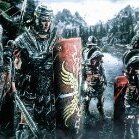
King John Inviato 10 Aprile, 2019 Autore #3026 Inviato 10 Aprile, 2019 (modificato) Antoniniano di Gallieno (253-268) che reca la legenda LEG IIII FL VI P VI F che attesta il conferimento del titolo VI Pia VI Fidelis ("sei volte pia, sei volte leale") alla Legio IIII Flavia Felix. Modificato 11 Aprile, 2019 da King John Cita Awards
King John Inviato 10 Aprile, 2019 Autore #3027 Inviato 10 Aprile, 2019 Numismatica Ars Classica NAC AG, Auction 106, lot 387, 9/05/2018 The Roman Republic T. Didius. Denarius 113 or 112, AR 3.96 g. Helmeted head of Roma r.; behind, ROMA in monogram. Below neck truncation, Ú. Rev. Fight between two gladiators; in exergue, T·DEIDI. Babelon Didia 2. Sydenham 550. RBW 1134. Crawford 294/1. In exceptional condition for the issue. Struck in high relief and with a light tone. Virtually as struck and almost Fdc 1 Cita Awards
Ospite Inviato 10 Aprile, 2019 #3028 Inviato 10 Aprile, 2019 @King John Guerrafondaio ! https://www.academia.edu/9528019/Violence_on_Roman_Imperial_Coinage Ciao R Cita
King John Inviato 10 Aprile, 2019 Autore #3029 Inviato 10 Aprile, 2019 Adesso, rorey36 dice: @King John Guerrafondaio ! https://www.academia.edu/9528019/Violence_on_Roman_Imperial_Coinage Ciao R chi, io?? Cita Awards
Baylon Inviato 10 Aprile, 2019 #3030 Inviato 10 Aprile, 2019 Il 2/4/2019 alle 22:11, King John dice: @dabbene @Scudo1901 pensavo di smettere prima o poi perchè ero sempre in dubbio di tediare con questa discussione ma nel mio perenne ricercare monete e immagini pertinenti mi imbatto sempre in cose belle, meraviglie che mi piacerebbe che il mio migliore amico mi mostrasse e allora le posto. Le vostre parole sono la più bella ricompensa... Caro King John, nell'ammirare le meraviglie iconografiche di quest'opera divulgativa, mi sono stupito delle parole sopra citate, ma subito venni rinfrancato dalla volontà di proseguire, sintomo di una passione ben salda ai suoi valori... Essendo l'aspetto iconografico di una moneta l'anima del mio essere collezionista, mi permetto un umile e piccolo consiglio ( nella famelica attesa di una nuova pubblicazione ) : al fine di non essere più assalito da altri " brutti pensieri ", credo sarebbe opportuno apporre sulla tua scrivania personale la fotografia di questa bella moneta, di cui tu stesso ne esaltasti le qualità artistiche, capace di dare grandi emozioni nel guardarla... Con stima, Pasquale Cita
eracle62 Inviato 10 Aprile, 2019 #3031 Inviato 10 Aprile, 2019 5 ore fa, King John dice: Numismatica Ars Classica NAC AG, Auction 106, lot 387, 9/05/2018 The Roman Republic T. Didius. Denarius 113 or 112, AR 3.96 g. Helmeted head of Roma r.; behind, ROMA in monogram. Below neck truncation, Ú. Rev. Fight between two gladiators; in exergue, T·DEIDI. Babelon Didia 2. Sydenham 550. RBW 1134. Crawford 294/1. In exceptional condition for the issue. Struck in high relief and with a light tone. Virtually as struck and almost Fdc Questa questa... 1 Cita
King John Inviato 11 Aprile, 2019 Autore #3032 Inviato 11 Aprile, 2019 5 ore fa, Baylon dice: Caro King John, nell'ammirare le meraviglie iconografiche di quest'opera divulgativa, mi sono stupito delle parole sopra citate, ma subito venni rinfrancato dalla volontà di proseguire, sintomo di una passione ben salda ai suoi valori... Essendo l'aspetto iconografico di una moneta l'anima del mio essere collezionista, mi permetto un umile e piccolo consiglio ( nella famelica attesa di una nuova pubblicazione ) : al fine di non essere più assalito da altri " brutti pensieri ", credo sarebbe opportuno apporre sulla tua scrivania personale la fotografia di questa bella moneta, di cui tu stesso ne esaltasti le qualità artistiche, capace di dare grandi emozioni nel guardarla... Con stima, Pasquale Grazie, amico. Cita Awards
King John Inviato 11 Aprile, 2019 Autore #3033 Inviato 11 Aprile, 2019 (modificato) Nomos AG > Auction 18 Auction date: 5 May 2019 Lot number: 40 Lot description: BRUTTIUM. Kroton. Circa 400-325 BC. Stater (Silver, 21 mm, 7.55 g, 12 h), circa 340s BC. ΚΡΟΤΟΝΙΑ - ΤΑΣ Laureate head of Apollo to right, with his long hair streaming down the back of his neck. Rev. Infant Herakles seated facing, strangling two snakes. HN III 2157. Jameson 433. Kraay & Hirmer 271. SNG ANS 386. SNG Lloyd 618. A coin of fine and elegant style. Has been expertly cleaned, otherwise, good very fine. From a Swiss collection formed prior to 2005. The reverse of this coin recalls the story of Hera's anger at Alkmene, one of Zeus's many girlfriends and, by him, the mother of Herakles. As a result, Hera sent two snakes to share the infant's crib; of course, this was all in fun and, in fact, the infant Herakles laughed heartily at the sight of the serpents, strangled them both and, when found, was looking around for more. According to some sources, the young child, now, because of his exploit, with the epithet Herakliskos Drakonopnigon ('Little Herakles the Snake Strangler'), summoned Hermes (the messenger of the gods), packed the bodies of the snakes in a box marked ἐπιστροφή στον αποστολέα = Return to Sender, and gave it to Hermes with the request he deliver it to Hera! The dies used to strike this coin are very similar but not the same as those used for the preceeding lot: this indicates that, as an issue, this Herakliskos series was a rather extensive one (albeit with a low rate of survival). Estimate: 2250 CHF https://www.academia.edu/24764115/Eracle_bambino_e_i_serpenti_di_Era Modificato 11 Aprile, 2019 da King John 1 Cita Awards
King John Inviato 11 Aprile, 2019 Autore #3034 Inviato 11 Aprile, 2019 Classical Numismatic Group, Web Shop n.790050 Sold For $8750 ARKADIA, Pheneos. Circa 360-350 BC. AR Drachm (21mm, 5.64 g, 12h). Head of Demeter left, wearing grain wreath, triple pendant earring, and pearl necklace / Hermes, nude but for cloak tied around shoulders, seated left on rock (Mt. Kyllene), holding korykeion; ΘEΡI to left. BCD Peloponnesos 1616; SNG Copenhagen -; BMC 14; Boston MFA 1267; Jameson 1266; SNG Lockett 2526=Weber 4323 (all from same dies). VF, lightly toned, a couple faint marks on cheek. Very rare. Ex BCD Collection (not in LHS sale); Giessener Münzhandlung 56 (7 October 1991), lot 221. The drachms of Pheneos are even rarer than the famed staters. All known examples are struck from the same dies, suggesting a very short issue struck for a special occasion, which is unknown today. ILLUSTRAZIONE: BUSTO DI HERMES Cita Awards
King John Inviato 11 Aprile, 2019 Autore #3035 Inviato 11 Aprile, 2019 (modificato) Heritage World Coin Auctions > CSNS Signature Sale 3073 Auction date: 25 April 2019 Lot number: 30307 Ancients Hadrian (AD 117-138). AV aureus (19mm, 7.25 gm, 6h). ANACS EF 45. Rome, AD 119-122. IMP CAESAR TRAIAN-HADRIANVS AVG, laureate, draped and cuirassed bust of Hadrian right, seen from front / P M TR P-COS III, Jupiter standing three-quarters to right, head slightly to left, nude but for chlamys over left shoulder, thunderbolt at side in right hand, scepter in left. RIC II 63c. Calicó 1301. Struck from artistic dies with areas of light orange toning around the devices. Estimate: 5000-6000 USD Modificato 11 Aprile, 2019 da King John 2 Cita Awards
King John Inviato 11 Aprile, 2019 Autore #3036 Inviato 11 Aprile, 2019 Classical Numismatic Group, Web Shop n.832946 832946. Sold For $2450 PHOENICIA, Arados. Circa 400-380 BC. AR Obol (9mm, 0.65 g, 11h). Half-length bust of marine deity facing, head right, holding fish in both hands / Prow of galley right; below, dolphin right; all within incuse square. Betlyon 8; SNG Copenhagen 6-7. Near EF, toned, slight granularity. Exceptional strike. Very rare. Arados, located on a small island off the northern coast of Phoenicia, was one of the most important centers of commerce in the region, and controlled a number of smaller towns located in its vicinity. Although much is known of the city in the Hellenistic and later periods, its origin and history during the Persian period is relatively obscure. Strabo noted that it was founded by colonists from Sidon in the 8th century, but other literary and archaeological evidence place the founding much earlier. Nevertheless, by the 5th or early 4th century Arados was under the hegemony of the Persian Empire. Evidence of the city's coinage in this period is quite obscure, and our understanding of it is primarily based upon comparisons with the more firmly researched coinages of Sidon, Biblos, and Tyre (see Betlyon, pp. 77-8). Betlyon placed this particular issue in the third series of coinage, circa 400-380 BC. The types employed are purely local in character; the obverse marine deity must represent a local god worshipped at Arados, and the reverse galley is a reference to the source of Aradian prosperity -- its maritime trade. ILLUSTRAZIONE: Nereo, divinità greca del mare tranquillo, figlio di Ponto e di Gea e padre delle Nereidi, avute dall'oceanina Doride. Era raffigurato come un bel vecchio e gli si attribuivano doti profetiche, per le quali fu consultato da Paride e da Eracle. A quest'ultimo rifiutò a lungo i consigli sul modo di prendere i pomi delle Esperidi, finché dovette cedere alla forza dell'eroe. 1 Cita Awards
eracle62 Inviato 12 Aprile, 2019 #3037 Inviato 12 Aprile, 2019 16 ore fa, King John dice: Nomos AG > Auction 18 Auction date: 5 May 2019 Lot number: 40 Lot description: BRUTTIUM. Kroton. Circa 400-325 BC. Stater (Silver, 21 mm, 7.55 g, 12 h), circa 340s BC. ΚΡΟΤΟΝΙΑ - ΤΑΣ Laureate head of Apollo to right, with his long hair streaming down the back of his neck. Rev. Infant Herakles seated facing, strangling two snakes. HN III 2157. Jameson 433. Kraay & Hirmer 271. SNG ANS 386. SNG Lloyd 618. A coin of fine and elegant style. Has been expertly cleaned, otherwise, good very fine. From a Swiss collection formed prior to 2005. The reverse of this coin recalls the story of Hera's anger at Alkmene, one of Zeus's many girlfriends and, by him, the mother of Herakles. As a result, Hera sent two snakes to share the infant's crib; of course, this was all in fun and, in fact, the infant Herakles laughed heartily at the sight of the serpents, strangled them both and, when found, was looking around for more. According to some sources, the young child, now, because of his exploit, with the epithet Herakliskos Drakonopnigon ('Little Herakles the Snake Strangler'), summoned Hermes (the messenger of the gods), packed the bodies of the snakes in a box marked ἐπιστροφή στον αποστολέα = Return to Sender, and gave it to Hermes with the request he deliver it to Hera! The dies used to strike this coin are very similar but not the same as those used for the preceeding lot: this indicates that, as an issue, this Herakliskos series was a rather extensive one (albeit with a low rate of survival). Estimate: 2250 CHF https://www.academia.edu/24764115/Eracle_bambino_e_i_serpenti_di_Era Già in fasce ho dovuto difendermi, che fatica queste fatiche... Tondello da impatto incredibile.. Il movimento vince sempre su tutto... Altro tondello che mi piacerebbe avere.. 1 Cita
King John Inviato 12 Aprile, 2019 Autore #3038 Inviato 12 Aprile, 2019 Savoca Numismatik, Live Online Auction 4, lot 34, 30/08/2015 Lucania, Herakleia. Circa 3rd-1st centuries BC. Æ Bronze. Helmeted head of Athena right / Marine deity (Glaukos?) right, holding shield and spear. Van Keuren 144; HN Italy 1437. 14 mm, 2,36 g nearly extremely fine Cita Awards
King John Inviato 12 Aprile, 2019 Autore #3039 Inviato 12 Aprile, 2019 (modificato) Numismatica Ars Classica > Auction 114, 6 May 2019 Lot number: 1012 Greek coins Lucania, Heraclea. Bronze III century BC, Æ 3.01 g. Helmeted head of Athena r. Rev. Marine deity r., holding spear and shield. Van Keuren 144. SNG ANS 116. Historia Numorum Italy 143 A beautiful and untouched green-brown patina. About extremely fine Estimate: 750 CHF Modificato 12 Aprile, 2019 da King John Cita Awards
King John Inviato 12 Aprile, 2019 Autore #3040 Inviato 12 Aprile, 2019 Classical Numismatic Group, Triton XV, lot 400, 3/01/2012 THESSALY, Larissa Kremaste. 4th century BC. Æ Trichalkon (18mm, 5.81 g, 4h). Bare head of Achilles to r., border of dots / ΛΑΡΙ from the bottom, towards the r., up and circular, Thetis, wearing long chiton and holding shield of Achilles with his monogram on it, seated l. on hippocamp; below, in front of her feet, dolphin to r. and downwards. Heyman p. 116, 2 and plate I, 2; see also Nomos 4, 1175 (different dies but same obv. hand). VF, green patina with dark red areas; an attractive coin. Heyman, op. cit ., p. 122 ff sees a portrait of Alexander the Great in most of these obverse dies, especially the early ones with head to r. This writer finds the simile a little far fetched, to say the least. Heyman calls the rev. symbol on this coin a harpa, whereas ASW does not mention it at all; here it is clearly a dolphin. Cita Awards
King John Inviato 12 Aprile, 2019 Autore #3041 Inviato 12 Aprile, 2019 The New York Sale, Auction 27, lot 405, 4/01/2012 The Prospero Collection of Ancient Greek Coins. CRETE. Itanos (c.350 B.C.), Silver Stater, 11.28g,. Bearded marine deity (Glaukos?), with the upper body of a man and the lower body of a fish, facing as if swimming outwards from the coin, inclined to the right, spearing downwards with a trident. Rev. TA , two crested sea monsters facing each other (Svoronos pl. 19, 7 (this obverse die); BMC 4). Cabinet tone, very fine and very rare, attractive style. Ex Nelson Bunker Hunt Collection, Sotheby’s, New York, 21 & 22 June 1990, lot 443 The figure appearing on the obverse of this coin could possibly be that of Glaukos. He was a mythological figure who had built the Argo and accompanied Jason and the Argonauts on their travels. During the sea-fight against the Tyrrhenians, Glaukos was said to have sunk to the bottom of the sea to become a marine deity, after which he possessed the lower body of a fish. US$ 8,000 1 Cita Awards
eracle62 Inviato 13 Aprile, 2019 #3042 Inviato 13 Aprile, 2019 10 ore fa, King John dice: The New York Sale, Auction 27, lot 405, 4/01/2012 The Prospero Collection of Ancient Greek Coins. CRETE. Itanos (c.350 B.C.), Silver Stater, 11.28g,. Bearded marine deity (Glaukos?), with the upper body of a man and the lower body of a fish, facing as if swimming outwards from the coin, inclined to the right, spearing downwards with a trident. Rev. TA , two crested sea monsters facing each other (Svoronos pl. 19, 7 (this obverse die); BMC 4). Cabinet tone, very fine and very rare, attractive style. Ex Nelson Bunker Hunt Collection, Sotheby’s, New York, 21 & 22 June 1990, lot 443 The figure appearing on the obverse of this coin could possibly be that of Glaukos. He was a mythological figure who had built the Argo and accompanied Jason and the Argonauts on their travels. During the sea-fight against the Tyrrhenians, Glaukos was said to have sunk to the bottom of the sea to become a marine deity, after which he possessed the lower body of a fish. US$ 8,000 Questo tondello lo preferisco per intensità, Glaukos con il tridente è dinamico e i mostri marini crestati sono perfetti per l'intero messaggio. Poi il carico mitologico fa il resto.. 1 Cita
King John Inviato 13 Aprile, 2019 Autore #3043 Inviato 13 Aprile, 2019 Leu Numismatik AG > Auction 4 Auction date: 25 May 2019 Lot number: 447 Lot description: CARIA. Mylasa. Septimius Severus, 193-211. Triassarion (Bronze, 28 mm, 9.55 g, 7 h). AY K Λ CЄC (sic!) CЄOYHPOC C Laureate, draped and cuirassed bust of Septimius Severus to right, seen from behind. Rev. MYΛACЄΩN Cult statue of Zeus Labraundos standing front, head to left and wearing polos, holding double-axe in his right hand and spear in his left. Akarca 76. SNG Leypold 836. SNG München 366 var. (differing obverse legend). Very rare. A beautiful issue with an attractive green patina and an excellent rendering of the cult statue of Zeus Labraundos. Minor smoothing, otherwise, good very fine. Estimate: 350 CHF ILLUSTRAZIONE: ZEUS LABRAUNDOS (WALTERS ART MUSEUM (BALTIMORA). Alcune informazioni su Zeus Labraundos Many religions were syncretistic, meaning that as they grew and came into contact with other religions, they adopted new beliefs and modified their practices to reflect their changing environment. Both Greek and Roman religious beliefs were deeply influenced by the so-called mystery religions of the East, including the Egyptian cult of Isis, which revealed beliefs and practices to the initiated that remained unexplained, or mysterious, to the uninitiated. Most popular Roman cults had associations with these mystery religions and included the prospect of an afterlife. Zeus Labraundos was a local version of Zeus from Mylasa in Caria (southwestern Asia Minor), of whom very few representations exist except on Roman coins. The front of his apron-like garment is decorated with images of divinities and astral symbols. On his head, he wears a tall headdress with lotus elements reflecting Egyptian influences and the eagle of Zeus at the front. Cita Awards
King John Inviato 13 Aprile, 2019 Autore #3044 Inviato 13 Aprile, 2019 Leu Numismatik AG > Auction 4 Auction date: 25 May 2019 Lot number: 225 Lot description: LOKRIS. Lokris Opuntii. Circa 340s BC. Stater (Silver, 25 mm, 12.05 g, 4 h). Head of Demeter to right, wearing wreath of wheat leaves, pendant earring and a simple pearl necklace. Rev. OΠONTIΩN Ajax advancing to right, nude but for his helmet, holding short sword in his right hand and shield ornamented with a griffin on the inside with his left; between his legs, diagonal bent spear with its point downwards to left. BCD 72 (same obverse die). Humphris & Delbridge Group 22, 160 (O26/R66). Nanteuil 884 (same dies). A wonderful example, perfectly centered, beautifully toned and of the finest late Classical style. About extremely fine. From 'a collection of ancient Greek coins formed in the 1960s and 1970s, the property of a gentleman', Spink 13015, 2 December 2013, 13. Estimate: 4000 CHF Cita Awards
King John Inviato 13 Aprile, 2019 Autore #3045 Inviato 13 Aprile, 2019 Numismatica Ars Classica > Auction 114 Auction date: 6 May 2019 Lot number: 137 Koinon, pseudo-autonomous issue. Time of Gordian III, 238-244. Bronze circa 238-244, Æ 10.26 g. ΑΛΕΞΑΝΔΡΟΥ Diademed head of Alexander r. Rev. KOINON MAKEDONΩN B NEΩ Horseman galloping r., holding spear. AMNG III, p. 528, 512. BMC 120. SNG Copenhagen 1355. Very rare. Lovely green patina, minor edge scrape at four o'clock on reverse, otherwise extremely fine Ex Roma Numismatics sale 7, 2014, 468. The Koinon of Macedonians under the Roman Empire was a religious and administrative confederation of Macedonian cities that had its roots in the royal administration of the Macedonian kingdom under its last kings, Philip V and Perseus. The capital of the Koinon was located at Beroia, where it celebrated pentetric Olympic games. Coinage struck by the Koinon regularly advertised the glories of the past, especially the most widely celebrated Macedonian ever to live-Alexander the Great. On the present coin, struck during the reign of Gordian III, Alexander's diademed portrait is depicted on the obverse and conforms to descriptions of the Macedonian conqueror in ancient literary sources. He has an elevated gaze, indicative of his pothos ("longing") to do the impossible and ascend to the gods, and a mane of windswept hair, giving him a powerful leonine appearance. The reverse type is a standard depiction of Alexander charging into battle on the back of his beloved horse, Bucephalus. This particular issue was probably struck in AD 242, when Gordian III passed through the city on his way to make war on the Sasanian Persian Empire. In this context, types featuring Alexander the Great not only celebrated the storied past of the Macedonian cities that made up the Koinon, but honoured the Emperor hoping to repeat the feats of Alexander and destroy the new Persian Empire. Alexander the Great had been a hero to Roman commanders since the late Roman Republic and the admiration of his grand conquests only increased under the Roman Emperors. Julius Caesar and Octavian (the future Augustus) both visited his tomb at Alexandria and lamented their deeds compared to what Alexander had accomplished by the time of his death at age 32. Roman campaigns against the Parthians and Sasanians, the Iranian successors of the Achaemenid Persians were prime occasions for Emperors to compare themselves (and be compared by others) to Alexander, although they were never able to fully duplicate his exploits. Thus there is perhaps an element of imperial flattery at work in the types in light of Gordian's apparent presence at Beroia in AD 242. As it turned out and as was usual for Roman leaders trying to emulate Alexander, Gordian III fell short. Although he drove back the Sasanians at the Battle of Raesena (AD 243) and began a march against Ctesiphon, his advance was fiercely contested. The Emperor was killed as he tried to force his way towards the Sasanian capital, either killed in the fighting or murdered by his own soldiers following a defeat. Estimate: 500 CHF Cita Awards
eracle62 Inviato 14 Aprile, 2019 #3046 Inviato 14 Aprile, 2019 6 ore fa, King John dice: Numismatica Ars Classica > Auction 114 Auction date: 6 May 2019 Lot number: 137 Koinon, pseudo-autonomous issue. Time of Gordian III, 238-244. Bronze circa 238-244, Æ 10.26 g. ΑΛΕΞΑΝΔΡΟΥ Diademed head of Alexander r. Rev. KOINON MAKEDONΩN B NEΩ Horseman galloping r., holding spear. AMNG III, p. 528, 512. BMC 120. SNG Copenhagen 1355. Very rare. Lovely green patina, minor edge scrape at four o'clock on reverse, otherwise extremely fine Ex Roma Numismatics sale 7, 2014, 468. The Koinon of Macedonians under the Roman Empire was a religious and administrative confederation of Macedonian cities that had its roots in the royal administration of the Macedonian kingdom under its last kings, Philip V and Perseus. The capital of the Koinon was located at Beroia, where it celebrated pentetric Olympic games. Coinage struck by the Koinon regularly advertised the glories of the past, especially the most widely celebrated Macedonian ever to live-Alexander the Great. On the present coin, struck during the reign of Gordian III, Alexander's diademed portrait is depicted on the obverse and conforms to descriptions of the Macedonian conqueror in ancient literary sources. He has an elevated gaze, indicative of his pothos ("longing") to do the impossible and ascend to the gods, and a mane of windswept hair, giving him a powerful leonine appearance. The reverse type is a standard depiction of Alexander charging into battle on the back of his beloved horse, Bucephalus. This particular issue was probably struck in AD 242, when Gordian III passed through the city on his way to make war on the Sasanian Persian Empire. In this context, types featuring Alexander the Great not only celebrated the storied past of the Macedonian cities that made up the Koinon, but honoured the Emperor hoping to repeat the feats of Alexander and destroy the new Persian Empire. Alexander the Great had been a hero to Roman commanders since the late Roman Republic and the admiration of his grand conquests only increased under the Roman Emperors. Julius Caesar and Octavian (the future Augustus) both visited his tomb at Alexandria and lamented their deeds compared to what Alexander had accomplished by the time of his death at age 32. Roman campaigns against the Parthians and Sasanians, the Iranian successors of the Achaemenid Persians were prime occasions for Emperors to compare themselves (and be compared by others) to Alexander, although they were never able to fully duplicate his exploits. Thus there is perhaps an element of imperial flattery at work in the types in light of Gordian's apparent presence at Beroia in AD 242. As it turned out and as was usual for Roman leaders trying to emulate Alexander, Gordian III fell short. Although he drove back the Sasanians at the Battle of Raesena (AD 243) and began a march against Ctesiphon, his advance was fiercely contested. The Emperor was killed as he tried to force his way towards the Sasanian capital, either killed in the fighting or murdered by his own soldiers following a defeat. Estimate: 500 CHF Beh qui c'è vento, movimento, dinamismo, velocità, energia, leggerezza, e grande espressività...è un tondello animato, sono quelli che preferisco perchè trasmettono più messaggi... Più di cosi...oltre una bellissima patina.. 1 Cita
King John Inviato 14 Aprile, 2019 Autore #3047 Inviato 14 Aprile, 2019 Gemini, Auction IX, lot 105, 8/01/2012 Mysia. Cyzicus. c. 400 BC. Hecte or 1/6 stater, 2.72g. (h). Obv: Perseus kneeling right, his head reverted, wearing a winged magic hood. A cloak over his shoulders is fastened with a circular brooch on his breast and its end covers his left arm, in which he holds head of Medusa. Below, tunny fish right. Rx: Four-part incuse square. Traite II 2, pl. 174, 19. von Fritze 162. SNG Paris 312. This coin is highly sought after and does appear on a somewhat regular basis, but a coin of this sharpness and centering is unparalleled. Even the head of Medusa is detailed. Mint State. The Argive hero Perseus undertook to obtain the head of Medusa, the only mortal Gorgon, whose look could turn any living creature into stone. The gods equipped Perseus with an adamantine sword, a helmet of invisibility, winged shoes, and a magic knapsack. Even after decapitating Medusa, he had to avoid looking at her head, which had retained its deadly power. Perseus rescued the Phoenician princess Andromeda by using Medusa's head as a weapon against the sea-monster that was threatening her. Perseus married the princess and in Greek myth became the ancestor of the Persians . 1 Cita Awards
dabbene Inviato 14 Aprile, 2019 #3048 Inviato 14 Aprile, 2019 Fantastica scena di lotta tra Perseo e Medusa, azione e movimento il tutto in una piccolissima moneta in elettro con incuso, splendida ! 1 Cita
King John Inviato 14 Aprile, 2019 Autore #3049 Inviato 14 Aprile, 2019 Numismatica Ars Classica > Auction 114 Auction date: 6 May 2019 Lot number: 412 Lot description: The Roman Republic The Bellum Sociale. Denarius, Corfinium circa 90, AR 3.92 g. Laureate head of Italia l.; behind, ITALIA. Rev. Oath-taking scene: Eight soldiers, four on each side, pointing their swords at pig held by kneeling youth; in the background, standard. In exergue A. Sydenham 621. Campana 59. RBW 1214 (this coin). Historia Numorum Italy 408. Rare and in exceptional condition for the issue, possibly the finest specimen known. Virtually as struck and almost Fdc Ex NAC -Spink Taisei 16 November 1994, Steinberg, 26; NAC 9, 1996, 640 and NAC 61, 2001, RBW part I, 1209 sales. Estimate: 10000 CHF ILLUSTRAZIONE: PARTICOLARE DEL "GIURAMENTO DEGLI ORAZI", DIPINTO DI JACQUES-LOUIS DAVID 2 Cita Awards
eracle62 Inviato 14 Aprile, 2019 #3050 Inviato 14 Aprile, 2019 8 ore fa, King John dice: Numismatica Ars Classica > Auction 114 Auction date: 6 May 2019 Lot number: 412 Lot description: The Roman Republic The Bellum Sociale. Denarius, Corfinium circa 90, AR 3.92 g. Laureate head of Italia l.; behind, ITALIA. Rev. Oath-taking scene: Eight soldiers, four on each side, pointing their swords at pig held by kneeling youth; in the background, standard. In exergue A. Sydenham 621. Campana 59. RBW 1214 (this coin). Historia Numorum Italy 408. Rare and in exceptional condition for the issue, possibly the finest specimen known. Virtually as struck and almost Fdc Ex NAC -Spink Taisei 16 November 1994, Steinberg, 26; NAC 9, 1996, 640 and NAC 61, 2001, RBW part I, 1209 sales. Estimate: 10000 CHF ILLUSTRAZIONE: PARTICOLARE DEL "GIURAMENTO DEGLI ORAZI", DIPINTO DI JACQUES-LOUIS DAVID Beh qui c'è poco da scegliere, un tondello cosi.. poi con la testa di Italia e il dipinto di David mi pare d'uopo... Continuo a seguirti... 1 Cita
Risposte migliori
Unisciti alla discussione
Puoi iniziare a scrivere subito, e completare la registrazione in un secondo momento. Se hai già un account, accedi al Forum con il tuo profilo utente..